What IICRC S520 Actually Covers
The IICRC S520 Standard for Professional Mold Remediation is a detailed technical guide covering everything from initial assessment to post-remediation clearance testing. It's not a law — it's a consensus-based industry standard developed by remediation professionals, industrial hygienists, and microbiologists.
S520 lays out specific protocols for containment (when you need negative air pressure vs. simple barriers), what personal protective equipment workers must wear based on contamination levels, and how to handle cross-contamination between affected and clean areas. It defines "Condition 1" (normal fungal ecology) through "Condition 3" (actual contamination requiring remediation).
Most importantly, it separates assessment from remediation — the same company shouldn't be diagnosing your problem and profiting from the fix.
Texas adopted this separation principle into state law through TDLR licensing. Your mold assessment company must be a different entity than your remediation contractor. That's not S520 being enforced by law — that's Texas going further than S520 recommends and making it mandatory.
Quick Reference: S520 Condition Levels
- Condition 1 — Normal fungal ecology; no action needed
- Condition 2 — Some contamination; limited remediation required
- Condition 3 — Heavy contamination; full protocols mandatory
- Assessment vs. Remediation — Must be separate companies in Texas
- Documentation Required — Moisture mapping, containment specs, clearance testing
Why S520 Compliance Protects Texas Homeowners
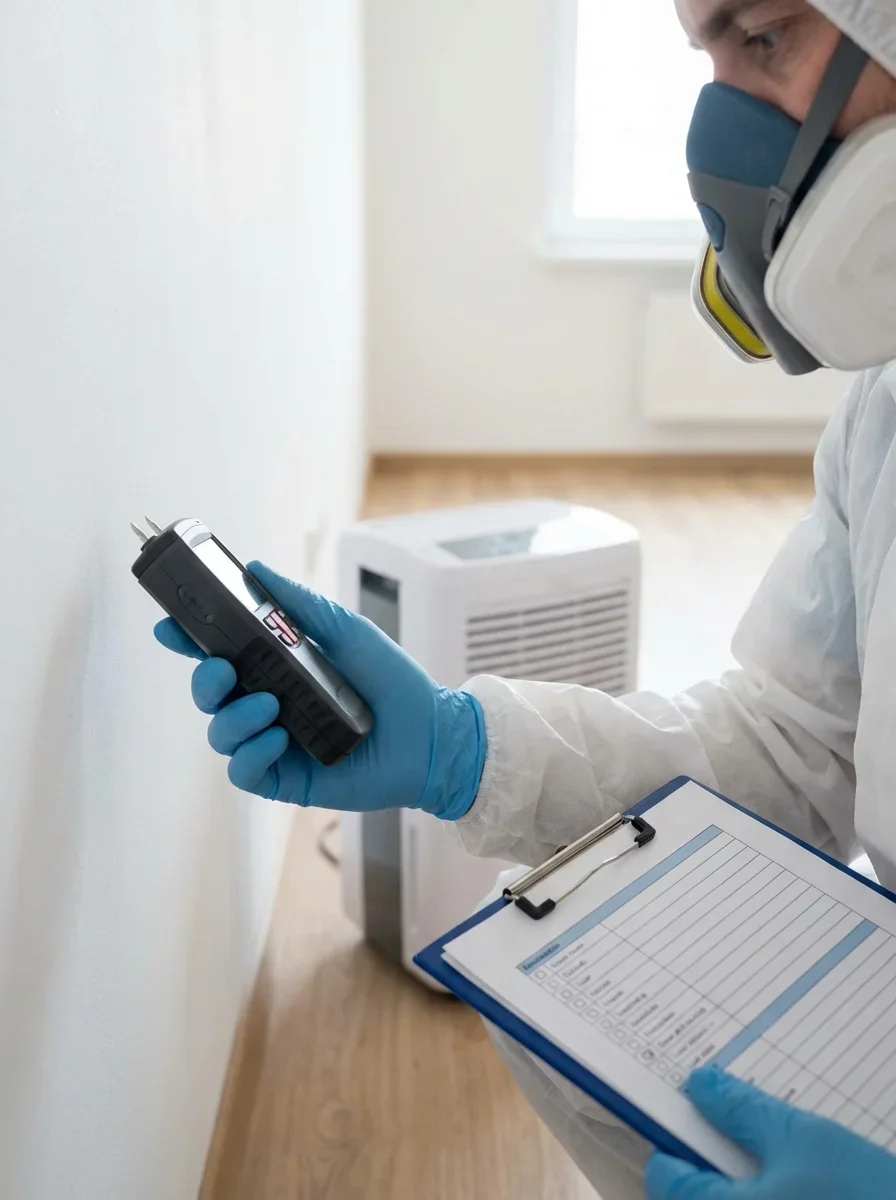
The standard exists because early mold remediation was the Wild West. Contractors would spray bleach on visible mold, slap up fresh drywall, and call it done. Spore counts would drop temporarily, then skyrocket once moisture returned.
S520 changed that by requiring source moisture control first.
In Texas, that moisture source is usually under your slab. Expansive clay soil across the Houston, Dallas-Fort Worth, and San Antonio metros causes foundation shifting that cracks both concrete and plumbing. A slow leak in a copper line buried under 8 inches of concrete creates the perfect mold incubator — warm, dark, and perpetually damp. S520-trained contractors know to call for leak detection before tearing out drywall, because killing surface mold without fixing the plumbing is just expensive theater.
The standard also addresses Texas-specific risks most homeowners don't think about. Your AC system runs 8+ months per year here, condensing gallons of water daily. S520 protocols require HVAC assessment during remediation, because mold spores colonizing your ductwork will recontaminate the entire house the moment you turn the system back on.
That's why HVAC mold removal often happens alongside wall cavity work in Texas homes built after 2000, when complex two-story ducting became standard.
The Containment Standards That Matter Most
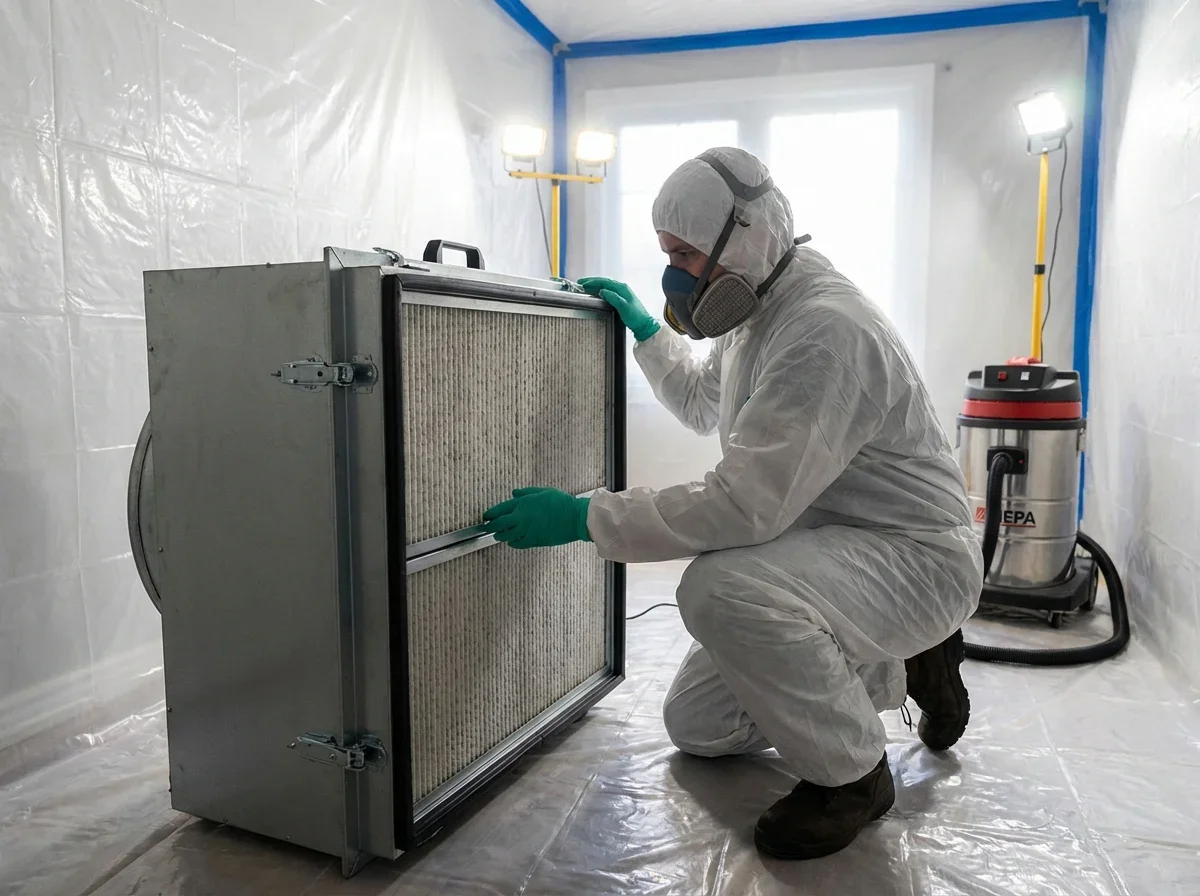
S520 defines three containment levels based on contamination extent. Limited containment uses 6-mil polyethylene barriers and maintains negative air pressure in the work zone using HEPA-filtered air scrubbers. Full containment adds double poly barriers with airlocks and decontamination chambers.
Here's what that looks like in a typical 1990s Houston slab home: Your mold inspection finds elevated Stachybotrys levels behind a bathroom wall. S520 requires at minimum limited containment — sealing doorways, running negative air machines, and preventing spores from migrating into your HVAC return.
But if testing reveals contamination spread into wall cavities across multiple rooms, you need full containment with staged decontamination. The contractor should explain why they chose that containment level, referencing specific S520 criteria, not just "to be safe."
Most complaints from Texas homeowners stem from inadequate containment during demo. You'll smell dust throughout the house. Your furniture gets coated in residue. The contractor says "don't worry about it."
That's a red flag. S520-compliant work shouldn't impact unaffected areas at all — if it does, containment failed.
| Containment Level | When Required | Equipment Needed | Cost Impact |
|---|---|---|---|
| Limited | <100 sq ft, Condition 2 | 6-mil poly barriers, 1-2 air scrubbers, negative pressure | Moderate (+15-25%) |
| Full | >100 sq ft or Condition 3 | Double poly, airlocks, decon chambers, multiple scrubbers | High (+40-60%) |
| None | <10 sq ft, Condition 1, surface only | Basic barriers, HEPA vacuum only | Minimal (+5-10%) |
Personal Protective Equipment Requirements You Should Recognize
S520 specifies PPE based on contamination condition and activity type. Minimum PPE for Condition 2 work includes N95 respirators, gloves, and eye protection. Condition 3 (heavy contamination or immunocompromised occupants) requires full-face respirators, disposable coveralls, and boot covers.
Walk onto your job site mid-project. If workers are demoing moldy drywall in cargo shorts and a dust mask, they're not following S520.
Period.
This isn't about contractor comfort — it's about cross-contamination. Workers tracking spores from the contained area into your kitchen on their boots defeats the entire remediation process. Proper PPE includes staging areas where workers change gear before moving between zones.
Texas TDLR licensing requires remediation workers to complete mold-specific training, but it doesn't mandate S520 certification. That means a TDLR-licensed company might follow S520 protocols, or might have their own "proprietary methods." Ask directly: "Do your crews follow IICRC S520 PPE protocols?" The answer tells you whether they treat this as a technical discipline or just construction work.
Source Moisture Control: The Non-Negotiable First Step
S520 states unequivocally that you cannot remediate mold without addressing the moisture source. No exceptions.
Yet half the horror stories from Texas homeowners involve contractors who skipped this step entirely.
Your foundation shifted. A supply line cracked under the slab. Water's been seeping into the wall cavity for months. The contractor removes 40 square feet of drywall, treats the studs with antimicrobial, replaces insulation, and closes it up. Three months later the smell's back. Why? Because the leak's still there.
S520-trained contractors know that killing existing mold is the easy part — preventing recurrence requires fixing plumbing, regrading drainage, repairing roof flashing, or upgrading HVAC condensate lines.
In pier-and-beam homes common in older Texas neighborhoods (pre-1980 construction in East Dallas, Montrose, Hyde Park), moisture control often means crawl space encapsulation or improved ventilation. S520 doesn't mandate specific solutions, but it requires documenting the source and verifying repair before proceeding.
If your contractor doesn't mention moisture mapping with thermal imaging or moisture meters, ask why.
What "HEPA Filtration" Actually Means in Practice
Every mold contractor claims to use HEPA filtration. S520 requires it for containment air scrubbers and final cleanup vacuums.
But HEPA is a specification, not a magic word — filters must capture 99.97% of particles 0.3 microns or larger.
The standard mandates calculating air changes per hour (ACH) in the contained space. For a typical 300-square-foot bathroom with 8-foot ceilings, you need roughly 400 CFM of negative airflow to achieve 4 ACH minimum. One undersized air scrubber won't cut it. S520-compliant contractors size equipment to the job, not whatever's on the truck.
You'll see this equipment running continuously during demo and drying phases. If machines cycle on and off or sit idle during lunch breaks, containment integrity is compromised. Negative pressure must be constant — that's how you prevent spores from escaping the work zone.
Your contractor should demonstrate negative pressure using smoke pencils or manometers, especially before breaking containment at project end.
The Cleaning and Disposal Standards Nobody Talks About
S520 requires two-stage cleaning: gross removal followed by HEPA vacuuming of all surfaces within containment. Contractors often skip the second stage. You'll see them bag debris, wipe down studs, and call it clean.
But microscopic spores remain on ceiling joists, electrical boxes, and HVAC boots.
Proper S520 protocol means HEPA-vacuuming everything — not just horizontal surfaces. Vertical framing, plumbing penetrations, wire runs. Then damp-wiping with antimicrobial solution. Then HEPA-vacuuming again after surfaces dry. This double-pass approach is what achieves clearance-level spore counts.
Disposal matters too. In Texas, most residential mold waste is non-hazardous and can go to standard landfills, but S520 requires double-bagging in 6-mil poly and sealing before removal from containment.
You shouldn't see loose drywall chunks getting hauled through your living room. Waste exits through decontamination chambers or directly through exterior windows.
Pro Tip: The two-stage cleaning process is where many contractors cut corners to save time. Insist on documentation showing both HEPA vacuuming passes occurred — before and after antimicrobial treatment. This single step separates compliant remediation from cosmetic cleanup.
Post-Remediation Verification: The Proof S520 Demands
The standard separates remediation from verification testing. Your remediation contractor should not be the one signing off on clearance — that's a conflict of interest. Texas TDLR rules reinforce this by requiring separate licensed assessors and remediators.
Post-remediation verification typically involves visual inspection (no visible mold, no musty odor, surfaces clean and dry) plus air sampling to confirm spore counts returned to Condition 1 levels. S520 doesn't mandate specific clearance criteria because background mold varies by region, but most Texas assessors compare post-remediation samples to outdoor control samples.
If indoor Aspergillus and Penicillium counts are within 25% of outdoor levels and no water-damage indicators (Stachybotrys, Chaetomium) appear, you likely achieved clearance.
Some contractors offer "certificates of completion" that look impressive but mean nothing without independent testing. S520 requires third-party verification.
If your contractor resists this, ask why. Legitimate remediation companies want independent confirmation their work succeeded.
How S520 Aligns with Texas TDLR Licensing
Texas goes beyond S520 in key areas. TDLR requires mold assessment companies and mold remediation companies to hold separate licenses — you can verify any company at the TDLR mold license lookup. S520 recommends this separation but doesn't enforce it.
Texas does.
TDLR-licensed Mold Remediation Contractors must employ at least one licensed Mold Remediation Worker who completed state-approved training. That training covers S520 principles, but S520 certification itself (through IICRC or ACAC) is optional. This creates a competency gap. A contractor can be TDLR-legal without understanding advanced S520 protocols for unusual situations — say, mold remediation in a home with immunocompromised occupants (which triggers elevated PPE and containment requirements).
The best Texas mold companies hold both TDLR licenses and IICRC S520 certifications. TDLR proves they're legal. S520 certification proves they're competent.
Don't assume one guarantees the other.
When S520 Protocols Change Based on Contamination Level
Not every mold situation requires full S520 protocols. The standard itself is tiered. A small patch of surface mold in a bathroom (less than 10 square feet, Condition 2, no immunocompromised occupants) might not need negative air machines or full containment.
S520 allows simplified procedures for limited-scope projects.
But Texas contractors sometimes over-apply this flexibility. You'll see estimates for black mold removal that skip containment entirely because "it's just one wall." S520 still requires barriers, HEPA vacuuming, and source moisture identification — even on small jobs. The standard provides minimum requirements; local conditions (like Texas humidity) often justify exceeding them.
Conversely, some contractors upsell unnecessary protocols. Condition 1 scenarios (normal background mold on window sills, minor condensation staining) don't require remediation at all. S520 explicitly states that some mold presence is normal and inevitable.
If a contractor wants to tent your entire house for a few spots of surface mold with no water damage history, get a second opinion.
The Role of Industrial Hygienists in S520 Compliance
S520 references industrial hygienists (IHs) as qualified assessors for complex mold projects. In Texas, IHs aren't required by law, but they add credibility for insurance claims and litigation.
An IH develops the remediation protocol, specifies containment requirements, and conducts clearance testing.
Many Texas mold assessment companies employ Certified Industrial Hygienists (CIH) or Certified Mold Inspectors (CMI) who write S520-compliant protocols. If your project involves whole house mold or potential litigation (tenant disputes, construction defect claims), an IH-written protocol protects you. It establishes that remediation followed nationally recognized standards, not just the contractor's opinion.
For routine residential work, a TDLR-licensed mold assessor suffices. For high-stakes situations — post-flood restoration, healthcare facilities, schools — insist on an IH.
Their protocols reference S520 by section number and create a defensible paper trail.
Common S520 Violations Texas Contractors Make
The most frequent violation: starting demo before moisture mapping. S520 requires documenting moisture content in affected materials using moisture meters. Contractors eyeball water stains and start cutting. Then they find mold extending 6 feet beyond the visible damage.
If they'd mapped moisture first, containment would've been sized correctly from day one.
Second violation: inadequate drying time. S520 specifies materials must reach equilibrium moisture content before reconstruction. In Texas humidity (summer dew points routinely hit 75°F), that takes longer than contractors expect. Lumber needs to drop below 15% moisture content, concrete below 4%. Closing walls while framing is still damp guarantees mold recurrence.
Proper S520 compliance includes documenting moisture readings over several days, not just once.
Third violation: failing to address HVAC systems. Texas homes built after 2000 often have ductwork running through unconditioned attics where summer temperatures exceed 140°F. Condensation forms inside ducts when cold AC air meets superheated metal. S520 requires evaluating HVAC as part of the moisture source investigation.
Contractors who ignore ductwork are setting you up for recontamination.
What S520 Doesn't Cover — and Why That Matters
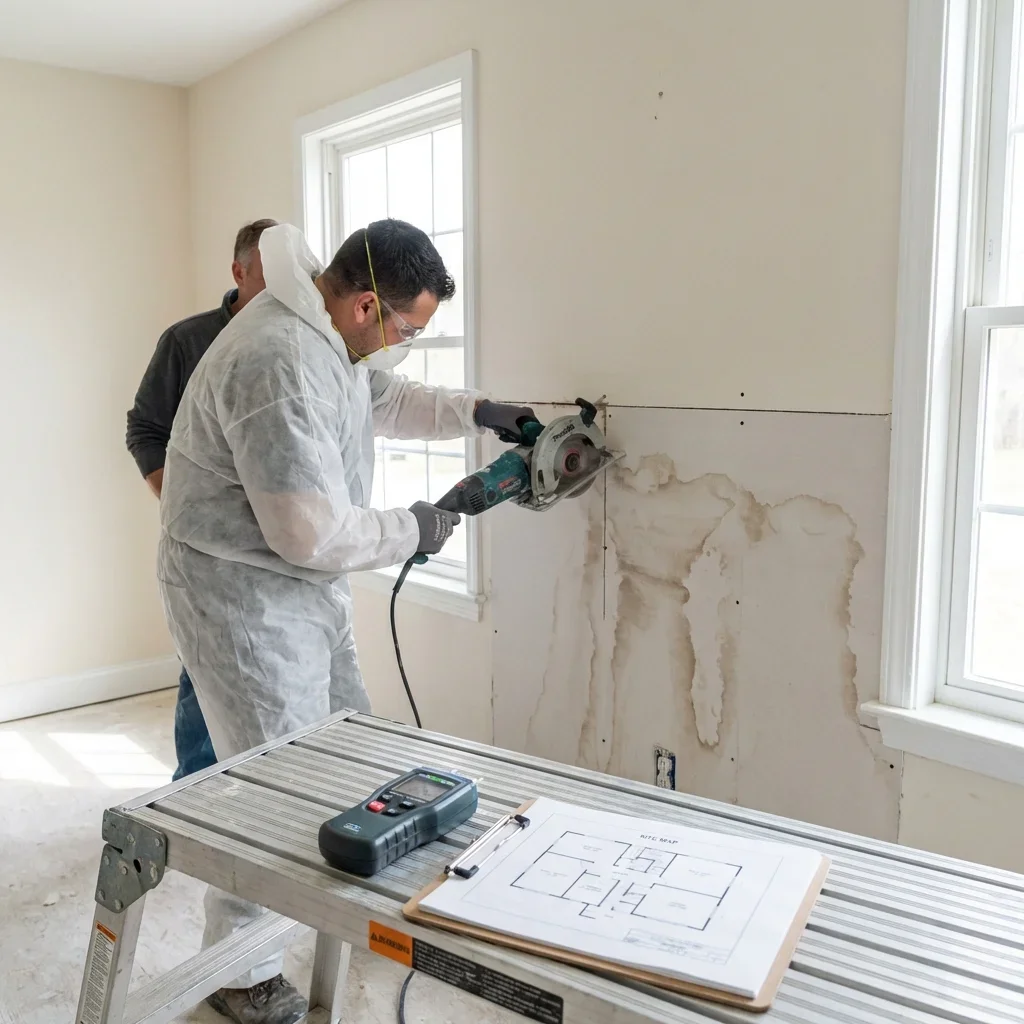
S520 addresses how to remediate mold safely. It doesn't tell you when remediation is necessary vs. when cleaning suffices. It doesn't establish health-based exposure limits (no consensus exists). And it doesn't mandate specific clearance criteria — those come from industrial hygienists, insurance adjusters, or state health departments.
This ambiguity creates problems in Texas real estate transactions. A seller's inspector finds elevated mold spore counts. The buyer demands remediation following S520. But S520 itself doesn't define "elevated" — one assessor might call 10,000 spores/m³ of Aspergillus acceptable background, another might flag it as Condition 2 requiring action.
You need an assessor who understands Texas-specific baselines (outdoor counts here run higher than arid Western states due to humidity).
S520 also doesn't address mold on contents (furniture, belongings). That falls under IICRC S580 Contents Processing. If your contents cleaning and restoration needs exceed simple HEPA vacuuming, the contractor should reference S580 alongside S520 for comprehensive coverage.
How Insurance Companies Use S520 in Claim Decisions
Most Texas homeowners insurance policies exclude mold coverage unless it results from a covered peril (sudden pipe burst, storm damage). When coverage applies, adjusters expect S520-compliant protocols.
Deviations give them ammunition to reduce payouts.
Your contractor submits an estimate with "$15,000 for mold remediation." The adjuster asks: "Where's the moisture mapping documentation? What containment level and why? How many air changes per hour in the work zone?" If the contractor can't cite S520 sections justifying their approach, the adjuster cuts the estimate.
Insurance companies love S520 because it's specific and measurable — contractors hate it for the same reason.
This matters most for storm damage mold remediation claims after hurricanes or flooding. Adjusters scrutinize these closely for fraud. A detailed S520-compliant protocol with third-party verification dramatically improves approval odds.
Some Texas contractors now include "S520 Protocol Development" as a separate line item on estimates specifically to satisfy insurance requirements.
Choosing Contractors Who Actually Follow S520
TDLR licensing proves a company can legally operate. S520 certification proves they know industry best practices.
Neither guarantees quality work. You need both, plus references and verification.
Ask specific questions: "What containment level will you use and why? How do you calculate required air changes? Who performs post-remediation verification? What moisture control measures address the source?" S520-trained contractors answer these immediately with technical detail. Others fumble or deflect to "we follow all industry standards" (meaningless).
Check their online profile. Companies serious about S520 usually mention IICRC certification prominently and explain their protocols. Generic "we remove mold safely" language suggests they're winging it.
When interviewing contractors, ask to see an example protocol from a past similar project. Redact the homeowner's info, but the technical specs should be visible.
If they can't produce one, walk away.
What S520 Means for Texas Rental Property Owners
Texas Property Code requires landlords to remediate mold conditions that materially affect tenant health. S520 provides liability protection by establishing you followed recognized professional standards. A tenant claims mold made them sick. Your defense: remediation followed S520 protocols under a TDLR-licensed contractor with third-party verification.
That's much stronger than "we cleaned it ourselves."
Rental property mold inspection should happen between tenants as preventive maintenance. If you find contamination, S520-compliant remediation creates a paper trail proving habitability. Some landlords cheap out with surface cleaning and paint. That might pass visual inspection, but air sampling will reveal elevated spores.
The next tenant gets sick, you face litigation, and your shortcut becomes Exhibit A.
Commercial property owners face even higher standards. S520 compliance isn't optional for multi-family, office, or retail spaces in practice — insurance and tenant lease agreements often require it explicitly.
If you own commercial property in Texas, budget for S520 from the start. Retrofitting non-compliant remediation later costs more than doing it right initially.
The Future of S520 and Texas Mold Regulation
IICRC updates S520 periodically based on new research. The most recent edition added guidance on antimicrobial resistance (overuse of biocides creating resistant mold strains) and climate change impacts (warmer, wetter conditions expanding mold-prone regions).
Texas is already seeing this — Houston's humid season now extends into November, prolonging peak mold risk.
There's ongoing debate about whether Texas should mandate S520 compliance by law, not just TDLR licensing. Some industry groups push for it, arguing consistency. Others resist, claiming it limits contractor flexibility. For homeowners, this matters less than ensuring your contractor follows S520 regardless of legal requirements.
The standard also increasingly addresses equity issues — low-income households face disproportionate mold exposure because they can't afford proper remediation. S520 protocols don't change based on ability to pay, which means a luxury home in Westlake Hills and a rental in South Dallas should receive identical technical rigor.
Reality falls short, but the standard at least establishes that principle.
- National Institutes of Health (NIH), Office of Research Services. "Moisture and Mold Remediation Standard Operating Procedures." https://ors.od.nih.gov/sr/dohs/Documents/moisture-and-mold-remediation-sop.pdf. Accessed April 02, 2026.