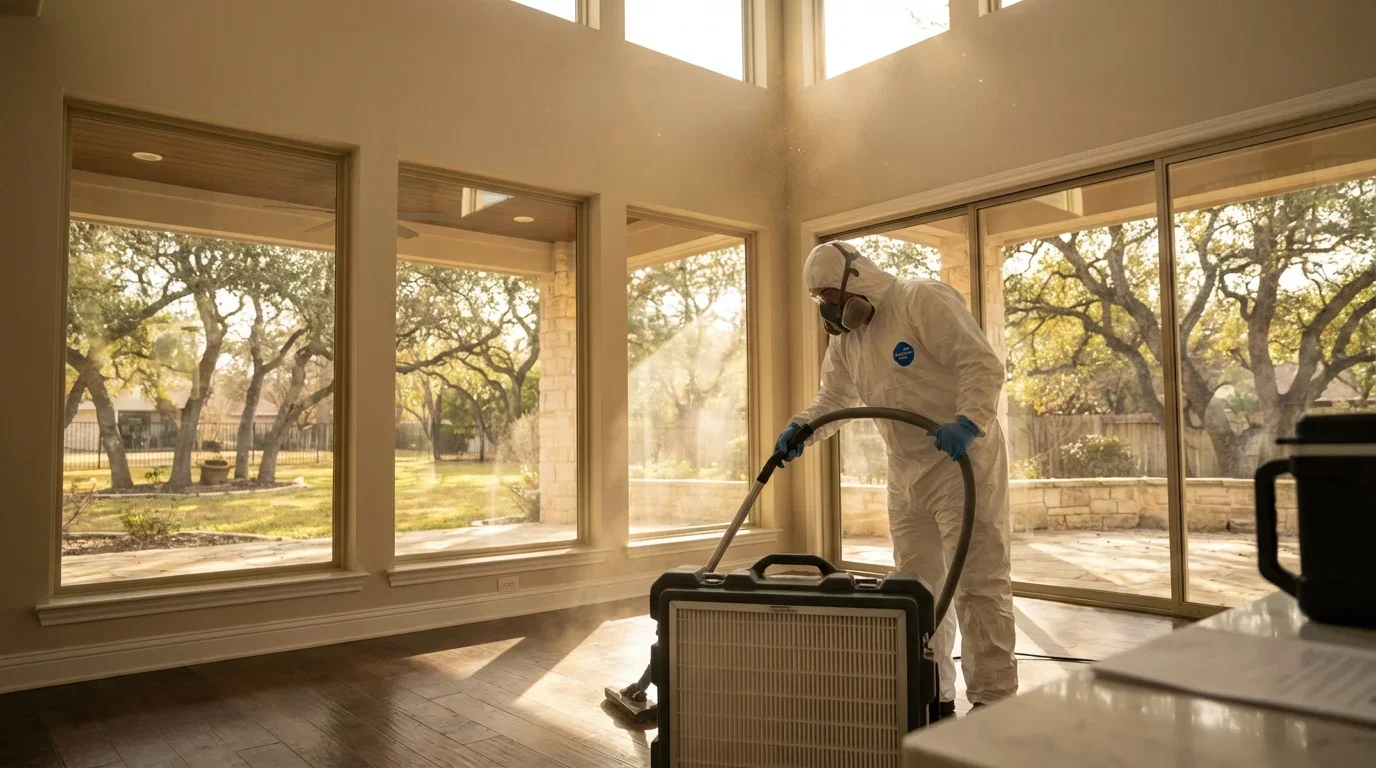
Your Whole Home Isn't Safe Until the Mold Is Gone
Major water damage doesn't stop at one room—and neither does mold. Our whole-house remediation eliminates contamination from every affected space, so your family breathes clean air again.
- Complete containment and removal across all rooms
- Prevents mold from spreading to unaffected areas
- Restores your entire home to safe, livable condition
⚠ Common Issues
When Do You Need Whole House Mold Remediation?
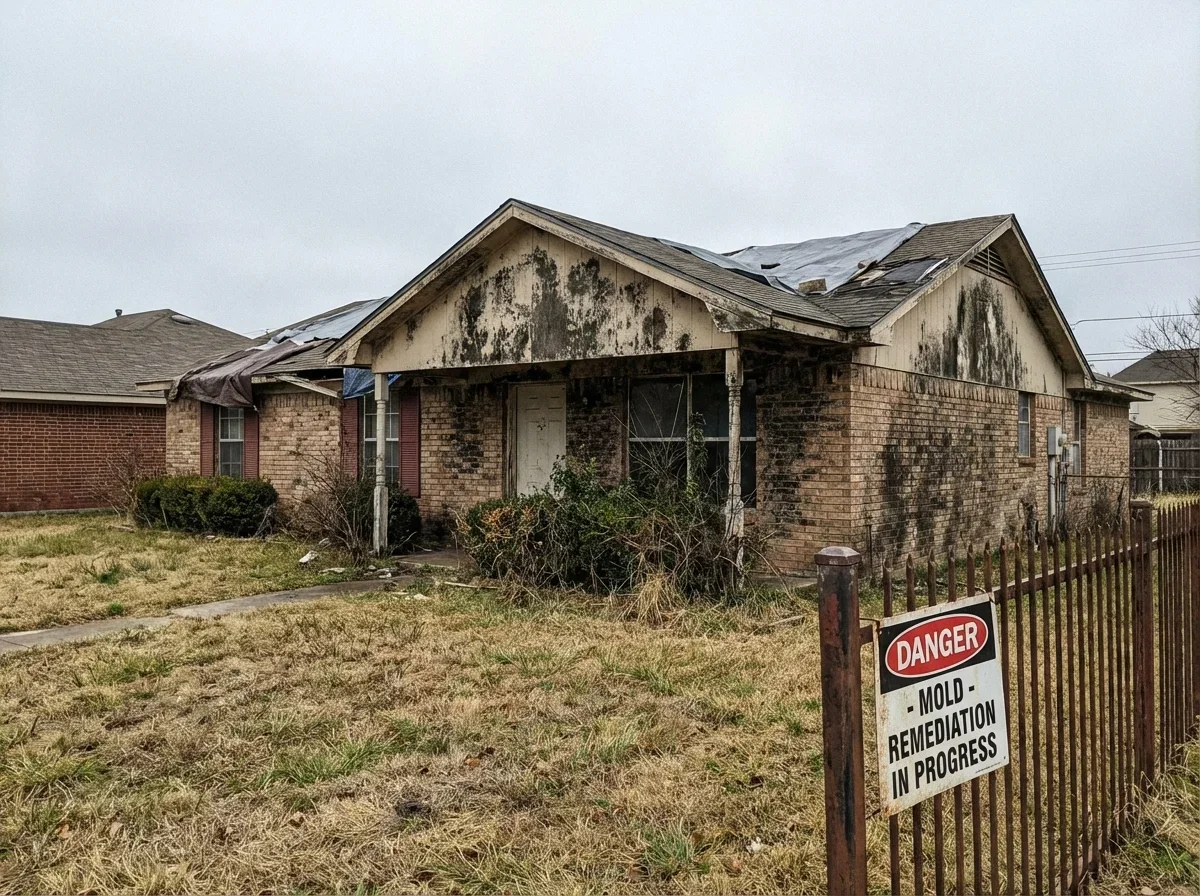
Whole house remediation becomes necessary after catastrophic water events or when hidden growth spreads throughout structural cavities. In Texas, the most common triggers are hurricane flooding along the Gulf Coast, burst pipes during rare winter freezes, and long-term HVAC condensation failures in Houston's extreme humidity.
Look for these warning signs across multiple rooms:
- Visible mold growth in 3+ areas (walls, ceilings, floors)
- Persistent musty odors throughout the home despite cleaning
- Health symptoms affecting multiple family members (respiratory issues, headaches, allergic reactions)
- Discoloration or staining on drywall in several rooms
- Warped flooring or ceiling sagging in multiple zones
- Recent flooding or water intrusion that sat for 48+ hours
If mold developed after a major water event — common during Houston or Corpus Christi hurricane seasons — contamination likely spread behind walls and under flooring before you noticed surface growth. Dallas and San Antonio homes with foundation issues face similar risks when groundwater seeps into wall cavities undetected.
Whole house contamination escalates fast. Once mold colonizes HVAC systems or wall cavities, spores circulate to every room. What starts as a 200-square-foot problem becomes a 2,000-square-foot crisis within weeks.[3]
Health risks justify immediate action. Extended exposure to extensive mold causes respiratory distress, chronic sinusitis, and aggravates asthma. If multiple household members show symptoms, relocate during remediation.
$ Cost Guide
What Does Whole House Mold Remediation Cost in Texas?
Whole house remediation is a major investment. Texas projects range from $15,000 to $75,000+, with costs driven by contamination extent, structural damage, and required reconstruction.[3]
| Home Size | Moderate Contamination | Extensive Contamination |
|---|---|---|
| 1,000-1,500 sq ft | $15,000 - $28,000 | $30,000 - $45,000 |
| 1,500-2,500 sq ft | $25,000 - $40,000 | $45,000 - $65,000 |
| 2,500-4,000 sq ft | $35,000 - $55,000 | $60,000 - $90,000 |
Cost Factors by Square Footage
Square footage affects labor hours and material removal volume. A Fort Worth 2,000-square-foot home requires more containment barriers, more HEPA filtration equipment, and more disposal loads than a 1,200-square-foot El Paso bungalow.
Contamination Level and Material Removal
Moderate contamination (affecting drywall surfaces and visible areas): Lower material removal, faster timelines, less reconstruction.
Extensive contamination (behind walls, in HVAC, structural cavities): Requires removing drywall to studs, insulation replacement, ductwork cleaning or replacement. San Antonio homes with long-term humidity issues often hit this tier.
Additional cost drivers:
- HVAC contamination: $3,000-$8,000 for duct cleaning or replacement
- Structural repairs: Water-damaged framing, subfloor replacement
- Contents storage: 2-4 weeks of climate-controlled storage during work
- Temporary housing: Many homeowners relocate during remediation
Testing and Post-Remediation Verification Costs
Texas requires separate licensed assessors for testing — contractors can't self-certify their work.[2]
- Initial mold assessment: $500-$1,200
- Post-remediation clearance testing: $400-$900
- Air quality testing (multiple zones): $150-$300 per sample location
Insurance rarely covers mold unless directly tied to a covered water event (burst pipe, not long-term leaks or flooding). Document everything. Some Dallas and Houston policies include limited mold coverage riders — verify before starting work.
→ What to Expect
The Whole House Mold Remediation Process
Texas mold remediation follows strict containment protocols established by TDLR regulations.[1] Here's what happens during a multi-week project:
Initial Assessment and Containment Setup (Days 1-2)
- Licensed mold assessor inspection — Required by Texas law before remediation begins. The assessor identifies contamination extent, tests air quality, and creates a remediation protocol.
- HVAC system shutdown — Prevents spore circulation during work. In Texas heat, expect temporary portable AC units in unaffected areas.
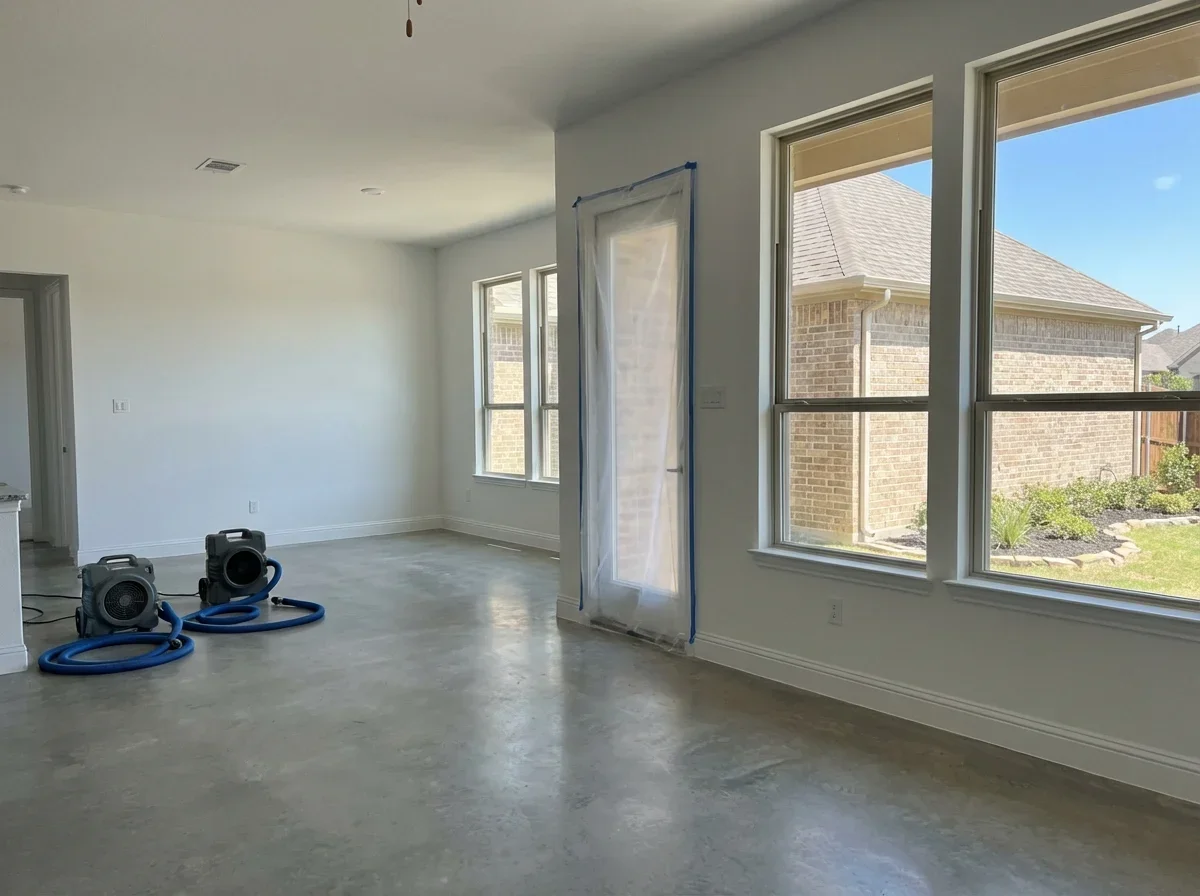
- Full containment barriers — Polyethylene sheeting seals affected zones. Negative air pressure machines with HEPA filters prevent cross-contamination to clean areas.
- Contents removal — Furniture, belongings, and salvageable items move to storage or decontamination areas.
Removal and HEPA Filtration (Days 3-10)
- Material removal — Contaminated drywall, insulation, flooring, and trim come out. Porous materials can't be saved. Non-porous surfaces (metal studs, concrete) get HEPA-vacuumed and antimicrobial treatment.
- Structural cavity cleaning — Wall and ceiling cavities receive antifungal application. In Texas homes with pier-and-beam foundations, crawl spaces get concurrent treatment.
- Continuous air filtration — Industrial HEPA scrubbers run 24/7, cycling air 4-6 times per hour.
Structural Drying and Reconstruction (Days 11-21)
- Moisture elimination — Dehumidifiers and air movers dry structural elements to <15% moisture content. Texas humidity extends this phase — Gulf Coast projects take longer than West Texas jobs.
- Clearance testing — Independent assessor tests air quality and surface samples. Work doesn't proceed until results meet Texas standards.
- Reconstruction — New drywall, insulation, flooring, paint. Many Austin and Plano contractors coordinate with restoration crews to streamline this phase.
Timeline varies by square footage and contamination severity. A 1,500-square-foot home with moderate contamination takes 10-14 days. A 3,000-square-foot home with extensive HVAC involvement can stretch to 3-4 weeks.
✓ Choosing a Contractor
How to Choose a Whole House Mold Remediation Contractor in Texas
Texas law is strict: only TDLR-licensed contractors can legally perform mold remediation.[1] Verify credentials before signing contracts.
Questions to Ask
- "What's your TDLR Mold Remediation Contractor license number?" — Look it up at tdlr.texas.gov. License type MAS-LC is required for remediation work.
- "Who performs post-remediation testing?" — Must be a separate licensed assessor (MAS-LA), not the remediation company.
- "What's included in your containment protocol?" — Negative air machines, polyethylene barriers, HVAC shutdown procedures should all be standard.
- "How do you handle reconstruction?" — Some contractors coordinate; others require separate bids.
- "What documentation do you provide?" — Detailed work logs, photo documentation, clearance certificates for insurance claims.
- "How many whole house projects have you completed in Texas?" — Experience with large-scale jobs matters. Ask for references from similar-sized homes.
Red Flags
- No TDLR license or claims "small jobs don't need licensing" (false — Texas requires licensing for all mold work)
- Offers to do testing and remediation (illegal in Texas — separate companies required)
- Quotes without on-site inspection
- Pressure to start immediately without written protocols
Texas TDLR Licensing Verification
Visit the TDLR License Search and enter the contractor's name or license number. Confirm:
- Active MAS-LC (remediation contractor) license
- No disciplinary actions or complaints
- Insurance coverage ($1 million general liability minimum)
For whole house projects, prioritize contractors with certified mold remediators on staff and experience managing multi-week timelines. Many homeowners also request third-party post-remediation verification from independent assessors for additional assurance.
Compare multiple licensed contractors through our directory. Check verified reviews, confirm TDLR credentials, and get detailed written protocols before choosing your team.
Top Contractors for Whole House Mold Remediation
View all →



Frequently Asked Questions
- Texas Department of Licensing and Regulation (TDLR). "Mold Abatement Services Rules." https://www.tdlr.texas.gov/mas/mas-rules.htm. Accessed April 02, 2026.
- Texas Department of Licensing and Regulation (TDLR). "Mold Abatement Services Frequently Asked Questions." https://www.tdlr.texas.gov/mas/mas-faqs.htm. Accessed April 02, 2026.
- New York City Department of Health and Mental Hygiene. "Guidelines on Assessment and Remediation of Fungi in Indoor Environments." https://www.nyc.gov/assets/doh/downloads/pdf/epi/mold-rpt1.pdf. Accessed April 02, 2026.