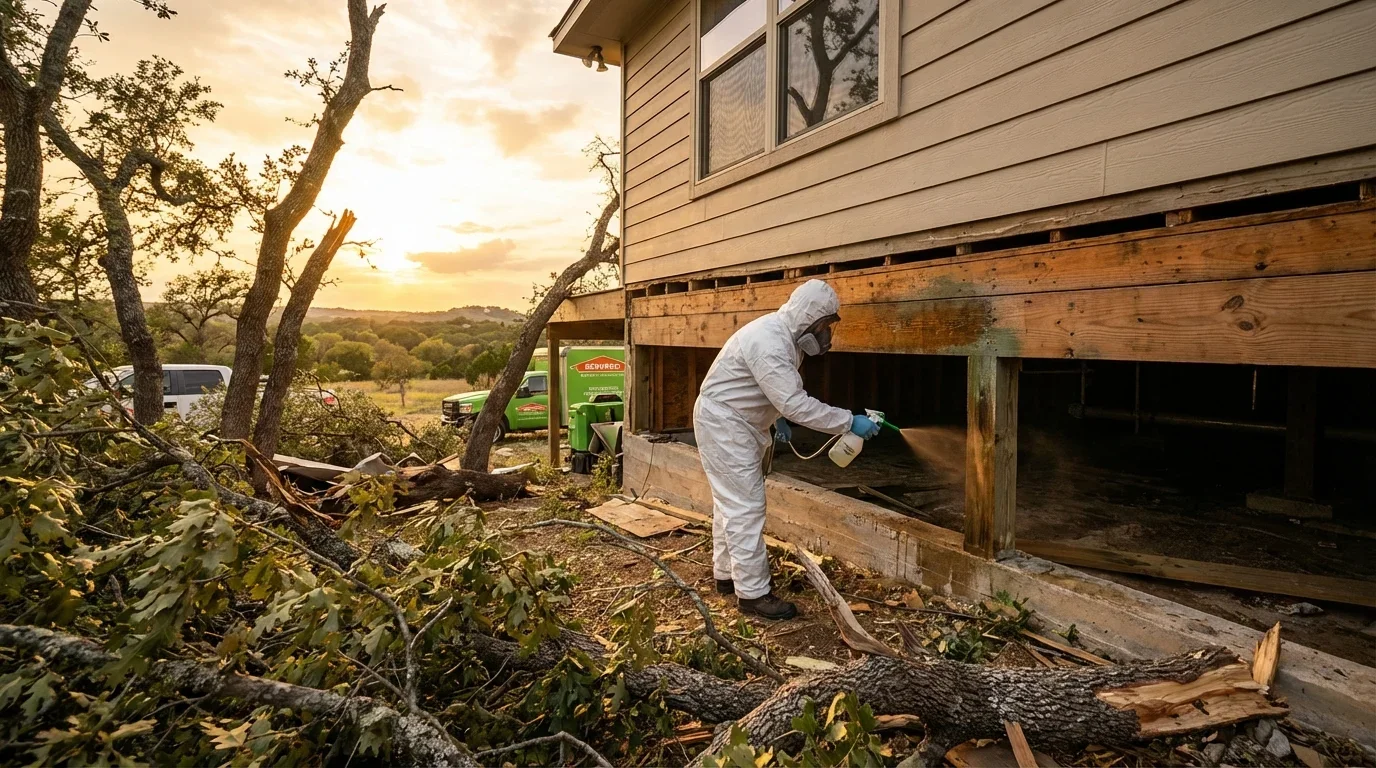
Storm Damage? Mold Grows Fast in Texas Humidity
After severe weather hits, you have 24-48 hours before mold takes hold. Our certified teams respond immediately to extract water, dry structures, and eliminate mold before it spreads through your property.
- Emergency response within hours of your call
- Prevent hidden mold in walls and crawlspaces
- Insurance documentation and direct billing available
⚠ Common Issues
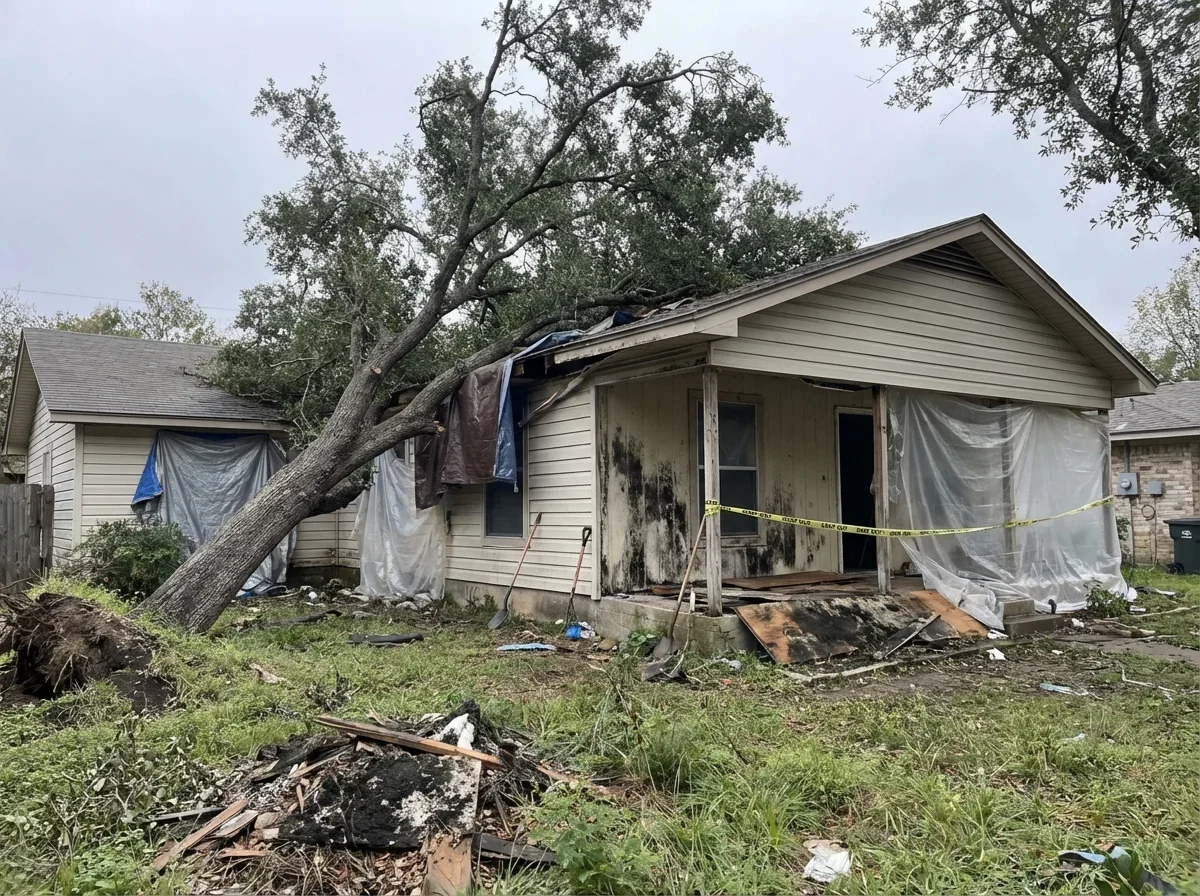
When Do You Need Storm Damage Mold Remediation?
The 24-48 Hour Window
Mold spores activate within 24 to 48 hours after floodwater intrusion.[1] Texas Gulf Coast humidity accelerates this timeline — what takes three days in Arizona happens overnight in Houston or Corpus Christi. You're watching the clock from the moment storm surge recedes or roof damage lets rain pour into your attic.
Call for assessment if you see: standing water that lasted more than 6 hours, wet drywall or insulation, visible water stains spreading on ceilings or walls, musty odors in flooded rooms, HVAC systems that ran during flooding.
Hidden Mold Growth After Hurricanes
The visible damage is obvious. The dangerous mold hides in wall cavities behind soaked drywall, attic insulation saturated from wind-driven rain through damaged shingles, and HVAC ductwork that pulled in floodwater. Post-hurricane inspections in San Antonio and Dallas routinely find concealed colonies weeks after homeowners assumed they'd dried out successfully.
Storm damage mold grows where you can't see it. By the time you smell it or spot surface growth, remediation costs have typically tripled from what emergency containment would have prevented.
Children, elderly residents, and anyone with respiratory conditions face acute health risks from airborne spores in temporary housing situations.[3] Delayed remediation turns a recoverable property into a total loss.
$ Cost Guide
What Does Storm Damage Mold Remediation Cost in Texas?
Storm-related mold remediation pricing splits into emergency response and full remediation. Costs vary significantly based on contamination extent and insurance coverage.
Emergency Response vs. Full Remediation Pricing
| Service Phase | Typical Cost Range | Timeline |
|---|---|---|
| Emergency water extraction & containment | $1,500 - $4,000 | 24-72 hours |
| Small-scale remediation (under 100 sq ft) | $2,000 - $6,000 | 3-5 days |
| Moderate remediation (100-300 sq ft) | $5,000 - $15,000 | 5-10 days |
| Large-scale/whole-house remediation | $15,000 - $50,000+ | 10-21 days |
| Air quality testing (pre and post) | $400 - $900 per visit | 2-3 hours |
Key cost factors: Square footage of affected areas, category of water damage (clean water vs. sewage), accessibility (attic vs. crawlspace increases labor), structural damage requiring reconstruction, contents restoration needs.
Attic mold from roof penetrations typically runs $3,000-$8,000 in Plano and Arlington homes. Wall cavity mold from storm surge flooding escalates quickly — budget $8-$15 per square foot for affected wall sections including drywall replacement.
Insurance Coverage and FEMA Claims
Homeowners insurance covers mold remediation resulting from covered storm damage (wind, hail) but excludes flood-related mold unless you carry separate flood insurance. Document everything immediately — insurers deny claims for "delayed maintenance" if you wait weeks to call contractors.
FEMA Individual Assistance grants require professional assessment within days of the disaster declaration. Licensed contractors familiar with FEMA paperwork (common in Houston and Corpus Christi after repeated hurricane events) streamline the claims process significantly. Many policies cap mold coverage at $10,000-$25,000; full remediation often exceeds this, leaving you responsible for the difference.
Texas TDLR licensing ensures contractors follow industry protocols that satisfy insurance requirements. Unlicensed "storm chasers" produce work that adjusters reject, leaving you liable for complete re-remediation costs. For insurance-specific guidance, review our insurance claim mold services resource.
→ What to Expect
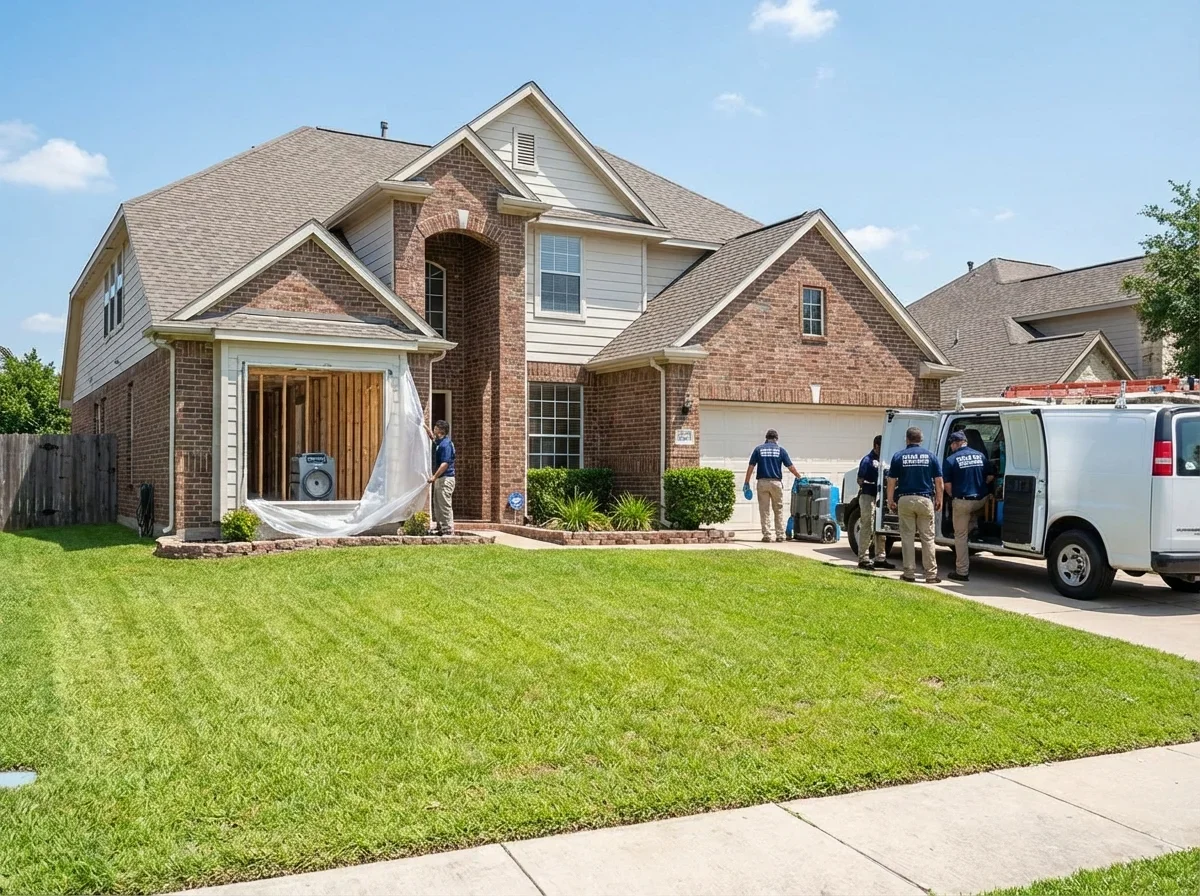
The Storm Damage Mold Remediation Process
Professional response unfolds in four phases. Emergency work begins within hours; complete remediation typically spans 5-14 days depending on severity and insurance coordination.
Phase 1: Emergency Stabilization (0-72 Hours)
- Water extraction and surface drying — Industrial pumps remove standing water, air movers target wet surfaces
- Temporary containment — Plastic sheeting isolates affected zones to prevent cross-contamination
- Dehumidification setup — Commercial dehumidifiers run 24/7 to drop moisture below mold growth thresholds
- Preliminary photo documentation — Required for insurance claims and FEMA assistance applications
Most Houston and Fort Worth contractors arrive within 4-8 hours of your call during active storm events. This phase prevents new growth but doesn't address existing colonies.
Phase 2: Assessment and Documentation
Texas law requires TDLR-licensed mold assessors to evaluate contamination over 25 contiguous square feet.[2] The assessor maps affected areas, tests air and surface samples, and creates the protocol your remediation contractor follows. Insurance adjusters need this documentation — DIY cleanup voids most policies.
Phase 3: Containment and Removal
Certified remediators establish negative air pressure containment, remove contaminated materials (drywall, insulation, flooring), HEPA-vacuum all surfaces, and apply antimicrobial treatments. Structural elements like studs and joists are cleaned and dried rather than removed when possible.
Phase 4: Structural Drying and Prevention
Post-removal, the structure must reach 15% moisture content or lower before reconstruction. Moisture meters verify dryness in framing lumber — critical in humid climates. Many contractors apply mold-resistant coatings to studs before new drywall installation. Final clearance testing (often required by lenders) confirms the space is safe for occupancy. See our guide on post-remediation verification for what clearance testing entails.
✓ Choosing a Contractor
How to Choose a Storm Damage Mold Contractor in Texas
Fly-by-night operators flood disaster zones after every hurricane. Protect yourself with these contractor evaluation criteria.
TDLR Licensing Verification
Questions to ask:
- What is your TDLR mold remediation company license number? (Verify at tdlr.texas.gov)
- Are your technicians individually certified for mold remediation work?
- Do you use separate licensed assessors, or do you perform assessment and remediation? (Same company doing both violates Texas law for projects over 25 sq ft)
- What liability insurance limits do you carry? ($1M minimum for storm work)
- Can you provide references from insurance adjusters you've worked with?
Storm Response Capabilities
Look for contractors with dedicated emergency response teams available 24/7, not "we'll get there when we can" operations. Ask about their equipment inventory — companies that own industrial dehumidifiers and air movers respond faster than those renting equipment during disaster surges.
Insurance Claim Experience
Red flags:
- Pressure to sign over insurance proceeds or assignment of benefits before assessment
- Quotes provided without physical inspection or moisture testing
- Unwillingness to coordinate directly with your adjuster or provide itemized estimates
- No mention of TDLR licensing or insurance compliance requirements
Legitimate contractors walk you through the claims process, provide detailed scope-of-work documentation, and communicate directly with adjusters. They understand that structural drying must meet insurance-mandated moisture thresholds before reconstruction begins.
Compare certified contractors in the TX Mold Pros directory by their TDLR license status, emergency response capabilities, and storm remediation experience. The right contractor protects both your property and your claim.
Top Contractors for Storm Damage Mold Remediation
View all →


Frequently Asked Questions
- U.S. Environmental Protection Agency (EPA). "Mold Remediation in Schools and Commercial Buildings." https://www.epa.gov/mold/mold-remediation-schools-and-commercial-buildings. Accessed April 02, 2026.
- Texas Department of Licensing and Regulation (TDLR). "Texas Mold Remediation Rules." https://www.tdlr.texas.gov/mold/mold-rules.htm. Accessed April 02, 2026.
- Centers for Disease Control and Prevention (CDC). "Guidelines for Responding to Flooding." https://www.cdc.gov/healthyhomes/flood.html. Accessed April 02, 2026.