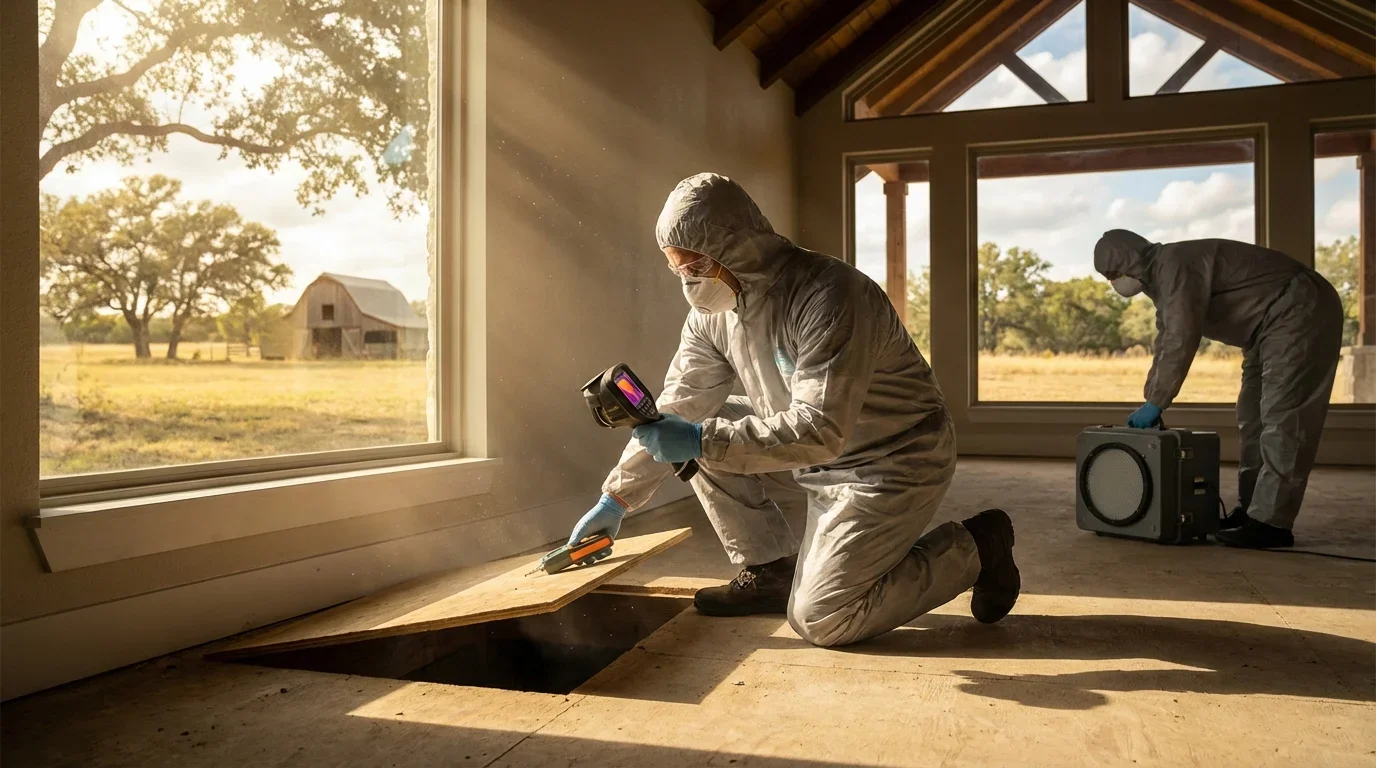
Protect Your Real Estate Deal from Hidden Mold
Texas buyers and sellers lose thousands to mold surprises at closing. Our certified inspections catch problems before they derail your transaction.
- Clear reports that satisfy lenders and agents
- Fast turnaround for tight closing timelines
- Unbiased findings that protect all parties
⚠ Common Issues
When You Need a Real Estate Mold Inspection
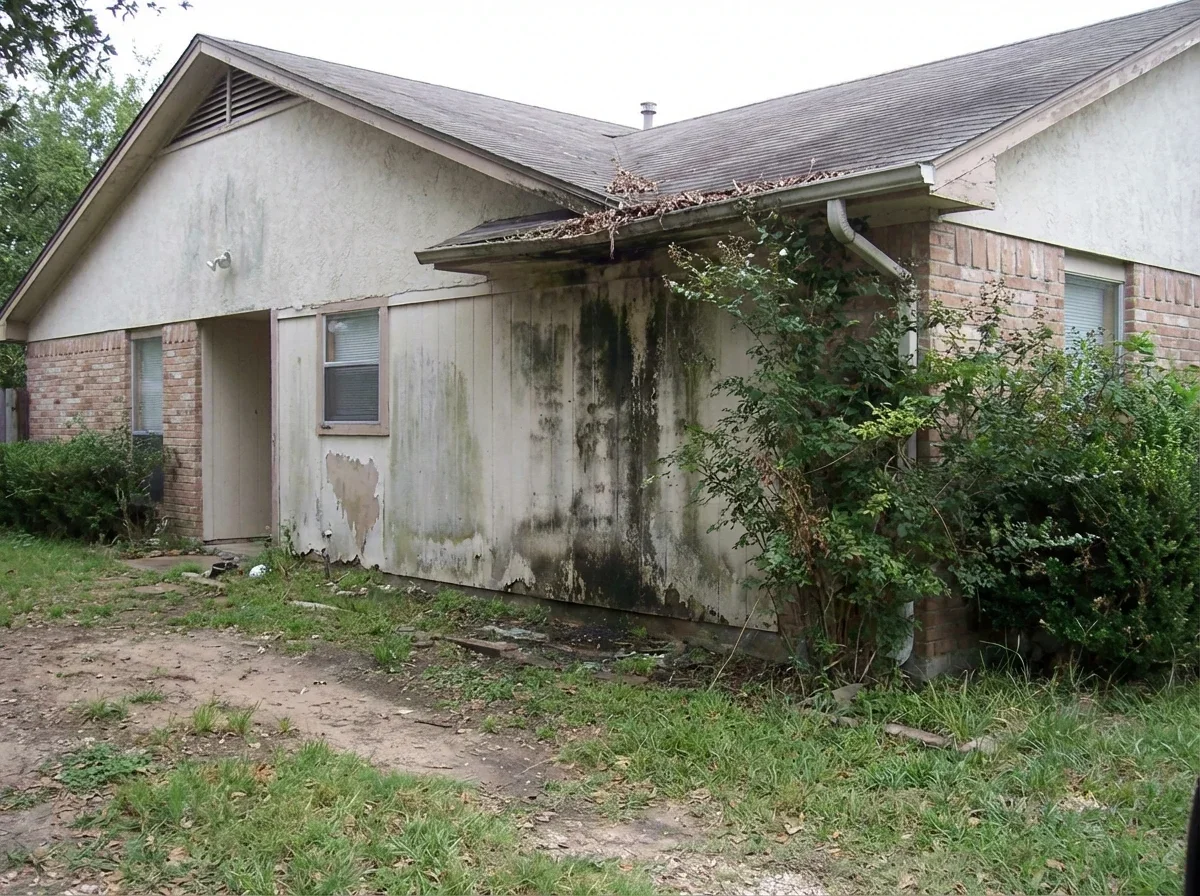
You need a specialized mold inspection when a general home inspection flags potential mold, when you're buying a property with past water damage, or when you're selling and want to avoid disclosure disputes. In Houston's humid climate and Dallas's post-storm markets, mold concerns surface in 20-30% of real estate transactions.
Buyers request inspections during their option period after noticing musty odors, visible staining, or past flooding history. Sellers commission pre-listing inspections to address issues before they derail negotiations. Real estate agents call for assessments when TREC-licensed home inspectors note suspected mold beyond their scope of practice.
Pre-Purchase vs. Pre-Listing Inspections
Pre-purchase inspections protect buyers from hidden problems. You're investing hundreds of thousands — spending $400 now prevents assuming someone else's $8,000 remediation bill.
Pre-listing inspections give sellers control. Address mold before listing, and you negotiate from strength instead of scrambling during option periods. Austin and San Antonio sellers use pre-listing assessments to price properties accurately and reduce transaction delays.
Texas disclosure law requires sellers to report known mold conditions. Hiring an inspector before listing documents your due diligence and reduces liability exposure under the Texas Property Code.
When It's Required vs. Recommended
No Texas law mandates mold inspections during residential sales. They're recommended when you're buying older homes (pre-1990 construction), properties with prior flooding, homes in high-humidity coastal areas like Corpus Christi, or any structure where general inspections flag moisture concerns. FHA and VA loans occasionally require mold clearance if appraisers note extensive damage.
$ Cost Guide
What Does a Real Estate Mold Inspection Cost in Texas?
| Service Level | Typical Cost | What's Included |
|---|---|---|
| Visual assessment only | $300 - $400 | No lab testing, same-day report |
| Standard inspection + air samples | $450 - $650 | 2-3 air samples, visual inspection, lab analysis |
| Comprehensive (air + surface samples) | $600 - $900 | 3-5 samples, multiple test methods |
| Large homes (3,500+ sq ft) | $700 - $1,200 | Additional sampling locations, extended inspection time |
Costs vary by property size, sampling requirements, and urgency. A 2,000-square-foot home in Plano with suspected attic mold typically runs $500-$600 with air sampling. Rush inspections during tight option periods add $100-$200.
Pricing Factors and Service Tiers
Square footage is the primary driver — larger homes require more time and additional sample locations. Accessibility affects cost: difficult crawl spaces or high-pitch attics in Fort Worth's older neighborhoods increase labor time. Lab fees for spore analysis add $40-$75 per air sample and $50-$90 per surface sample.
The least expensive inspection isn't always the smart choice. TDLR-licensed assessors carry professional liability insurance and follow standardized protocols. Unlicensed inspectors offering $200 assessments often lack proper certification and insurance coverage — creating liability exposure during real estate transactions.
Who Pays: Buyer, Seller, or Negotiated?
Buyers typically pay for inspections they request during option periods. Sellers pay for pre-listing inspections. In competitive markets, sellers sometimes offer mold inspection credits to serious buyers. When general home inspections flag mold concerns, buyers and sellers occasionally split specialized inspection costs during negotiations.
Some real estate agents maintain relationships with inspectors who offer discounted rates for repeat referrals — ask your agent before booking independently.
→ What to Expect
The Real Estate Mold Inspection Process
Scheduling During the Option Period
Most Texas buyers schedule mold inspections 2-3 days into their option period — after the general home inspection identifies concerns but with enough time to negotiate remediation or cancel. Licensed assessors typically book 3-5 days out in major markets. Rush inspections cost 25-40% more but deliver reports within 24-48 hours when your option period is tight.
Sellers scheduling pre-listing inspections should allow 7-10 business days for inspection, lab results, and any follow-up remediation before listing.
Visual Assessment and Testing Methods
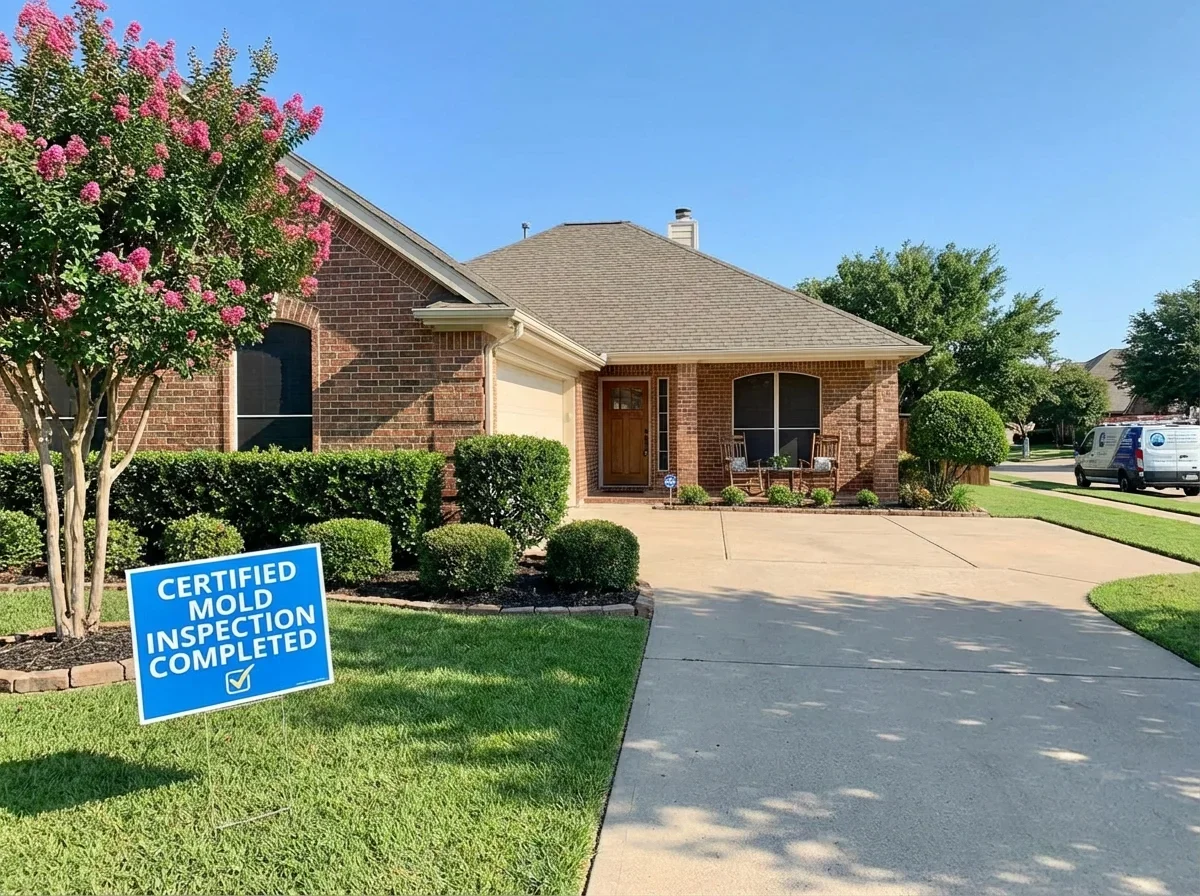
TDLR-licensed mold assessors start with visual inspection of high-risk areas: attics, crawl spaces, around HVAC systems, bathrooms, and previous water damage locations. They document conditions with photos and moisture readings.
| Testing Method | When Used | Report Timeline |
|---|---|---|
| Visual assessment only | No visible growth, low suspicion | Same day |
| Air sampling (spore trap) | Hidden mold suspected, odor present | 3-5 business days |
| Surface sampling (tape lift/swab) | Identify specific mold on visible growth | 5-7 business days |
| Combined air + surface | Comprehensive pre-listing or complex cases | 5-7 business days |
Air samples measure airborne spore concentrations. Surface samples identify mold species on visible growth. Lab analysis through accredited facilities provides genus-level identification — critical for distinguishing cosmetic mold from toxic species.
Report Delivery and Next Steps
You'll receive a written report detailing findings, moisture readings, lab results (if samples were taken), and recommendations. Reports specify locations, estimated affected square footage, and whether conditions exceed normal outdoor baselines.[2]
If mold is found, the report outlines remediation protocol requirements. For contamination affecting 25+ contiguous square feet, Texas requires licensed remediation contractors.[1] Smaller areas may qualify for homeowner cleanup following assessor guidelines.
✓ Choosing a Contractor
How to Choose a Mold Inspector for Your Transaction
Questions to Ask Before Hiring
- "What's your TDLR license number?" — Verify active status at tdlr.texas.gov before booking
- "Do you carry errors and omissions insurance?" — Protects all transaction parties if assessments are faulty
- "Which accredited lab analyzes your samples?" — AIHA-accredited labs ensure reliable results
- "What's included in your report?" — Should detail locations, moisture readings, lab results, and remediation protocols
- "How quickly will I receive results?" — Critical during time-limited option periods
- "Do you also perform remediation?" — Texas law prohibits assessors from remediating properties they inspect to prevent conflicts of interest[2]
TDLR Licensing Requirements in Texas
Texas requires separate licenses for mold assessment and remediation. Your inspector must hold a TDLR Mold Assessment Consultant or Mold Assessment Company license — not just a TREC home inspector license. TREC-licensed home inspectors can note suspected mold, but they cannot collect samples, perform lab analysis, or develop remediation protocols.
Red Flags That Should Concern You
- Offering to "fix the mold problem right after inspecting" (illegal dual role in Texas)
- No proof of current TDLR licensing or professional liability insurance
- Prices significantly below market ($200 for full inspections with lab work)
- Guaranteeing specific findings before inspection ("we'll find it" or "we won't find anything")
Compare licensed mold inspection professionals in your area before committing. Look for established companies with real estate agent references and verifiable transaction experience. During complex deals involving multiple properties or commercial transactions, consider specialists offering post-remediation verification services for comprehensive documentation.
Top Contractors for Real Estate Mold Inspection
View all →

Frequently Asked Questions
- Texas Department of Licensing and Regulation. "Consumer Protection Mold Brochure." https://www.tdlr.texas.gov/media/pdf/consumer-protection-mld-2025.pdf. Accessed April 02, 2026.
- Texas Department of State Health Services. "Texas Mold Assessment and Remediation Rules (TMARR)." https://www.environmentaleducation.com/documents/Mold%20Agency%20Documents/MoldRules.pdf. Accessed April 02, 2026.
- Texas Department of Licensing and Regulation. "Mold Remediation Notification Requirements." https://www.tdlr.texas.gov/mld/mldnotifications.htm. Accessed April 02, 2026.