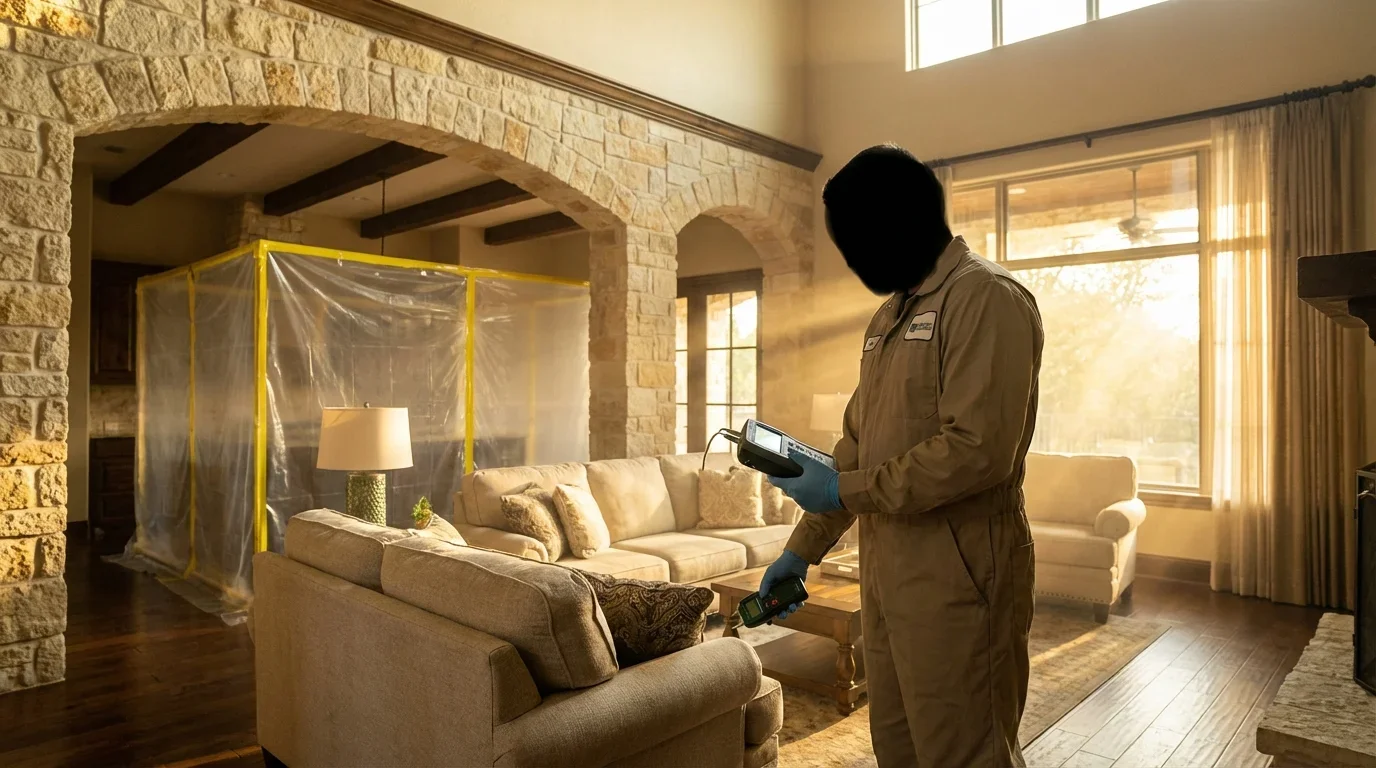
Proof Your Mold Problem Is Actually Gone
Independent testing that confirms your remediation worked—so you're not guessing about your family's safety or risking a failed inspection.
- Third-party verification protects your investment
- Required documentation for insurance and real estate transactions
- Catches incomplete remediation before you move back in
⚠ Common Issues
When Texas Law Requires Third-Party Clearance
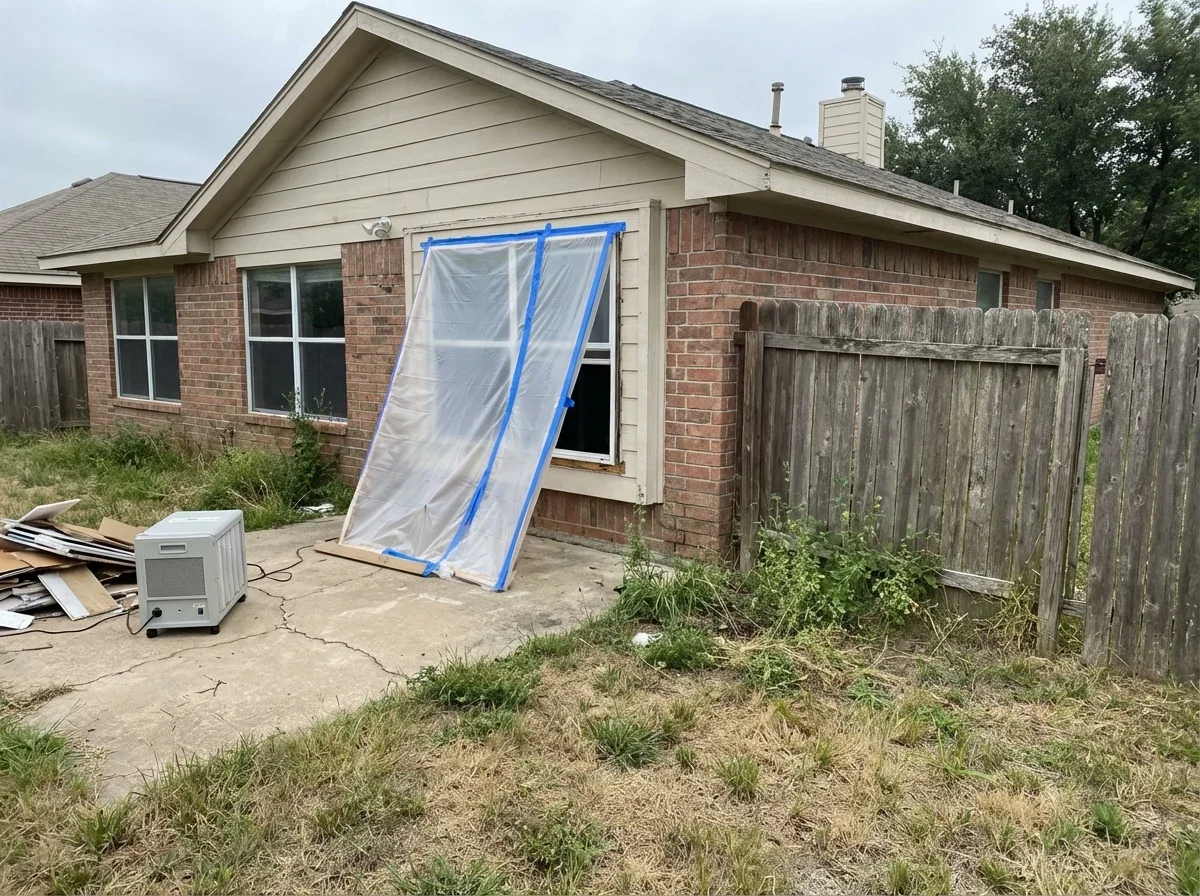
Texas regulations are explicit: a mold assessment consultant cannot be affiliated with the remediation company performing the work.[1] This separation protects you from conflicts of interest where contractors declare their own work successful.
You need independent post-remediation verification when:
- Insurance claims require documented clearance before payout
- Commercial properties, schools, or healthcare facilities demand compliance records
- Real estate transactions hinge on certified mold-free confirmation
- Any TDLR-licensed remediation project covering 25+ contiguous square feet[3]
- Your remediation contractor offers to "test it themselves" (red flag)
Houston and Dallas property managers know this well: tenants and buyers won't accept verbal assurances. They want lab results and a clearance certificate from someone with no financial stake in the remediation outcome.
Independence matters. A TDLR-licensed assessment consultant confirms the work area is free from visible mold, the protocol was followed, and the underlying moisture problem was fixed to prevent recurrence.[2]
Without third-party verification, you risk re-occupying a property with lingering contamination — or facing rejected insurance claims and stalled transactions.
$ Cost Guide
What Does Post-Remediation Verification Cost in Texas?
Clearance testing costs reflect sample volume, property size, and lab turnaround requirements. Budget for independent verification as a non-negotiable final step — not an optional add-on.
Residential Clearance Testing Costs
| Property Type | Typical Cost Range |
|---|---|
| Single-family home (standard protocol) | $300 - $600 |
| Multi-story or complex layout | $500 - $850 |
| Rush lab analysis (24-48 hour results) | +$150 - $300 |
Standard residential protocol includes visual inspection, 2-3 air samples, lab analysis, and certificate. Corpus Christi coastal properties with widespread hurricane damage may require additional sample locations, pushing costs toward the higher range.
Commercial and Multi-Unit Pricing
| Property Type | Typical Cost Range |
|---|---|
| Small commercial (<5,000 sq ft) | $500 - $1,200 |
| Large commercial/multi-family | $1,500 - $3,500+ |
| Per-unit testing (apartments, condos) | $200 - $400 per unit |
Cost drivers include:
- Sample count — larger El Paso warehouses or Dallas office buildings need proportionally more air and surface samples
- Accessibility — attic or crawl space remediation adds inspection time
- Lab turnaround — standard 5-day results versus 48-hour rush service
- Documentation complexity — insurance claim packages require detailed reporting
Texas TDLR assessors set their own fees, so expect variation. The cheapest option isn't always the smartest — you're paying for credibility and independence, not just a test kit.
Most insurance policies cover clearance testing costs when mold damage exceeds policy thresholds. Confirm coverage before scheduling to avoid surprise out-of-pocket expenses.
→ What to Expect
The Post-Remediation Verification Process
Independent clearance testing follows a four-stage protocol designed to confirm complete remediation success.
1. Visual Inspection and Documentation Review
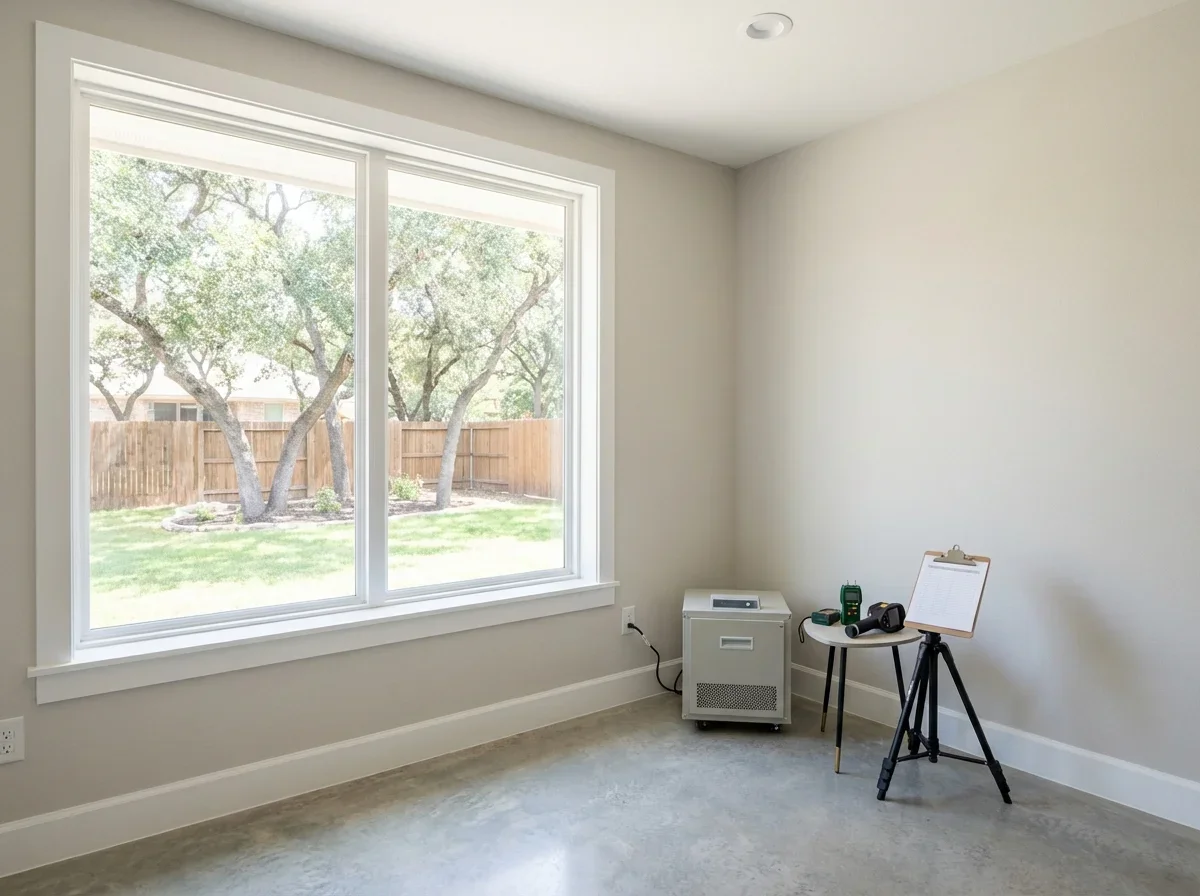
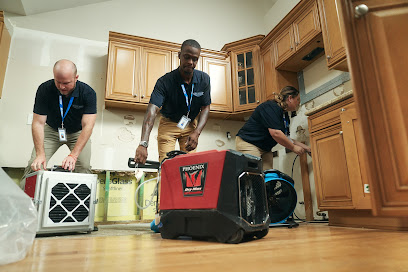
The TDLR-licensed assessor inspects all remediated areas with moisture meters and thermal imaging. They verify containment barriers were used, HEPA filtration ran properly, and all visible mold and staining are gone. Protocol compliance is checked against the original remediation plan.
2. Air and Surface Sampling Protocols
Strategic sample collection compares indoor air quality to outdoor baseline conditions. Typical residential projects in San Antonio or Austin require 2-4 air samples (remediated area, adjacent rooms, outdoor control). Surface samples confirm no residual spores on cleaned materials. High-humidity Gulf Coast properties often need additional moisture readings.
3. Laboratory Analysis and Result Interpretation
Samples ship to AIHA-accredited labs for spore identification and quantification. Turnaround ranges from 48 hours (rush) to 5 business days (standard). The assessor compares indoor spore counts to outdoor baseline — indoor levels should be equal to or lower, with no elevation of toxigenic species.
4. Clearance Certificate Issuance
If results pass, you receive a formal clearance certificate documenting:
- Lab-verified spore count data and species identification
- Comparison to outdoor control samples
- Visual inspection findings and photo documentation
- Safe re-occupancy recommendation
- TDLR assessor license number and signature
If results fail, the report details specific issues requiring additional remediation. The cycle repeats until clearance standards are met.
Most Fort Worth and Plano residential clearances complete within 3-5 days from initial testing to certificate delivery.
✓ Choosing a Contractor
How to Choose a Post-Remediation Verification Company
Selecting the right assessor protects your investment and ensures regulatory compliance. Use this checklist to evaluate candidates.
Questions to Ask
- What is your TDLR Mold Assessment Consultant license number? (Verify at tdlr.texas.gov — non-negotiable requirement)
- Are you financially independent from the remediation contractor? (Any affiliation voids the clearance)
- Which AIHA-accredited lab do you use for analysis?
- What is your standard sample protocol for a property my size?
- How long until I receive the clearance certificate or re-remediation recommendations?
- Do you provide documentation formatted for insurance claims or real estate transactions?
Red Flags
- Assessor offers to connect you with "their remediation team" (conflict of interest)
- No TDLR license number displayed on website or business cards
- Verbal assurances without lab analysis ("looks good to me")
- Prices significantly below market ($150-200 clearances cut corners)
Texas Licensing Requirements
Texas law requires separate licenses for assessment versus remediation.[1] Your clearance assessor must hold a current TDLR Mold Assessment Consultant license and cannot perform remediation work on the same property. This separation ensures objective, conflict-free verification.
Look for assessors who reference indoor air quality testing protocols and understand the difference between clearance testing and initial mold inspection work.
Compare multiple licensed assessors in your area. The right professional delivers fast lab results, clear documentation, and independence you can defend to insurers and buyers.
Top Contractors for Post-Remediation Verification
View all →

Frequently Asked Questions
- Texas Department of Licensing and Regulation (via Cornell Law). "16 Tex. Admin. Code § 78.140 - Post-Remediation Assessment and Clearance." https://www.law.cornell.edu/regulations/texas/16-Tex-Admin-Code-SS-78-140. Accessed April 02, 2026.
- Texas Department of Licensing and Regulation (TDLR regulations quoted). "§295.324. POST-REMEDIATION ASSESSMENT AND CLEARANCE." https://www.moldinspectiontexas.com/services/post-mold-remediation-clearance-inspections-and-testing. Accessed April 02, 2026.
- Texas Department of Licensing and Regulation (TDLR). "Texas Mold Remediation Notification Requirements." https://www.tdlr.texas.gov/mld/mldnotifications.htm. Accessed April 02, 2026.