
That Musty Smell Won't Disappear on Its Own
Mold odor means active growth is happening behind your walls, under floors, or in your HVAC system. Masking it with air fresheners only delays the problem.
- Breathe clean air again without that constant mustiness
- Eliminate odors at the source, not just cover them up
- Protect your family from ongoing mold exposure
⚠ Common Issues
What Causes Mold Odor in Texas Homes?
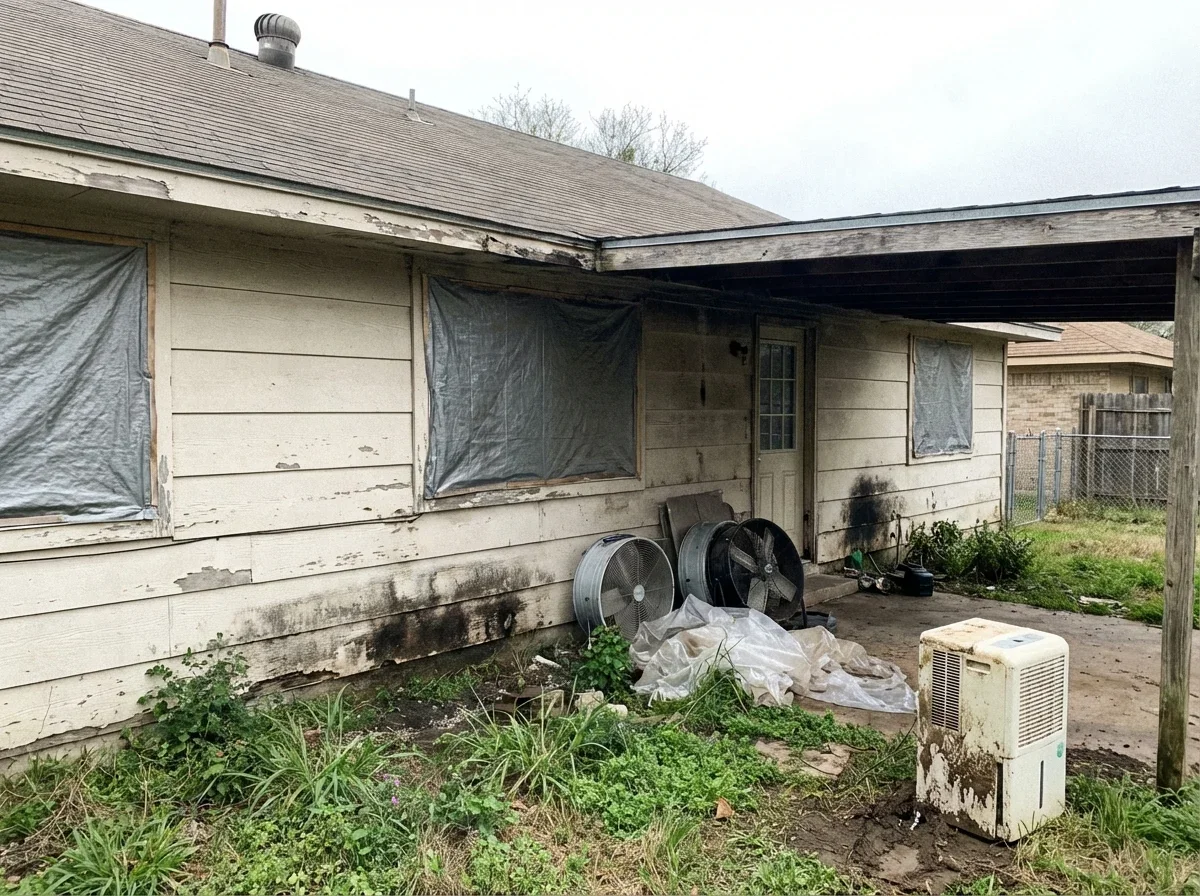
That persistent musty smell isn't just unpleasant — it's your first warning that mold is actively growing somewhere. In Texas homes, the combination of extreme humidity along the Gulf Coast and post-storm water intrusion creates perfect conditions for hidden mold colonies that announce themselves through smell long before you see visible growth.
You're likely dealing with mold if you notice:
- Musty odor that worsens after running AC or during humid months (May-September)
- Smell concentrated near HVAC returns, crawl space access, or bathroom walls
- Odor that returns within days after cleaning or using air fresheners
- Post-flooding smell that never fully disappeared, even months after water damage
Hidden Moisture Sources
In Houston and Corpus Christi homes, attic condensation from HVAC ducts meeting superheated roof spaces creates ideal mold conditions you'll smell before you see. Dallas and Fort Worth properties often harbor crawl space mold from ground moisture wicking up through inadequate vapor barriers. The Gulf Coast humidity alone can sustain mold growth year-round — your nose is detecting microbial volatile organic compounds (MVOCs) released as mold digests building materials.[3]
Odor means active growth. Dead mold doesn't smell — if you're detecting that characteristic musty odor, you have a living colony somewhere releasing spores into your air.
Air fresheners and ozone machines only mask the problem temporarily. Professional odor removal starts by finding and eliminating the moisture source feeding the mold.
→ What to Expect
The Mold Odor Removal Process
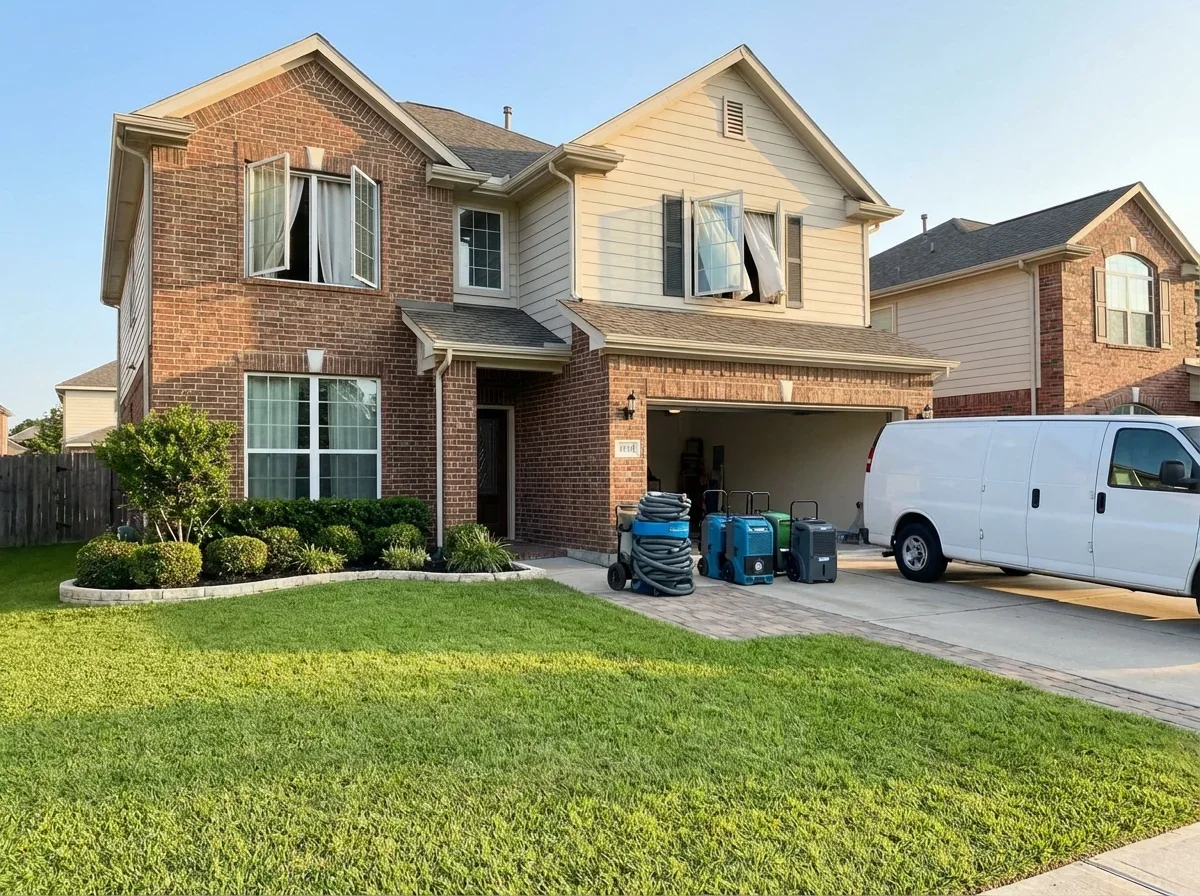
True odor elimination happens in four distinct phases — skipping any step means the smell returns within weeks.
Step 1: Professional Inspection and Moisture Mapping
Licensed contractors use thermal imaging and moisture meters to identify exactly where water is entering and where mold is growing. In Texas homes, this often reveals HVAC condensation dripping into wall cavities, roof leaks saturating attic insulation, or post-Harvey water damage that never fully dried. This inspection typically takes 2-4 hours and determines whether you need a formal mold assessment for areas exceeding 25 contiguous square feet.[1]
Step 2: Source Remediation and Containment
Before any air treatment, the actual mold must be physically removed. Contractors establish containment barriers with negative air pressure, then remove contaminated materials following TDLR protocols.[2] This isn't spraying bleach on surfaces — it's cutting out drywall, removing insulation, HEPA-vacuuming structural members, and treating remaining surfaces with EPA-registered antimicrobials. Most residential projects take 2-5 days depending on the affected square footage.
Step 3: Air Treatment and Deodorization
Only after source removal do air treatment technologies work effectively:
| Technology | Best For | Duration | Safety Notes |
|---|---|---|---|
| HEPA Air Scrubbers | Active spore removal during remediation | Continuous during work | Safe with occupants present |
| Hydroxyl Generators | Occupied spaces needing deodorization | 24-72 hours | Safe around people and pets |
| Ozone Treatment | Unoccupied spaces with severe odor | 12-24 hours | Building must be vacant |
San Antonio and Austin contractors typically use hydroxyl generators for occupied homes, reserving ozone for vacant properties or final treatments where occupants can vacate for 24 hours.
Step 4: Verification and Prevention
Professional jobs conclude with post-remediation air quality testing to confirm spore counts have returned to normal outdoor levels. Contractors then address the original moisture source — repairing roof penetrations, improving ventilation, installing vapor barriers, or rerouting HVAC condensate drains.
✓ Choosing a Contractor
How to Choose a Mold Odor Removal Contractor in Texas
Texas requires specific licensing for mold work — verify credentials before signing any contract.
Required TDLR Licensing and Certifications
Questions to ask every contractor:
- Is your company TDLR-licensed for mold remediation? (Verify license numbers at tdlr.texas.gov)
- Will a licensed mold assessment consultant develop the remediation protocol if my project exceeds 25 square feet?
- Do your technicians carry individual contractor licenses, or just company-level registration?
- What liability insurance and workers' compensation coverage do you maintain?
- Will you provide a written scope of work following TDLR standards before starting?
- How do you verify remediation success — visual inspection only or post-testing?
Red Flags: Odor Masking vs. True Remediation
Warning signs of contractors to avoid:
- Promises to eliminate odor without identifying the moisture source
- Offers ozone treatment or fogging as the primary solution without physical mold removal
- No mention of containment, negative air pressure, or HEPA filtration
- Refuses to provide TDLR license numbers or insurance certificates
- Quotes significantly below others without explaining why
Legitimate contractors explain that odor removal is a byproduct of proper mold remediation, not a standalone service. If they're not discussing moisture control, material removal, and air quality verification, they're planning to mask symptoms temporarily.
Compare at least three licensed contractors in your area. Use our directory to verify TDLR credentials, read verified customer reviews, and request detailed written estimates that specify containment procedures, disposal methods, and post-remediation testing. The lowest bid often means corners will be cut — and that musty smell will return within months.
For ongoing prevention after remediation, consider mold prevention services to maintain the improvements. If your odor stems from specific areas, specialized services like attic mold removal or crawl space mold removal may be appropriate.
Top Contractors for Mold Odor Removal
View all →

Frequently Asked Questions
- Texas Department of Licensing and Regulation (TDLR). "Consumer Protection - mold.pdf." https://www.tdlr.texas.gov/media/pdf/Consumer%20Protection%20-%20mold.pdf. Accessed April 02, 2026.
- Texas Department of Licensing and Regulation (TDLR). "Texas Mold Remediation Notification Requirements." https://www.tdlr.texas.gov/mld/mldnotifications.htm. Accessed April 02, 2026.
- Texas A&M University (Texas AgriLife Extension). "Mold - An Indoor Air Pollutant." https://texashelp.tamu.edu/wp-content/uploads/2016/02/E332-mold-an-indoor-air-pollutant.pdf. Accessed April 02, 2026.