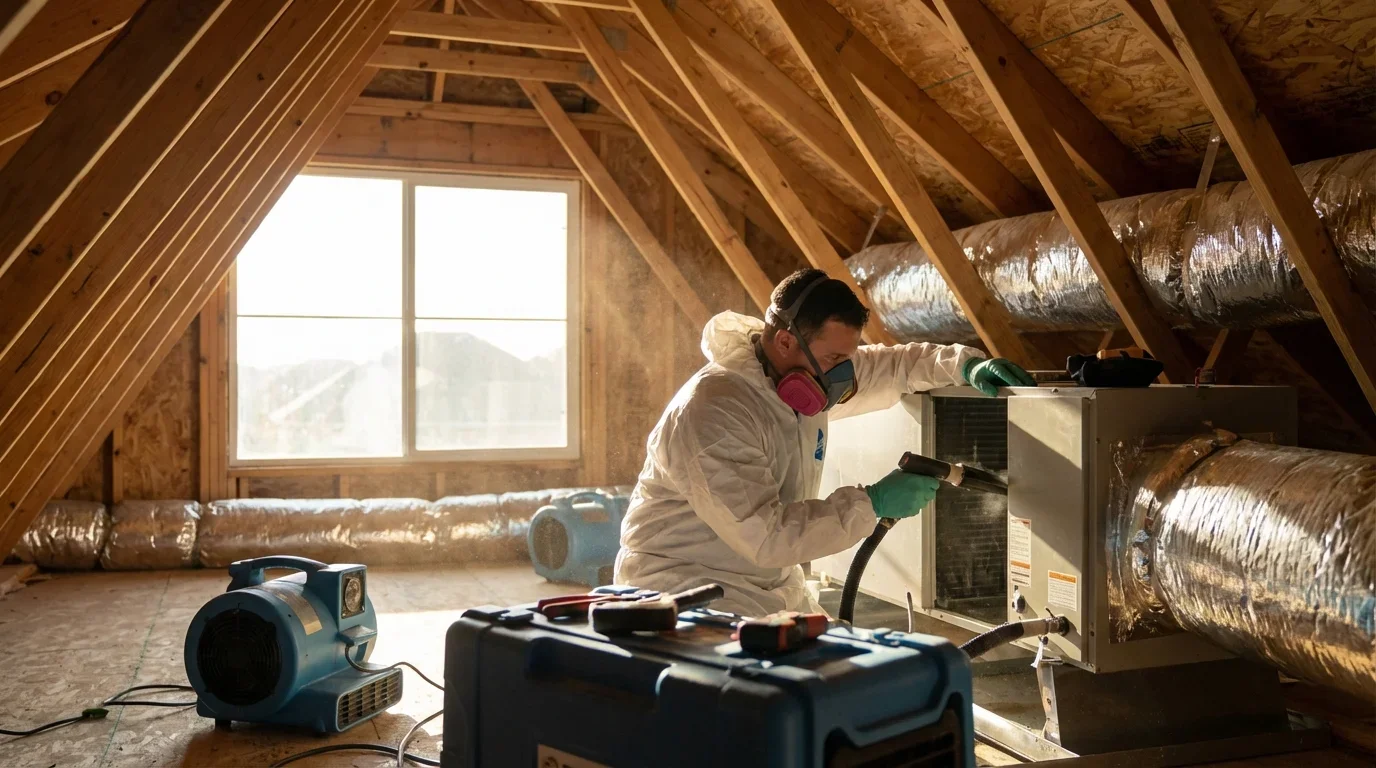
Your AC Shouldn't Make You Sick
Mold in your HVAC system spreads spores throughout your entire home with every cooling cycle. Texas humidity makes it worse.
- Musty odors every time the AC runs
- Allergies and respiratory issues that won't quit
- Black growth on vents and ductwork
⚠ Common Issues
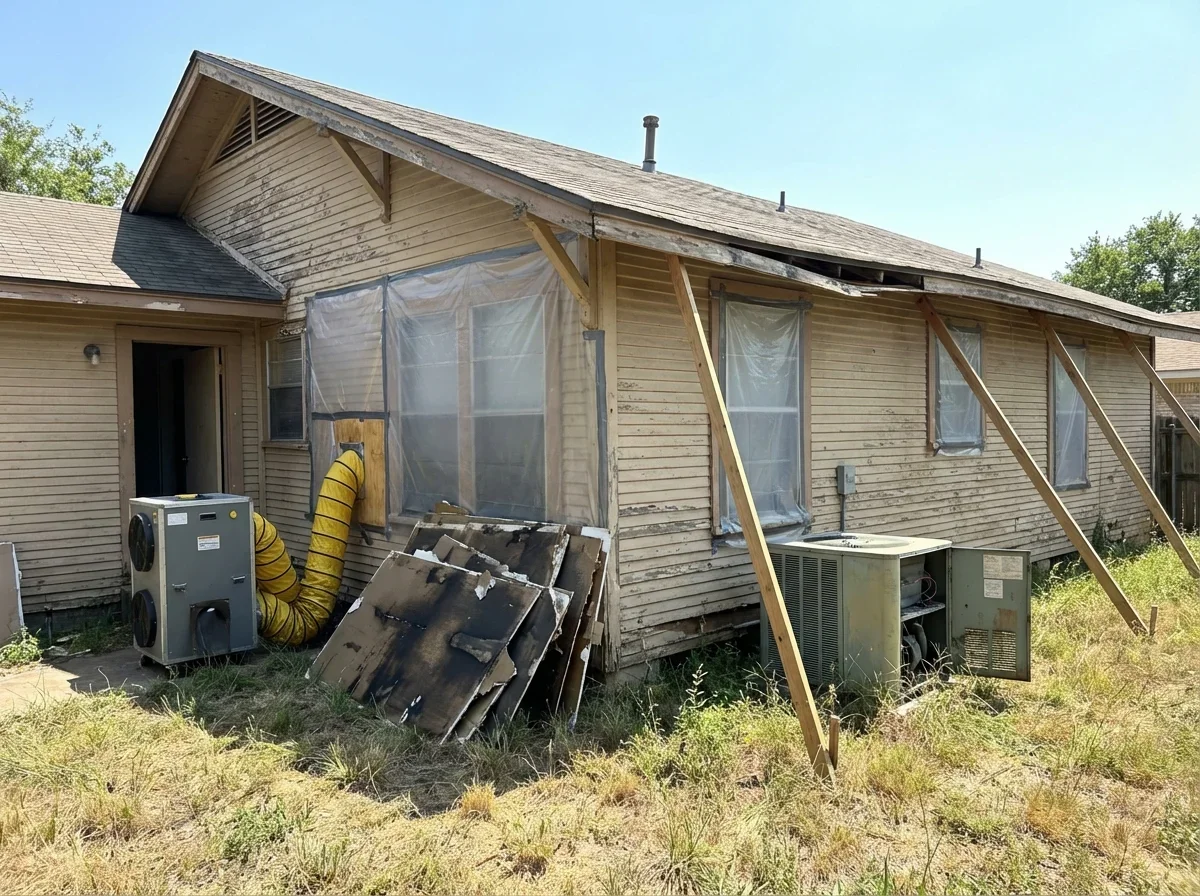
When Do You Need HVAC Mold Removal?
HVAC mold isn't a maintenance issue — it's a health hazard requiring licensed remediation, not just cleaning. In Houston and San Antonio, where indoor humidity routinely hits 70-90% during summer months, air conditioners work overtime. That constant condensation on evaporator coils creates breeding grounds for mold colonies.
Warning Signs in Your AC System
You need remediation — not routine service — when you notice:
- Musty or earthy odor that only appears when the AC runs
- Black or greenish dust accumulating around supply vents
- Visible mold growth on vent grilles or inside ductwork
- Water stains or rust on air handler cabinet panels
- Increased respiratory symptoms (coughing, wheezing, eye irritation) that improve when you leave the house
Health Symptoms That Point to Duct Mold
Indoor air quality degrades fast. Mold spores circulate through your system 8-12 times per hour in a typical Texas home. Children, elderly residents, and anyone with asthma or allergies experience symptoms first — congestion, headaches, fatigue that lifts outdoors.
Texas humidity accelerates the problem. An AC system with minor condensation issues in May can develop widespread mold colonization by August in Gulf Coast climates.
The distinction matters: routine HVAC cleaning addresses dust and debris. Mold remediation requires containment, EPA-registered biocides, and post-treatment verification testing.[1]
$ Cost Guide
What Does HVAC Mold Removal Cost in Texas?
Prices reflect the difference between duct cleaning ($300-$500) and licensed mold remediation — containment protocols, specialized equipment, and mandatory clearance testing add significant cost.
Inspection and Assessment Costs
| Service | Typical Cost Range |
|---|---|
| TDLR-licensed mold assessment (HVAC-focused) | $200 - $500 |
| Air quality sampling (pre-remediation baseline) | $150 - $300 per sample set |
| Thermal imaging inspection (hidden moisture) | $100 - $250 |
Assessment costs in Corpus Christi and other coastal markets run higher when hurricane damage or chronic flooding complicates moisture mapping.
Treatment Costs by System Component
| Remediation Scope | Typical Cost Range |
|---|---|
| Evaporator coil cleaning + treatment | $400 - $1,200 |
| Duct interior remediation (per linear foot) | $15 - $35 |
| Full duct system treatment (1,500-2,500 sq ft home) | $800 - $2,500 |
| Air handler cabinet remediation | $300 - $800 |
| Complete system remediation (extensive contamination) | $2,000 - $8,000+ |
| Post-remediation clearance testing | $200 - $400 |
Cost factors that increase pricing:
- Ductwork accessibility (attic vs. slab installations)
- Extent of coil contamination (surface vs. deep fin penetration)
- Insulated flex duct replacement (often necessary in humid climates)
- Condensate drain system redesign to prevent recurrence
- Emergency service timing (peak summer AC demand)
Most El Paso and Lubbock projects cost less than Houston work — the arid West Texas climate creates fewer chronic moisture issues. Gulf Coast remediation routinely requires duct insulation replacement due to persistent condensation damage.
Insurance coverage varies. Policies typically cover mold remediation resulting from sudden water damage (burst pipes, storm flooding) but exclude long-term maintenance issues like clogged drain pans.
For homes with recurring issues, pairing remediation with Indoor Air Quality Testing and ongoing Mold Prevention Services addresses root causes — usually inadequate dehumidification or AC sizing problems in Texas humidity.
→ What to Expect
The HVAC Mold Remediation Process
This isn't a standard service call. Texas law requires licensed mold remediation contractors — HVAC techs can't legally perform this work unless they hold separate TDLR mold credentials.[2]
Step 1: Licensed Assessment and Protocol Development
A TDLR-licensed mold assessor inspects your entire HVAC system — air handler, evaporator coil, condensate drain pan, supply and return ducts. They measure moisture levels, collect air samples, and photograph affected areas. In Dallas and Austin, assessors frequently find mold behind insulated ductwork where condensation accumulates unnoticed.
The written protocol specifies which components need remediation, which require replacement, and the containment strategy.
Step 2: Containment and Air Filtration
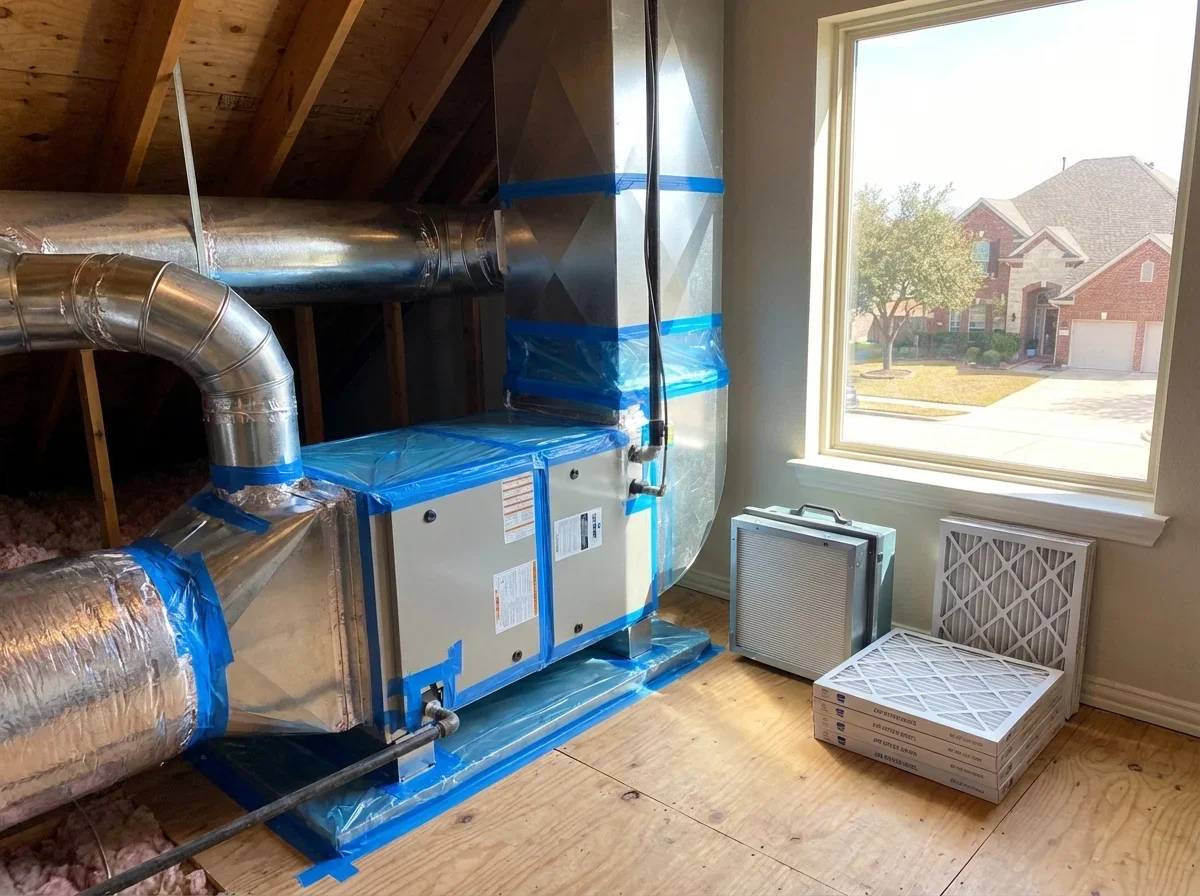
Unlike duct cleaning, remediation requires isolating your HVAC system. Technicians seal supply registers with plastic sheeting, establish negative air pressure with HEPA filtration units, and contain the work area to prevent cross-contamination. The AC stays off during treatment.
Step 3: Removal and Treatment
| System Component | Remediation Method |
|---|---|
| Evaporator coils | HEPA vacuuming + EPA-registered biocide application |
| Ductwork (interior) | Physical removal + antimicrobial fogging |
| Air handler cabinet | Cleaning or component replacement |
| Condensate drain pan | Disinfection + drain line treatment |
Remediation follows IICRC S520 protocols — the industry standard for mold cleanup. Heavily contaminated components (porous insulation, corroded drain pans) get replaced rather than treated.
Step 4: Clearance Testing and Verification
Post-remediation verification isn't optional. An independent assessor collects air samples and visually inspects treated areas. Clearance testing confirms mold spore counts have returned to normal fungal ecology levels.[3]
Most residential projects in Fort Worth and Plano take 2-4 days from assessment to clearance, depending on system size and contamination extent.
✓ Choosing a Contractor
How to Choose an HVAC Mold Remediation Contractor in Texas
The wrong contractor won't just waste money — unlicensed work creates legal liability and health risks. Texas requires specific credentials that most HVAC companies don't hold.[2]
TDLR Licensing Requirements
Verify these credentials before signing any contract:
- TDLR Mold Remediation Contractor license (not just HVAC license)
- Active Texas Department of Insurance and Regulation registration
- Liability insurance minimum $1 million (standard for mold work)
- IICRC-certified technicians (Applied Microbial Remediation or specific HVAC restoration training)
- Independent assessor relationship for clearance testing (cannot self-verify)
Questions to Ask
- "What's your TDLR mold remediation license number?" (verify at tdlr.texas.gov)
- "Will you provide a written remediation protocol before starting work?"
- "Who performs your post-remediation clearance testing?" (must be independent)
- "Do you follow IICRC S520 standards for HVAC remediation?"
- "What's included in your warranty, and does it cover recurrence?"
- "Can you provide references from projects in [your city] with similar climate conditions?"
Red Flags
- "We can clean that mold during a routine duct cleaning" — inadequate containment
- Pressure to skip assessment or clearance testing — violates Texas standards
- HVAC contractor without separate mold remediation license — illegal
- Verbal-only quotes without written scope of work — enforcement issues later
HVAC Contractor vs. Mold Remediation Specialist
Standard HVAC technicians handle mechanical repairs and routine maintenance. Licensed mold remediation contractors manage contamination — two different skill sets. The best projects involve both: remediators handle the mold, then HVAC pros address the mechanical failures (oversized units, inadequate dehumidification) that caused it.
For properties with water damage origins, consider contractors experienced in Water Damage Mold Removal who understand how flooding events create HVAC contamination. Post-storm remediation in Arlington and San Antonio requires hurricane-specific protocols beyond typical AC mold treatment.
Compare multiple licensed contractors through the directory. Request copies of TDLR licenses, insurance certificates, and sample remediation protocols before scheduling assessments.
Top Contractors for HVAC Mold Removal
View all →


Frequently Asked Questions
- U.S. Environmental Protection Agency (EPA). "Mold Remediation in Schools and Commercial Buildings." https://www.epa.gov/mold/mold-remediation-schools-and-commercial-buildings. Accessed April 02, 2026.
- Texas Department of Licensing and Regulation (TDLR). "Mold Remediation." https://www.tdlr.texas.gov/mold/mold.htm. Accessed April 02, 2026.
- Institute of Inspection Cleaning and Restoration Certification (IICRC). "IICRC S520 Standard for Professional Mold Remediation." https://iicrc.org/wp-content/uploads/2022/03/S520ReferenceGuide.pdf. Accessed April 02, 2026.