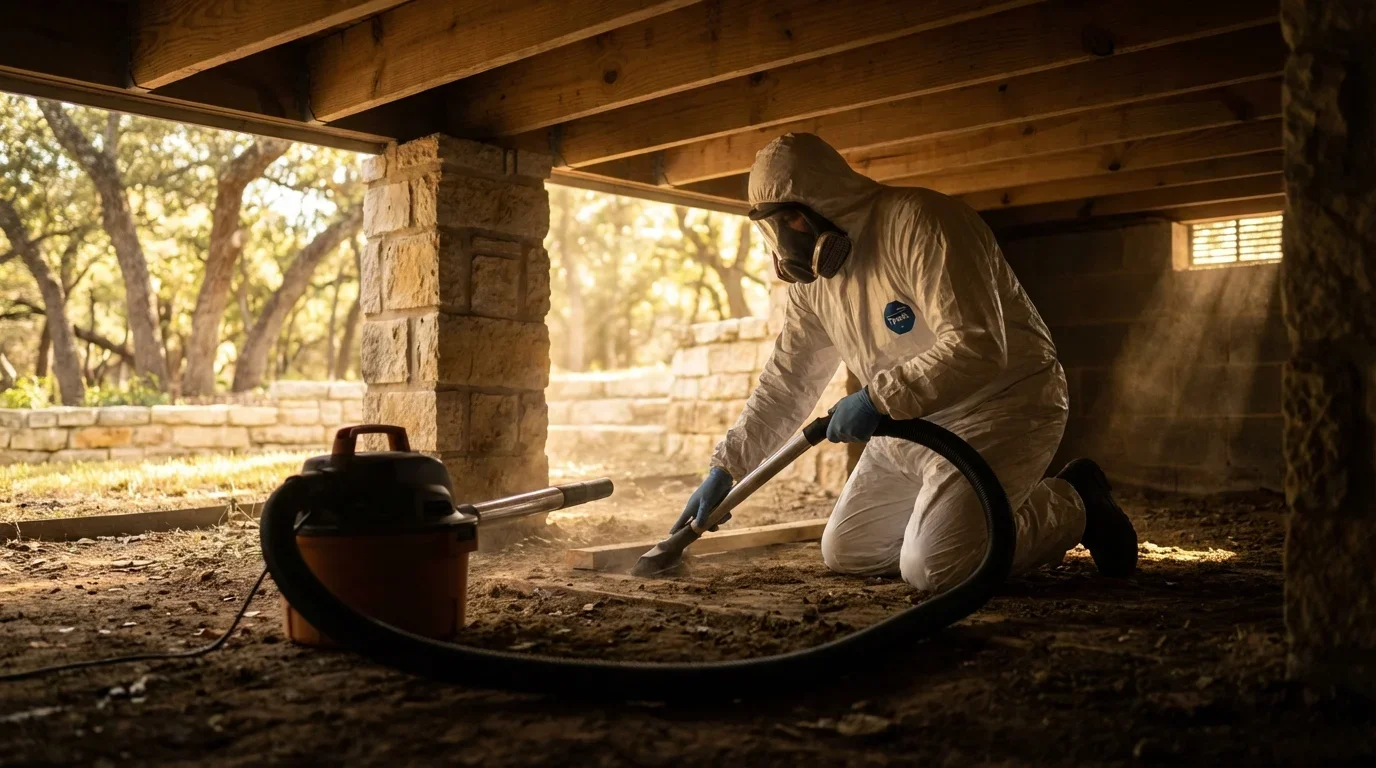
Crawl Space Mold Won't Clear Itself Out
That musty smell isn't going away on its own. Texas humidity turns crawl spaces into mold factories, threatening your home's foundation and your family's health.
- Eliminate toxic mold at the source
- Professional vapor barriers that actually work
- Stop humidity before it spreads upstairs
⚠ Common Issues
When Do You Need Crawl Space Mold Removal?
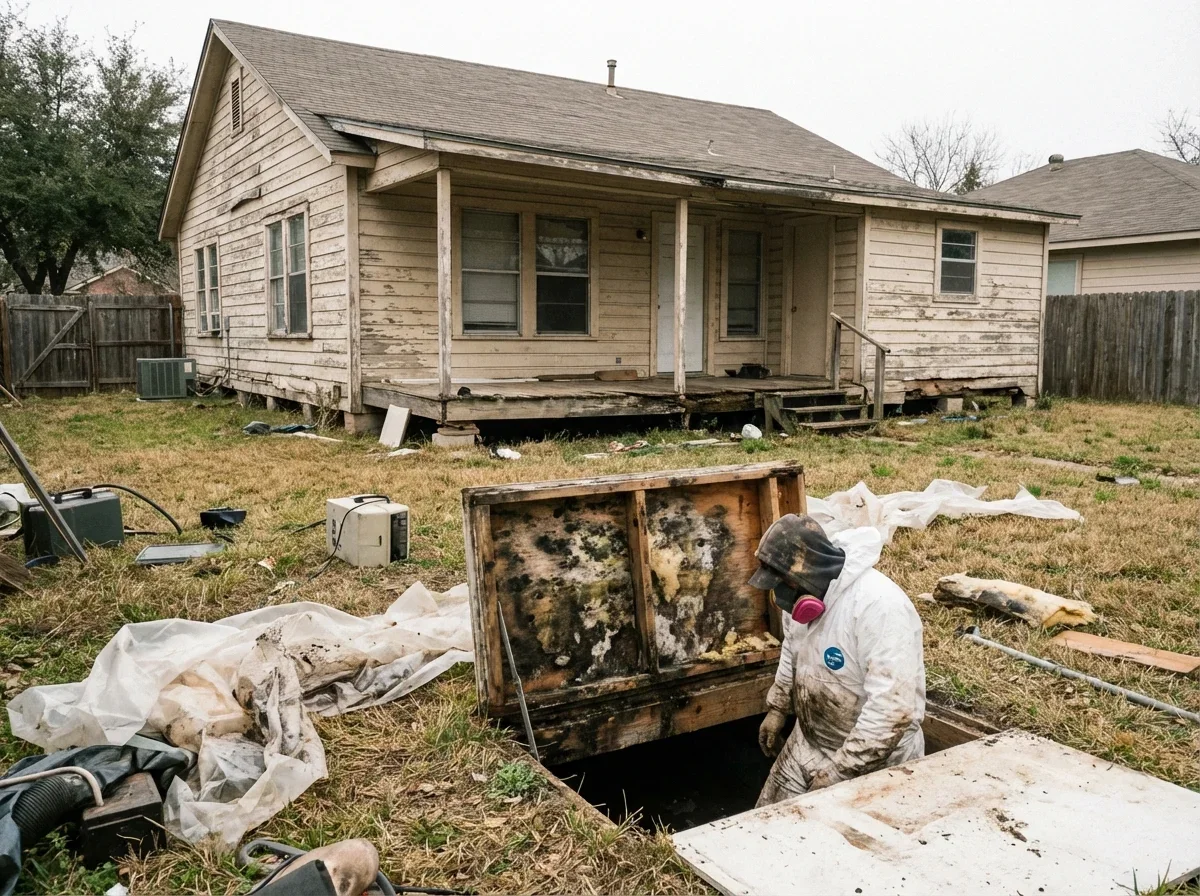
You smell it before you see it. That musty, earthy odor rising through your floors signals mold growing in the crawl space below. In Texas pier-and-beam homes — common throughout Houston, Austin, and San Antonio — high humidity and poor ventilation turn these dark spaces into mold incubators.
Warning signs point to active growth:
- Persistent musty smell indoors, especially near floor registers
- Visible mold on floor joists, insulation, or vapor barriers
- Condensation or standing water in the crawl space
- Increased allergy symptoms or respiratory irritation
- Warped or soft flooring above the crawl space
- HVAC struggles to maintain temperature (moisture-soaked insulation)
Texas humidity accelerates crawl space mold. Gulf Coast regions regularly see 70-90% humidity during summer months, and a single flooding event can trigger growth within 24-48 hours.[3]
Mold in crawl spaces doesn't stay contained. Your HVAC system pulls air from below, distributing spores throughout your home. Structural damage follows — rotted floor joists, compromised support beams, destroyed insulation. The longer it grows, the more invasive (and expensive) the remediation becomes.
$ Cost Guide
What Does Crawl Space Mold Removal Cost in Texas?
Expect to invest $1,500–$6,000 for crawl space mold remediation, with costs scaling based on contamination extent and moisture control needs. Here's the breakdown:
| Service Component | Typical Cost Range |
|---|---|
| Inspection and air testing | $300 - $700 |
| Mold removal (800-1,200 sq ft crawl space) | $1,200 - $3,500 |
| Vapor barrier installation (6-mil) | $0.50 - $1.50/sq ft |
| Encapsulation (full sealing, insulation) | $3,000 - $8,000 |
| Dehumidifier installation | $800 - $1,800 |
| Post-remediation testing | $200 - $500 |
Cost Factors: Size, Severity, and Access
Size: Larger crawl spaces require more materials and labor. A 1,500-square-foot home in Plano might run $2,800, while a 3,000-square-foot property in Fort Worth reaches $5,200.
Severity: Light surface mold on joists costs less than structural damage requiring beam replacement or subfloor removal. Heavy contamination adds 30-50% to base pricing.
Access: Tight clearances (less than 18 inches), multiple support piers, or difficult entry points increase labor time and costs.
Encapsulation and Moisture Control Costs
Remediation-only addresses existing mold but leaves humidity problems intact — expect regrowth within months in Texas climate. Encapsulation costs more upfront ($3,000–$8,000 additional) but eliminates moisture sources permanently. In Gulf Coast regions prone to hurricane flooding or in areas with high water tables, encapsulation delivers better long-term ROI.
Most Texas contractors recommend pairing remediation with at least basic vapor barrier installation ($600–$1,800 for materials and labor). Full encapsulation makes sense for chronic moisture issues or homes with indoor air quality testing showing elevated spore counts in living areas.
Insurance note: Flood damage may trigger coverage, but gradual humidity-related mold often falls outside standard homeowner policies. TDLR-licensed contractors provide documentation required for claims.[2]
→ What to Expect
The Crawl Space Mold Remediation Process
Texas requires licensed contractors for any mold remediation exceeding 25 square feet — and most crawl space projects surpass that threshold immediately.[1] Here's what proper remediation looks like:
Inspection and Air Quality Testing
A licensed TDLR assessor inspects the crawl space, identifies mold species, measures moisture levels, and collects air samples. Testing determines contamination extent and whether spores have spread to living areas. Thermal imaging reveals hidden moisture in joists and subfloors.
Containment, Removal, and Treatment
- Containment setup: Negative air pressure machines and polyethylene barriers isolate the crawl space from living areas
- Material removal: Contaminated insulation, vapor barriers, and damaged wood come out in sealed bags
- HEPA vacuuming: All surfaces scrubbed clean of visible mold and debris
- Antimicrobial treatment: EPA-registered biocides applied to joists, beams, and subfloors
- Air scrubbing: HEPA filtration runs continuously during work to capture airborne spores
Vapor Barrier Installation and Humidity Control
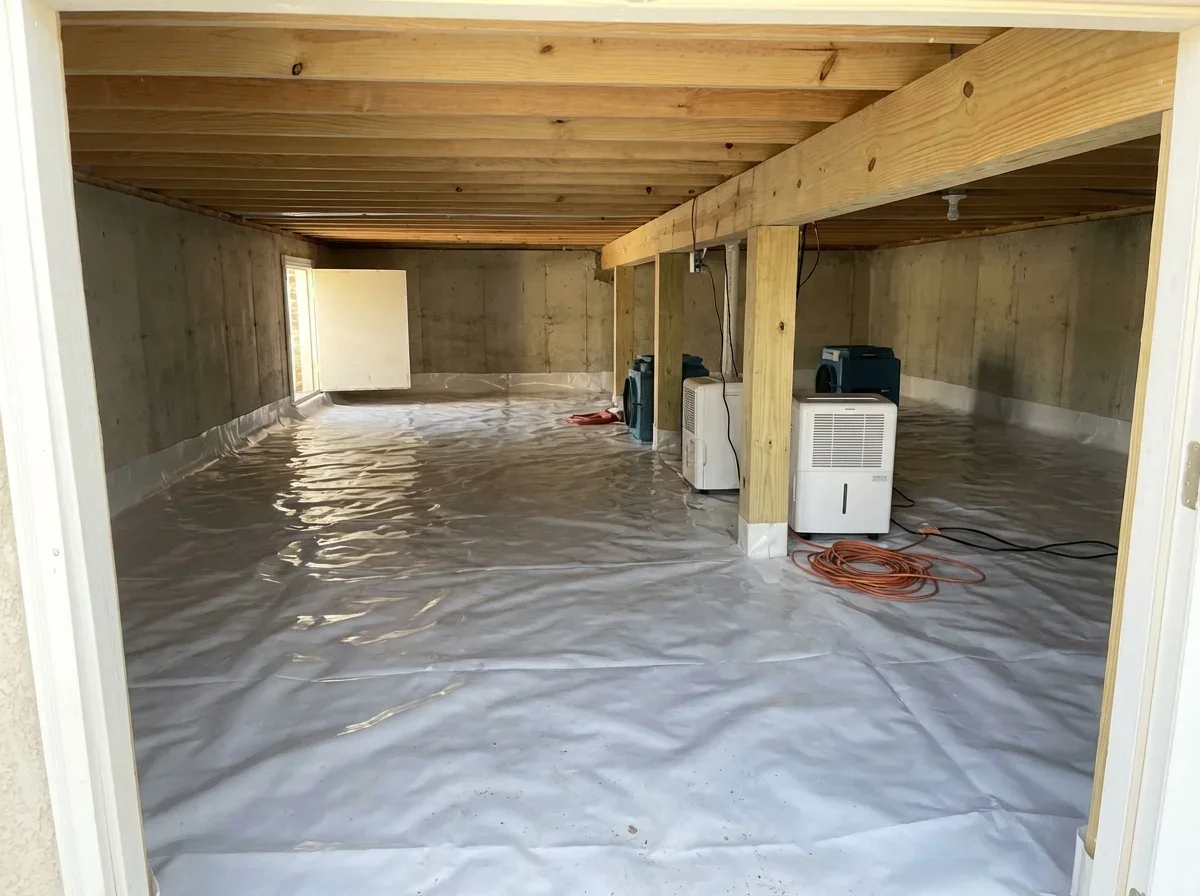
After remediation, moisture control prevents recurrence. Contractors install 6-mil (minimum) or 10-mil reinforced vapor barriers across the entire crawl space floor, sealed at seams and anchored to foundation walls. Dehumidifiers maintain 50-55% relative humidity year-round — critical in humid cities like Corpus Christi and Dallas where summer moisture fuels regrowth.
Encapsulation goes further: sealed vents, insulated walls, conditioned air circulation. For Texas pier-and-beam foundations prone to flooding, this comprehensive approach stops the cycle.
Timeline: Most residential crawl space jobs take 2-5 days depending on size and severity. Post-remediation air testing confirms clearance before reoccupation.
✓ Choosing a Contractor
How to Choose a Crawl Space Mold Removal Contractor
Texas law mandates licensing for mold work exceeding 25 square feet — and crawl space jobs always exceed that threshold.[1] Verify credentials before signing contracts.
Questions to ask:
- Do you hold an active TDLR mold remediation company license? (Verify at tdlr.texas.gov)
- Are individual technicians licensed through TDLR? (Each worker needs state credentials)
- What certifications do you carry? (IICRC-certified firms follow industry protocols)
- Do you provide written remediation protocols before starting? (Outlines containment, removal methods, timeline)
- What's included in post-remediation verification? (Air testing, clearance report, warranty terms)
- How do you address moisture sources? (Vapor barriers, dehumidification, encapsulation recommendations)
Red flags:
- "We don't need licensing for small jobs" (False — Texas requires it for >25 sq ft)[2]
- Quotes without crawl space inspection (Legitimate pricing requires assessment)
- Pressure to skip post-remediation testing (Verification confirms successful treatment)
- No written protocols or timeline (Professional contractors document everything)
Texas licensing requirements: TDLR issues separate licenses for mold assessment companies and mold remediation companies. Many firms hold both, allowing comprehensive service from testing through clearance. Liability insurance (minimum $1 million) protects homeowners from contractor errors.
Compare contractors offering mold inspection and remediation services together — integrated providers streamline communication and accountability. Look for firms that emphasize moisture control alongside removal; stopping mold without fixing humidity guarantees you'll pay for remediation again in 12-18 months.
Top Contractors for Crawl Space Mold Removal
View all →


Frequently Asked Questions
- Texas Department of Licensing and Regulation (TDLR). "Mold Abatement Services." https://www.tdlr.texas.gov/mold/mold.htm. Accessed April 02, 2026.
- Texas Attorney General's Office. "Mold Remediation in Texas." https://www.tsa.texas.gov/consumer-protection/mold-remediation. Accessed April 02, 2026.
- Texas Commission on Environmental Quality (TCEQ). "Texas Mold Guidance: Guidelines for Environmentally Sound Building Demolition and Renovation." https://www.tceq.texas.gov/assets/public/comm_exec/pubs/rg/rg-454.pdf. Accessed April 02, 2026.