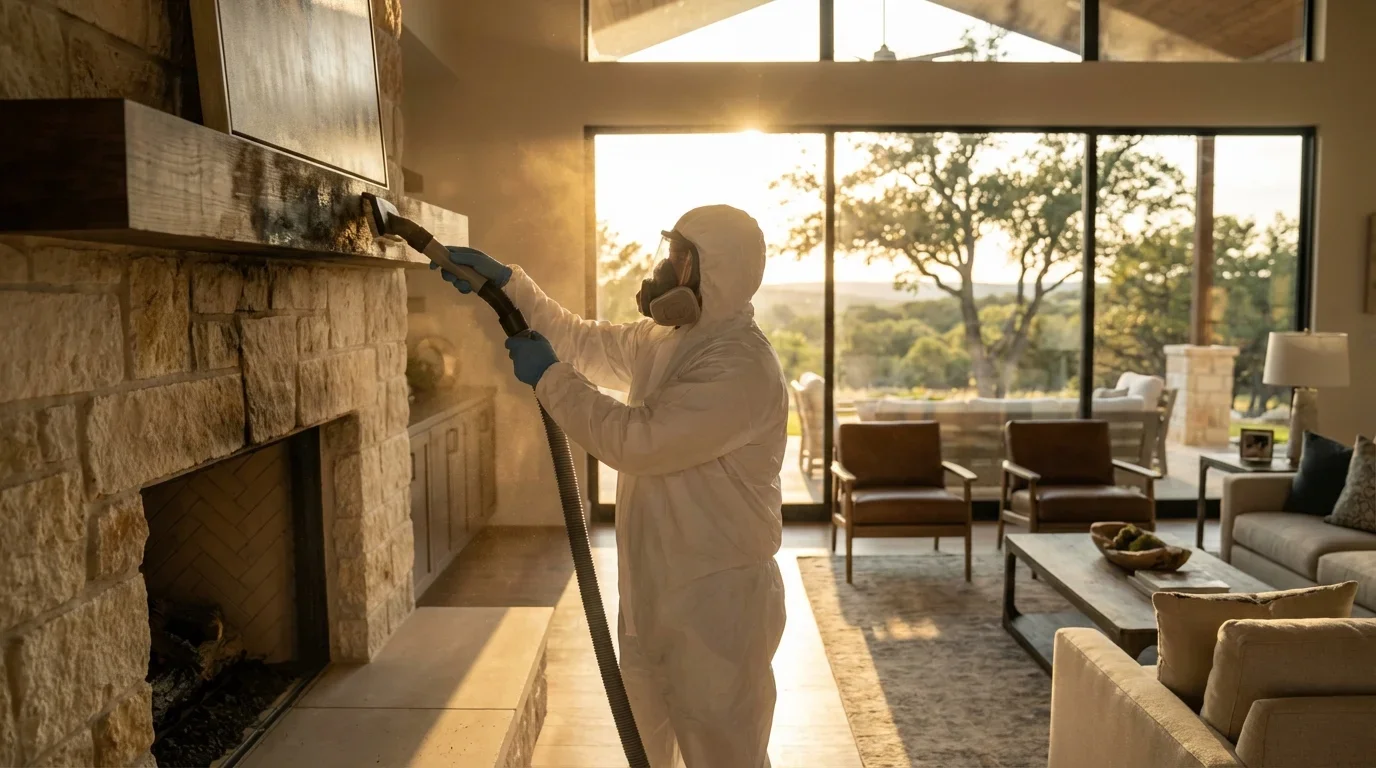
Black Mold Doesn't Give You a Second Chance
Stachybotrys spreads fast and threatens your family's health. Our certified technicians use medical-grade HEPA filtration and full containment protocols to eliminate toxic black mold safely.
- Complete containment prevents spread during removal
- HEPA filtration captures 99.97% of mold spores
- Safe disposal protects your property and health
⚠ Common Issues
What Is Black Mold and Why Is It Dangerous?
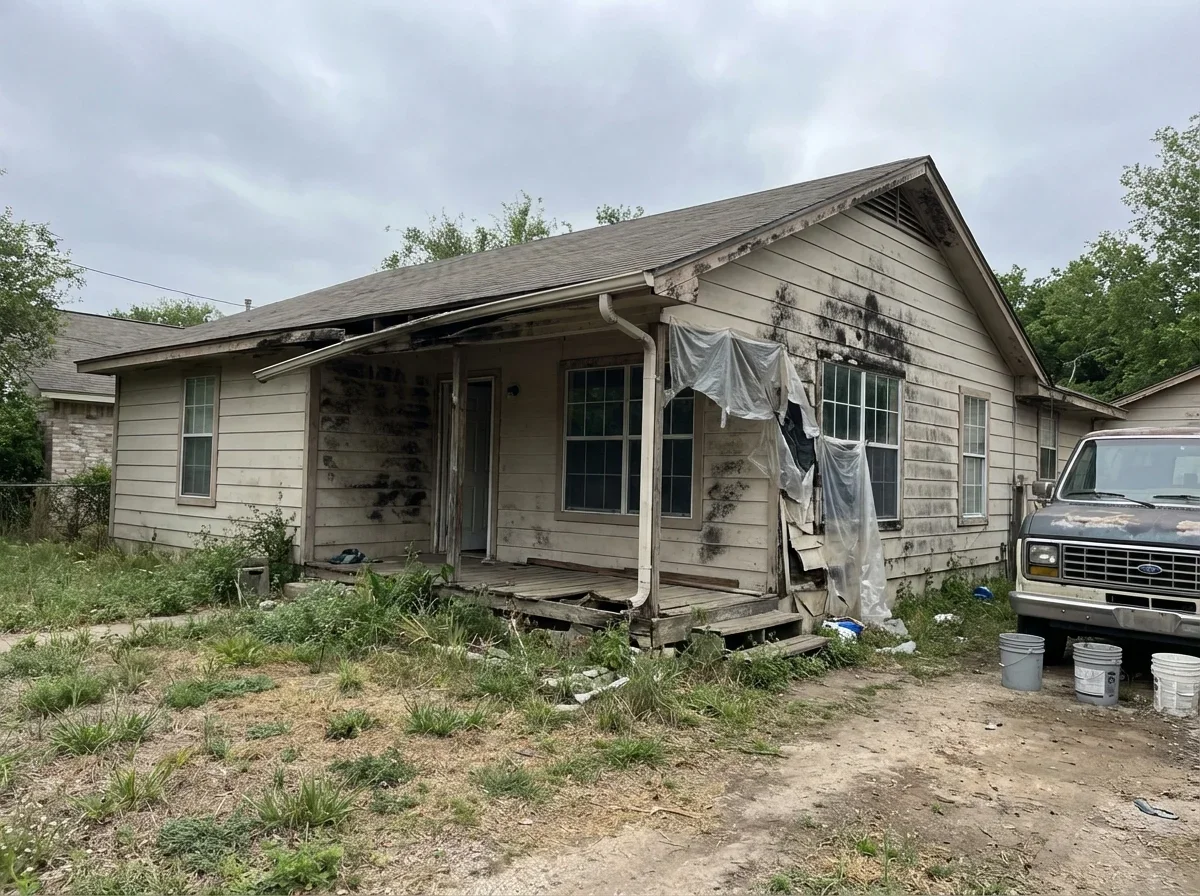
Black mold (Stachybotrys chartarum) appears as greenish-black, slimy colonies on chronically wet building materials. You'll often smell it before you see it — a persistent musty odor in bathrooms, crawl spaces, or HVAC systems.
Texas humidity accelerates black mold growth. Houston properties post-Harvey, Dallas homes with HVAC condensation leaks, and San Antonio structures with foundation moisture intrusion are particularly vulnerable. The fungus thrives on cellulose materials (drywall, ceiling tiles, wood framing) that stay wet for 48+ hours.[3]
Health Risks and Mycotoxin Exposure
Stachybotrys produces mycotoxins that cause respiratory irritation, headaches, and fatigue in sensitive individuals. Children, elderly residents, and immunocompromised people face higher risk from prolonged exposure.
This isn't DIY territory. Disturbing black mold colonies without proper containment releases spores throughout your property — exactly what remediation protocols prevent.
If you've identified black mold or have persistent symptoms after water damage, professional assessment is the next step. Texas requires licensed contractors for a reason.
$ Cost Guide
What Does Black Mold Removal Cost in Texas?
Black mold removal runs higher than general mold remediation due to containment requirements and disposal protocols.
| Project Scope | Typical Cost Range |
|---|---|
| Small area (bathroom, closet) | $1,500 - $3,000 |
| Medium contamination (bedroom, HVAC system) | $3,000 - $6,000 |
| Extensive damage (crawl space, multiple rooms) | $6,000 - $15,000+ |
Price Factors: Size, Location, and Contamination Severity
Containment setup drives base costs. Even small black mold projects require full negative air chambers and HEPA equipment. You're paying for safety infrastructure, not just labor hours.
Key variables that affect your quote:
- Square footage: Pricing typically runs $15-25 per square foot for black mold work
- Material penetration: Mold inside wall cavities or under flooring doubles removal time
- Accessibility: Attic or crawl space work in Fort Worth summer heat increases labor costs
- HVAC involvement: Ductwork contamination requires specialized HVAC mold removal — add $2,000-5,000
Insurance Coverage and Documentation Requirements
Homeowners insurance in Texas typically covers mold remediation when it results from a covered peril (burst pipe, storm damage). Gradual humidity or maintenance neglect? You're paying out of pocket.
Get itemized estimates from TDLR-licensed contractors. Insurance adjusters in Houston and Corpus Christi request detailed scope documents showing containment methods, square footage, and material disposal costs. Verbal quotes don't satisfy claims documentation.
Post-Harvey properties and homes with previous water damage claims face closer scrutiny — expect the insurer to require independent mold testing before approving remediation.
→ What to Expect
The Black Mold Removal Process
Texas law requires mold remediation contractors to hold active TDLR licenses for projects over 25 square feet.[1] Here's what compliant removal looks like:
Containment and Safety Protocols
Licensed teams establish physical barriers before touching contaminated materials:
- Containment setup: 6-mil polyethylene sheeting seals the work area from occupied spaces
- Negative air pressure: HEPA-filtered air scrubbers create negative pressure (minimum 0.02-inch water gauge) to prevent spore migration[2]
- Personal protection: Full-face respirators, Tyvek suits, and gloves protect workers from mycotoxin exposure
Removal and HEPA Filtration
The contaminated materials are removed, not cleaned:
- Material removal: Porous items (drywall, insulation, carpet) get double-bagged and disposed of as contaminated waste
- HEPA vacuuming: All surfaces in the containment area receive thorough HEPA vacuum treatment
- Moisture correction: The source — leaking pipe, roof intrusion, condensation issue — gets repaired before rebuilding
Post-Remediation Verification
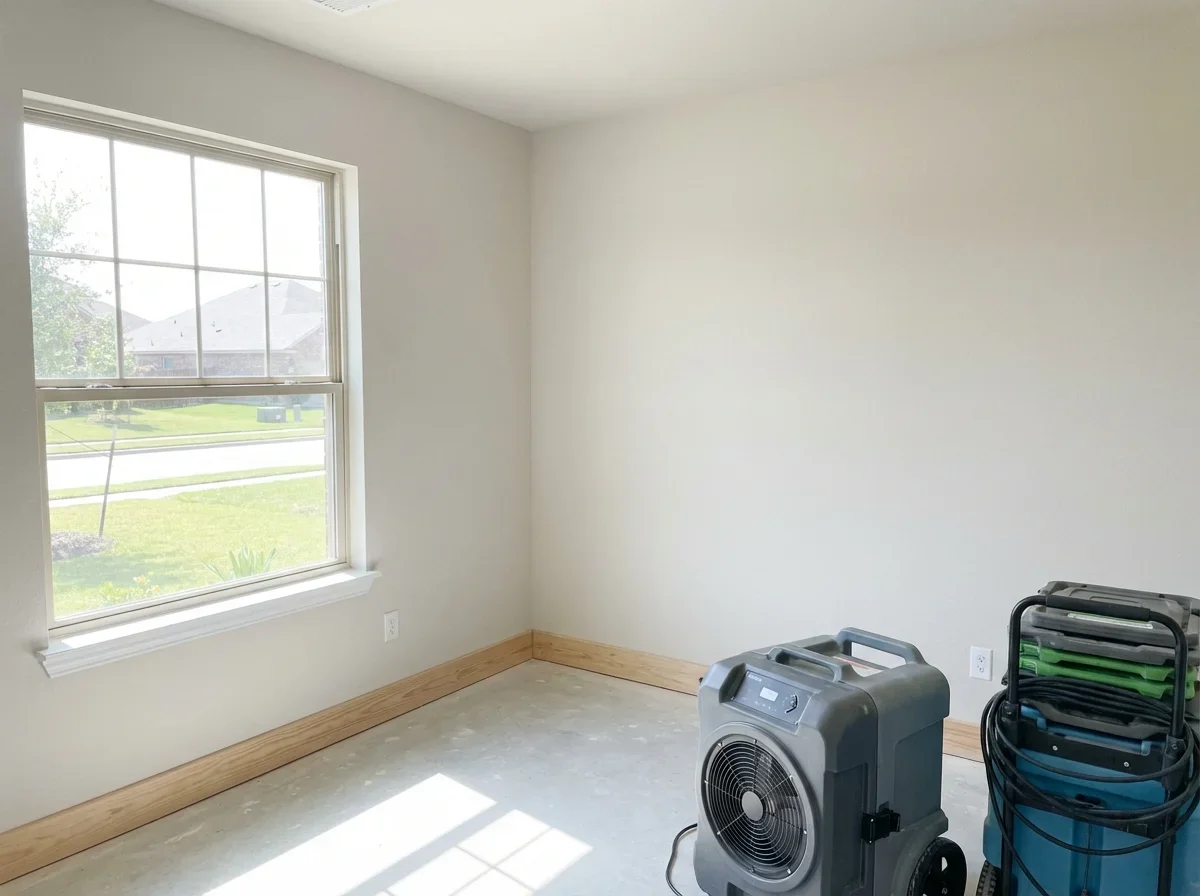
Reputable contractors include post-remediation verification. A third-party assessor performs visual inspection and air sampling to confirm clearance. You need this documentation for insurance claims and future property transactions in Austin, Plano, and other competitive real estate markets.
Timeline: Most residential black mold projects take 3-5 days from containment to clearance. Extensive contamination in HVAC ductwork or wall cavities extends the schedule.
✓ Choosing a Contractor
How to Choose a Black Mold Removal Contractor in Texas
Texas requires separate TDLR licenses for mold assessment and remediation — verify both before signing contracts.
Questions to Ask
- What's your TDLR remediation license number? (Verify at tdlr.texas.gov — active status required)
- Do you subcontract the actual removal? (Some assessors refer work to licensed remediators)
- What containment protocol do you follow for black mold? (Look for negative air pressure specifics)
- Will you provide post-remediation clearance testing? (Third-party verification protects you)
- What's included in moisture correction? (Source repair is essential — structural drying prevents recurrence)
- How do you handle contents in contaminated areas? (Porous items often require disposal)
Red Flags
- No visible TDLR license or refusal to provide license number
- "We can clean black mold" instead of remove contaminated materials (black mold on porous surfaces requires disposal, not cleaning[2])
- Skipping containment for "small" black mold areas (all Stachybotrys work requires containment)
- Pressure to skip post-remediation testing ("just trust us it's gone")
Compare TDLR-licensed contractors in your area using verified credentials. Black mold removal done right protects your family and your property value — cutting corners creates bigger problems six months later.
Top Contractors for Black Mold Removal
View all →



Frequently Asked Questions
- Texas Department of Insurance. "Mold Remediation in Texas Homes." https://www.tdi.texas.gov/consumer/mold-remediation.html. Accessed April 02, 2026.
- Centers for Disease Control and Prevention (CDC) / National Institute for Occupational Safety and Health (NIOSH). "Guidelines on Assessment and Remediation of Stachybotrys in Houses." https://www.cdc.gov/niosh/docs/2005-106/default.html. Accessed April 02, 2026.
- U.S. Environmental Protection Agency (EPA). "A Brief Guide to Mold, Moisture and Your Home." https://www.epa.gov/mold/brief-guide-mold-moisture-and-your-home. Accessed April 02, 2026.