Your Basement Shouldn't Smell Like a Swamp
Texas humidity and foundation issues turn basements into mold factories fast. We eliminate the growth and fix what's feeding it.
- Stop musty odors at the source
- Protect your foundation investment
- Breathe easier knowing it's handled right
⚠ Common Issues
When Do You Need Basement Mold Removal?
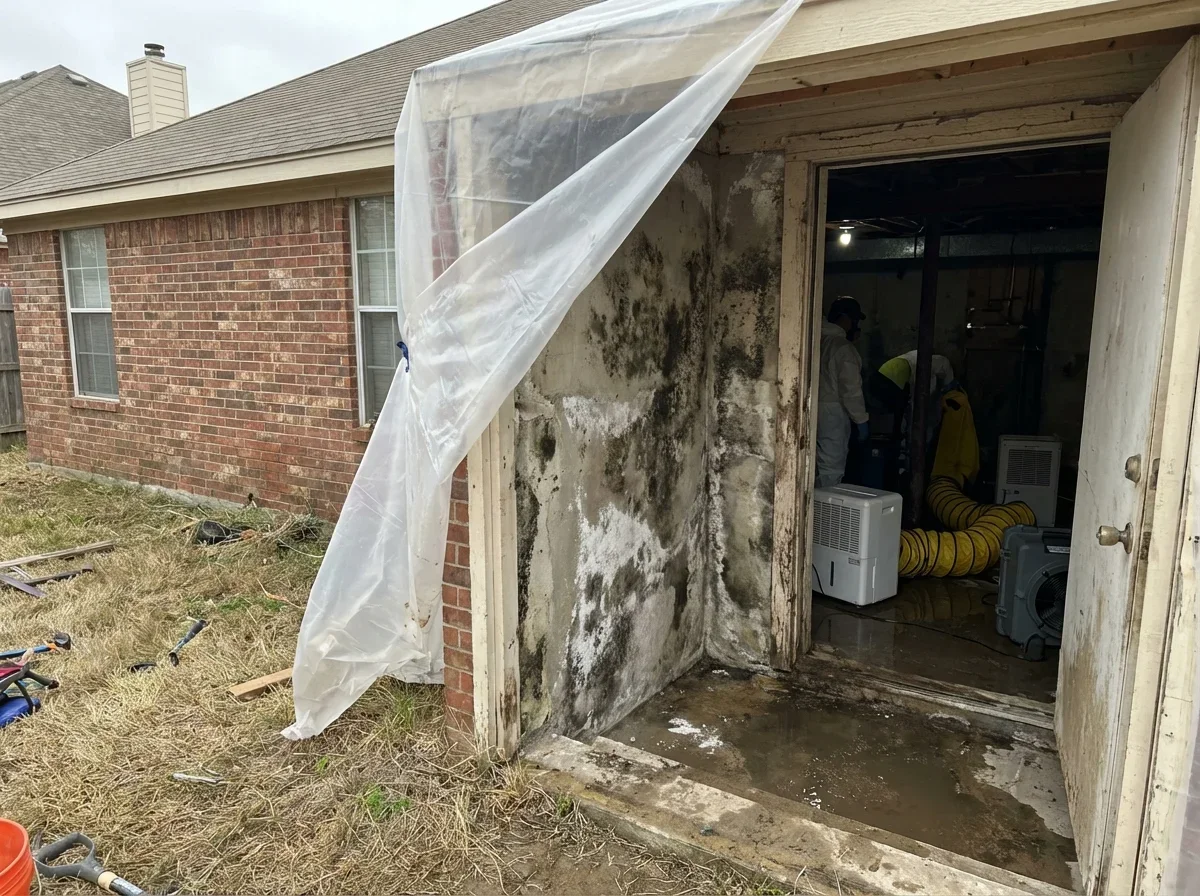
Basement mold rarely announces itself with obvious warning signs until it's already widespread. You might notice dark discoloration on concrete walls, particularly along the foundation seam where moisture seeps through during heavy rains. Musty odors that worsen after humid summer days or tropical storms indicate active growth behind stored boxes or finished wall systems.
Houston and Dallas homeowners frequently discover mold after foundation settlement creates hairline cracks in below-grade concrete. Texas clay soil expands and contracts dramatically, allowing groundwater intrusion that basement dehumidifiers can't control.[2]
Watch for respiratory symptoms that improve when you leave home — persistent coughing, headaches, or allergy-like reactions. Peeling paint on basement walls signals trapped moisture behind the surface. Water stains near floor drains or sump pump areas point to recurring drainage failures.
Visible mold covering more than 10 square feet requires professional intervention under Texas regulations.[1] Don't wait for the problem to migrate upstairs through HVAC returns or stairwells.
Foundation issues accelerate mold growth. A single crack in pier-and-beam foundations can introduce gallons of moisture during Gulf Coast storm season, creating colony growth within 48 hours.
$ Cost Guide
What Does Basement Mold Removal Cost in Texas?
Basement mold remediation in Texas typically runs between $1,500 and $8,000, with costs driven by contamination extent, moisture source complexity, and foundation system type. Expect higher costs in pier-and-beam homes where crawl space access complicates containment.
| Project Scope | Typical Cost Range |
|---|---|
| Small area (<100 sq ft, surface only) | $1,500 - $3,000 |
| Medium contamination (100-300 sq ft, wall cavities) | $3,000 - $5,500 |
| Extensive growth (300+ sq ft, structural involvement) | $5,500 - $8,000+ |
| Foundation waterproofing + remediation | $8,000 - $15,000+ |
Project Size and Severity Factors
Square footage drives base pricing — contractors charge $15-30 per square foot for standard removal. Add 30-50% when mold penetrates wall cavities or requires floor joist replacement. HEPA filtration equipment rental, containment materials, and disposal fees add $800-1,500 to most projects.
Fort Worth and Plano projects involving finished basements cost more due to drywall removal, insulation replacement, and reconstruction. Unfinished concrete basements with surface growth only represent the lowest cost scenario.
Moisture Source Repairs and Prevention
Foundation crack repair adds $500-2,500 depending on severity. French drain installation around the basement perimeter runs $2,000-6,000 for adequate drainage in expansive clay soil conditions. Interior vapor barrier installation costs $3-6 per square foot of wall coverage.
Contractors may recommend sump pump installation ($800-1,500) or exterior excavation with waterproof membrane application ($5,000-12,000) for chronic moisture intrusion. These investments prevent recurring mold growth that would require repeat remediation.
Texas insurance policies rarely cover mold removal unless directly linked to a covered peril like sudden pipe bursts. Foundation settlement and chronic moisture issues typically fall outside coverage.[3] Budget for out-of-pocket costs unless you have documented water damage from a qualifying event.
→ What to Expect
The Basement Mold Remediation Process
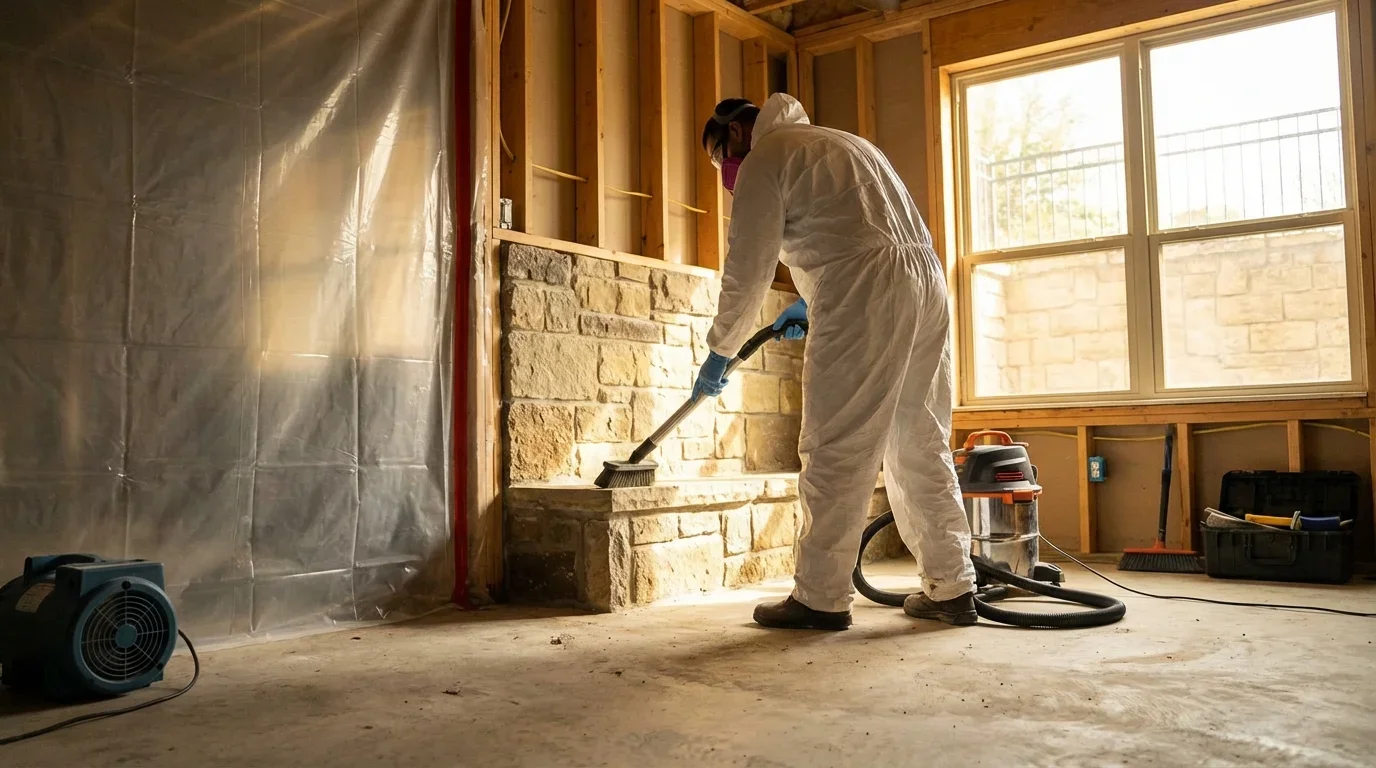
Professional basement mold removal in Texas follows strict containment protocols to prevent spore migration into upper living areas. Contractors establish negative air pressure zones using HEPA-filtered air scrubbers that exhaust contaminated air outside your home, not into adjacent rooms.
Containment and Air Filtration
Technicians seal basement access points with 6-mil polyethylene barriers and create airlocks for equipment entry. HEPA filtration systems run continuously during remediation, cycling basement air 4-6 times per hour to capture airborne spores released during removal.
Removal and Treatment
The removal method depends on affected materials. Non-porous surfaces (concrete, metal) receive HEPA vacuuming followed by antimicrobial treatment. Porous materials like drywall, insulation, or wooden studs are physically removed and bagged for disposal when contamination extends beyond surface cleaning.
- Inspection and moisture mapping identifies the water source (foundation cracks, condensation, drainage failure)
- Containment setup isolates the work area with negative pressure
- Material removal eliminates contaminated porous materials
- HEPA cleaning treats salvageable surfaces
- Antimicrobial application prevents regrowth during repairs
- Moisture control installation addresses the root cause
Moisture Control and Prevention
San Antonio and Austin contractors typically recommend French drain installation or exterior foundation waterproofing to manage Texas clay soil moisture. Interior solutions include vapor barriers on concrete walls, improved ventilation systems, and dehumidification sized for high-humidity months. Most basement projects take 3-5 days depending on affected square footage and foundation repair scope.
Post-remediation clearance testing confirms spore levels return to normal ranges before reconstruction begins.[3]
✓ Choosing a Contractor
How to Choose a Basement Mold Removal Contractor in Texas
Texas requires separate licensing for mold remediation companies and individual technicians through the Texas Department of Licensing and Regulation (TDLR).[1] Verify credentials before signing contracts — unlicensed work voids insurance claims and provides no legal recourse.
TDLR Licensing Verification
Questions to ask:
- What is your TDLR company license number? (Verify at tdlr.texas.gov)
- Which technicians hold individual TDLR mold remediation licenses?
- Do you carry separate mold-specific liability insurance beyond general coverage?
- Will you provide a detailed scope of work before starting?
- Who performs post-remediation clearance testing? (Must be independent from remediation company)
Insurance and Clearance Testing
Require proof of current general liability insurance ($1M minimum) and workers' compensation coverage. The contractor should arrange third-party clearance testing through a licensed mold assessor — never accept clearance results from the same company performing removal.[3]
Foundation and Drainage Expertise
Red flags:
- Refusing to identify and address moisture sources before remediation
- Proposing mold removal without containment or air filtration
- Offering same-day service without proper inspection
- Unable to explain Texas clay soil impacts on foundation moisture
Ask about experience with your specific foundation type (slab vs. pier-and-beam). Corpus Christi and coastal contractors should demonstrate hurricane flooding remediation experience. Request references from similar basement projects completed in the past 12 months.
Compare multiple bids from mold remediation contractors and verify each company's TDLR standing before deciding. The lowest bid often indicates shortcuts on containment, disposal, or moisture control — priorities that determine whether mold returns within months.
Top Contractors for Basement Mold Removal
View all →

Frequently Asked Questions
- Texas Department of Licensing and Regulation (TDLR). "Mold-Related Services." https://www.tdlr.texas.gov/mold/mold.htm. Accessed April 02, 2026.
- Texas A&M AgriLife Extension Service. "Mold Abatement in Texas Homes." https://aggie-horticulture.tamu.edu/earthkind/landscape/dont-let-mold-ruin-your-home/. Accessed April 02, 2026.
- Texas Department of Insurance (TDI). "Texas Mold Remediation Regulations Frequently Asked Questions." https://www.tdi.texas.gov/consumer/mold-remediation.html. Accessed April 02, 2026.