What Makes Black Mold Different From Other Molds
Stachybotrys chartarum earns its reputation because it produces mycotoxins — chemical compounds that can cause health problems under certain conditions. The CDC confirms that Stachybotrys is toxigenic, meaning it has the capacity to produce these substances.[2]
But here's the critical detail most articles skip: the mold itself isn't toxic or poisonous.
That distinction matters. You won't die from touching black mold or walking past it. The health risks come from prolonged exposure to airborne spores and mycotoxins in enclosed spaces — usually when you're living with active growth for weeks or months without realizing it.
The real danger isn't the mold species. It's the moisture condition severe enough to support heavy growth.
In Texas homes, Stachybotrys typically appears on cellulose materials — drywall, paper backing on insulation, ceiling tiles, cardboard stored in humid spaces. It needs consistent moisture for 48+ hours to establish. That's why you find it in AC closets with drain pan leaks, behind walls with slow plumbing leaks under the slab, or in attics with roof penetrations that let rain in during our spring storm season.
The mold looks greenish-black and slimy when wet, turning dark and powdery as it dries. But visual identification means nothing without addressing what you're breathing.
If you're seeing growth large enough to identify by color, you've likely been inhaling spores for longer than you'd like.
| Mold Type | Appearance | Common Locations | Health Risk Level |
|---|---|---|---|
| Black Mold (Stachybotrys) | Greenish-black, slimy when wet | Drywall, insulation backing, ceiling tiles | High — produces mycotoxins |
| Aspergillus | Gray-green to yellow | HVAC systems, dust, insulation | Moderate — allergenic, can cause infections |
| Cladosporium | Olive-green to brown | Window sills, fabrics, wood | Low to Moderate — primarily allergenic |
| Penicillium | Blue or green | Water-damaged materials, wallpaper | Moderate — allergenic, musty odor |
The Actual Health Risks: What Research Says
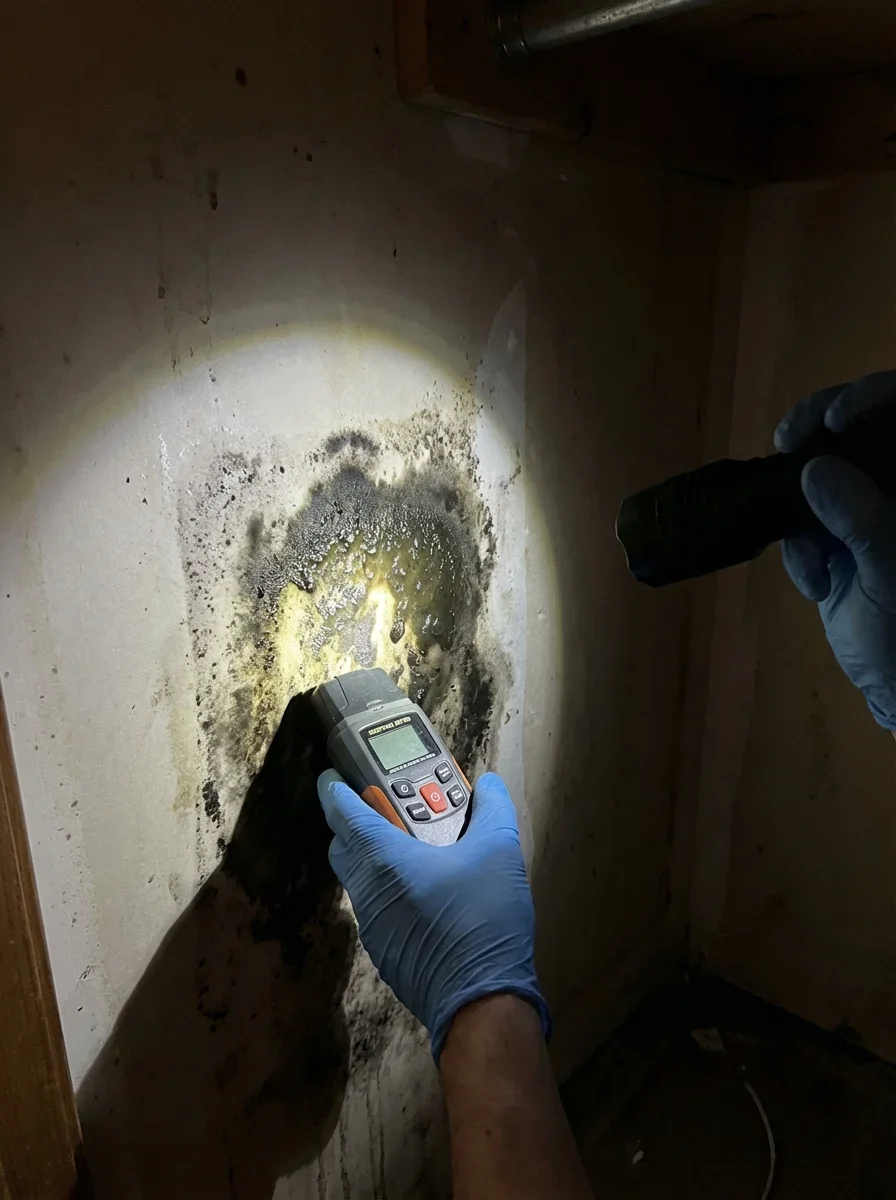
The EPA states clearly that all molds — black or otherwise — should be treated with the same caution because all produce allergens, irritants, and potentially toxic substances.[3] Inhaling or touching mold spores can trigger allergic reactions: sneezing, runny nose, red eyes, skin rash. These symptoms affect sensitive individuals immediately and are reversible once exposure stops.
Mycotoxin exposure is trickier.
Research shows mycotoxins can cause serious health effects in extreme cases — think agricultural workers handling moldy hay in enclosed spaces or people living in flood-damaged homes for months without remediation. But establishing a direct health link in typical residential settings remains scientifically challenging because there are no federal standards for safe airborne mold concentrations.[1] No EPA regulations. No OSHA limits for homes.
The science hasn't delivered clear thresholds.
What Texas homeowners report experiencing tells a practical story. Respiratory irritation, persistent coughing, worsened asthma, chronic headaches, fatigue — symptoms that improve significantly within days of leaving the home or completing mold remediation. One Houston homeowner described months of unexplained sinus infections that cleared two weeks after contractors removed mold from the HVAC system.
Another Dallas family noticed their toddler's wheezing disappeared after addressing hidden mold behind bathroom tile.
Immune-compromised individuals, infants, elderly people, and those with existing respiratory conditions face elevated risk. If someone in your household has asthma, COPD, or is undergoing chemotherapy, treating any mold growth as urgent makes sense regardless of species.
Who Faces the Highest Risk
People with mold allergies or asthma experience immediate reactions. Their immune systems treat mold spores as threats, triggering inflammation in airways and sinuses. Prolonged exposure can worsen asthma control and increase medication needs.
Immune-compromised individuals risk fungal infections. While rare, invasive aspergillosis and other fungal diseases occur when someone's immune system can't fight off inhaled spores. This includes organ transplant recipients, HIV patients, and anyone on immunosuppressant drugs.
Infants and children face disproportionate exposure because they breathe faster relative to body weight and spend more time playing on floors where disturbed spores settle.
Texas pediatricians in post-Harvey Houston saw measurable upticks in respiratory visits correlated with delayed mold remediation in flooded neighborhoods.
Construction workers and remediation crews face occupational exposure. Texas requires separate TDLR licensing for mold assessment and remediation precisely because improper handling creates health risks for workers and occupants. Remediation workers must use respirators, containment barriers, and negative air pressure to prevent cross-contamination.
Critical Health Warning: If anyone in your household experiences respiratory symptoms that consistently improve when away from home and worsen upon return, treat this as urgent. This pattern indicates significant mold exposure requiring immediate professional assessment — especially for children, elderly family members, or anyone with compromised immunity.
Why Texas Homes Create Perfect Conditions for Black Mold
Our state sits at the intersection of terrible mold factors. The Gulf Coast climate delivers 75-90% relative humidity for six months straight. Central and North Texas run air conditioning from March through October — every condensate drain line becomes a potential leak point, and every poorly insulated duct breeds condensation.
Slab-on-grade construction dominates 90%+ of Texas homes built after 1980.
That means plumbing runs under the concrete slab. When expansive clay soil shifts — and it will, we have some of the worst soil movement in the country — it cracks both foundation and pipes. You get slow leaks that saturate the ground beneath your home, wicking moisture up through the slab and into drywall.
The San Antonio and Austin areas sit on particularly problematic soil. The Blackland Prairie and Edwards Plateau clays swell up to 10% with water, then shrink just as dramatically during drought. That constant expansion-contraction cycle has created a permanent market for foundation repair and, consequently, water damage mold removal.
Pier-and-beam homes in older neighborhoods — common in East Dallas, Houston Heights, parts of San Antonio — have crawl spaces prone to moisture accumulation. Poor ventilation, ground moisture vapor, and occasional plumbing leaks create year-round humidity perfect for mold colonization.
Homeowners often discover extensive growth during real estate inspections when selling, which is why mold inspection before buying has become standard practice.
Post-2000 construction brought spray foam insulation and better energy efficiency, but also tighter building envelopes. Less air exchange means moisture from cooking, showering, and breathing has fewer escape routes. If your HVAC system isn't properly sized or your bathroom fans vent into the attic instead of outside, you're creating moisture pockets.
What to Do If You Find Black Mold in Your Home
Don't touch it. Don't bleach it. Don't ignore it hoping it goes away.
All three approaches make the situation worse or create false confidence that the problem is solved.
Your first move is stopping the moisture source. Find the leak, fix the plumbing, repair the roof, correct the drainage, redirect the AC condensate line — whatever created 48+ hours of wetness. Mold remediation without moisture correction is purely cosmetic.
It'll be back within weeks.
Next, determine scale. A dinner-plate-sized patch on a bathroom ceiling is manageable. Growth covering 10+ square feet, especially behind walls or in HVAC systems, requires professional assessment. Texas law requires TDLR-licensed assessors to inspect and create remediation protocols for commercial properties, and most reputable companies apply the same standard to residential work even though it's not legally mandated.
Mold testing helps in specific situations: when you smell mold but can't locate it, when someone in the household has unexplained respiratory symptoms, or when you're dealing with insurance claims requiring documentation. Surface sampling identifies species. Air sampling measures spore concentration.
Both cost $300-600 in Texas and should be performed by licensed Mold Assessment Technicians — verify credentials at tdlr.texas.gov before hiring.
Remediation follows IICRC S520 standards whether you're in Houston, El Paso, or anywhere between. That means containment with plastic sheeting, negative air pressure using HEPA-filtered air scrubbers, physical removal of contaminated materials, HEPA vacuuming, and antimicrobial treatment.
DIY approaches using household bleach don't kill mold roots in porous materials and spread spores throughout the house when you scrub.
Cost runs $500-2,000 for small isolated areas, $3,000-8,000 for whole-room remediation including drywall replacement, and $10,000+ for whole house mold projects involving multiple rooms or HVAC contamination. Texas homeowners insurance rarely covers mold unless it resulted from a covered peril like a sudden pipe burst — gradual leaks and maintenance issues are excluded.
Black Mold Response Timeline — What to Do When:
- Within 24 hours: Stop the moisture source — fix leaks, redirect drainage, repair plumbing
- 24-48 hours: Document extent with photos, measure affected area, check for hidden growth
- Within 3 days: Contact TDLR-licensed assessor if growth exceeds 10 sq ft or affects porous materials
- Within 1 week: Begin professional remediation (small areas may take 2-3 days, larger projects 5-7 days)
- Post-remediation: Schedule clearance testing with independent assessor before re-occupying affected areas
- Ongoing: Monitor humidity levels (keep below 60%), inspect for recurrence monthly for 6 months
When to Call in Professionals vs. Handling It Yourself
You can handle small surface mold (less than 10 square feet) on non-porous surfaces if you're healthy and take precautions. Tile grout in the shower corner, metal window frames with condensation mold, small spots on painted drywall without underlying moisture damage — these respond to careful cleaning with detergent and thorough drying.
Call professionals when mold affects porous materials like drywall, insulation, or wood framing.
Once mold colonizes inside these materials, surface cleaning is cosmetic. The roots (hyphae) penetrate deep, and disturbing the surface without proper containment spreads spores to clean areas of your home.
Any mold in HVAC systems requires professional intervention. Your AC system moves 400-1,200 cubic feet of air per minute through your home. Mold in ductwork or on cooling coils becomes an active distribution system for spores. HVAC mold removal requires specialized equipment and training that DIY approaches can't replicate.
Growth behind walls, above ceilings, or under flooring demands professional assessment.
You need to understand extent before cutting into structures. Texas homes with slab leaks often have mold growth 6-10 feet beyond the visible water stain because moisture wicks through drywall laterally. What looks like a small problem frequently extends through multiple wall cavities.
If anyone in your household has asthma, immune conditions, or chronic respiratory disease, don't risk DIY remediation. Disturbing mold releases exponentially more spores than leaving it undisturbed. Professional containment and air scrubbing protect vulnerable occupants during the process.
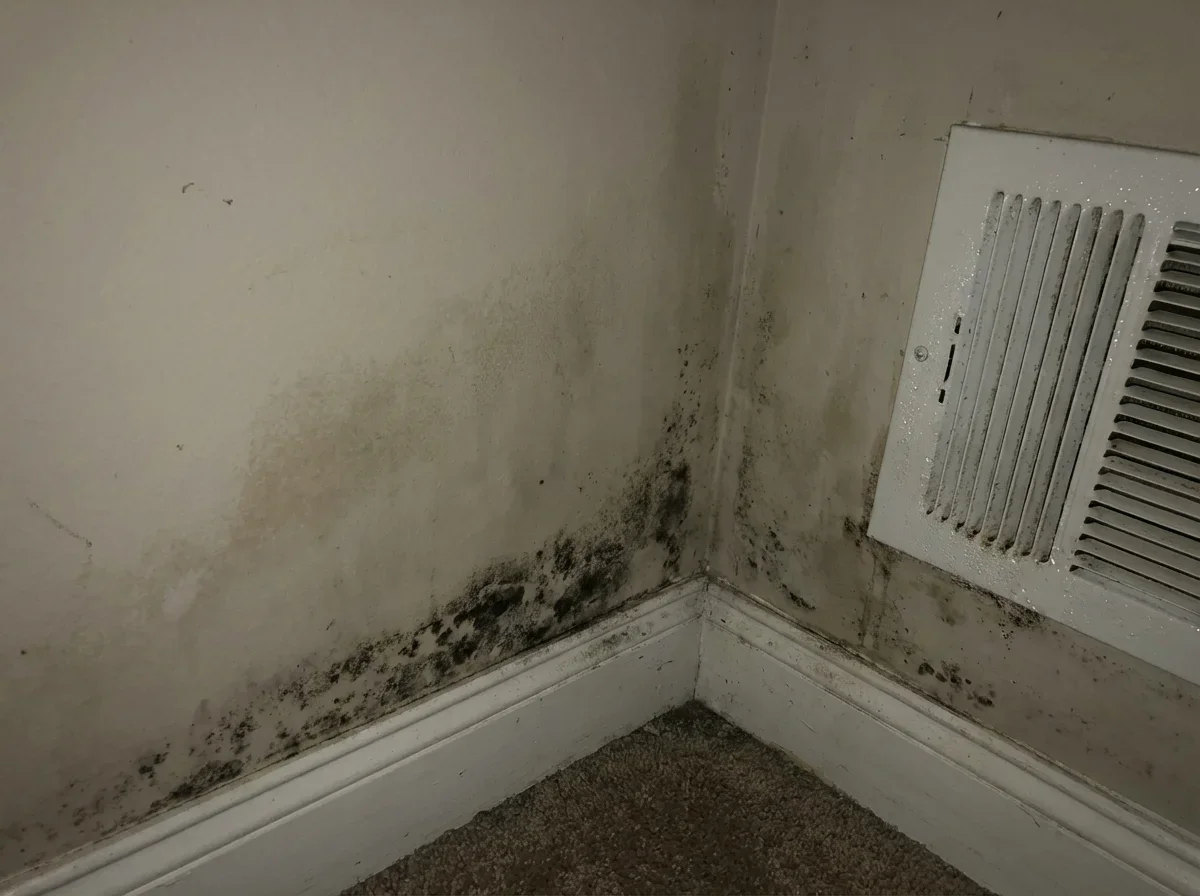
Preventing Black Mold: Moisture Control in Texas Climate
Mold prevention in Texas is moisture prevention, period.
You can't eliminate mold spores — they're everywhere, floating in outdoor air, landing on every surface. What you control is whether they find conditions to grow.
Keep indoor humidity below 60%, ideally 45-50%. Texas homes struggle with this from May through September without help. Dehumidifiers in problem areas (master bathrooms, laundry rooms, AC closets) pull 30-50 pints per day. Whole-home dehumidifiers integrate with HVAC systems and work better in our climate than trying to cover 2,500 square feet with portable units.
Fix leaks immediately.
"Immediately" means within 24 hours, not when you get around to it next month. That shower pan crack, the toilet seal that's been seeping, the AC drain line dripping into the closet — each creates mold growth in 48-72 hours under Texas humidity. Catch them early and you're wiping up water. Wait a week and you're cutting out drywall.
TDLR-licensed contractors see the same patterns. Bathroom exhaust fans venting into attics instead of through the roof. Kitchen range hoods that recirculate instead of exhaust. Dryer vents kinked behind the machine. Gutters dumping water against the foundation. Grade sloping toward the house instead of away.
Each mistake compounds in our climate.
Pier-and-beam homes need vapor barriers over crawl space soil and functional vents on all four sides. The traditional 1:150 ventilation ratio (1 square foot of vent per 150 square feet of crawl space) barely keeps up with Texas ground moisture. Many remediation companies now recommend encapsulation — sealing the crawl space entirely and conditioning it with the house HVAC rather than fighting ventilation battles.
AC maintenance prevents more mold than any other single action. Condensate drain lines clog with biofilm and overflow into drip pans, then onto ceilings. Have the lines blown out with compressed air or treated with drain tablets every spring. Check that the drip pan has proper drainage and isn't rusted through.
Verify duct insulation remains sealed and condensation isn't forming inside ductwork.
Understanding Texas Mold Regulations and Your Rights
Texas is one of only three states with specific mold licensing laws. The Texas Mold Assessment and Remediation Rules require separate licensing for assessment companies and remediation companies — the same entity cannot perform both services on the same job.
This separation prevents conflict of interest: your assessor shouldn't profit from recommending expensive remediation.
License categories include Mold Assessment Technician, Mold Assessment Company, Mold Remediation Worker, Mold Remediation Contractor, and Mold Remediation Company. Each requires different training, experience, and continuing education. Verify any company's credentials at the TDLR mold licensing database before hiring.
These requirements don't apply to single-family homeowners doing their own work, but they do apply to anyone you hire. Unlicensed operators offer cheaper rates and skip the training, insurance, and oversight that licensing requires.
You save money upfront and risk inadequate remediation that leaves mold behind, spreads contamination, or creates future liability when you sell the home.
Post-remediation verification provides documentation that work met standards. A licensed assessor (different from the remediation company) inspects the completed work and tests air quality to confirm spore counts returned to normal levels. This clearance report matters for insurance claims, real estate transactions, and your own confidence that the problem is truly resolved.
Texas has no disclosure requirements for mold in residential real estate transactions unless you're the seller and know about it.
That creates an information gap during home purchases. Smart buyers order real estate mold inspections as part of their due diligence, especially on homes built before 2000, homes with foundation issues, or any property with visible water stains or musty odors.
When Black Mold Becomes a Health Emergency
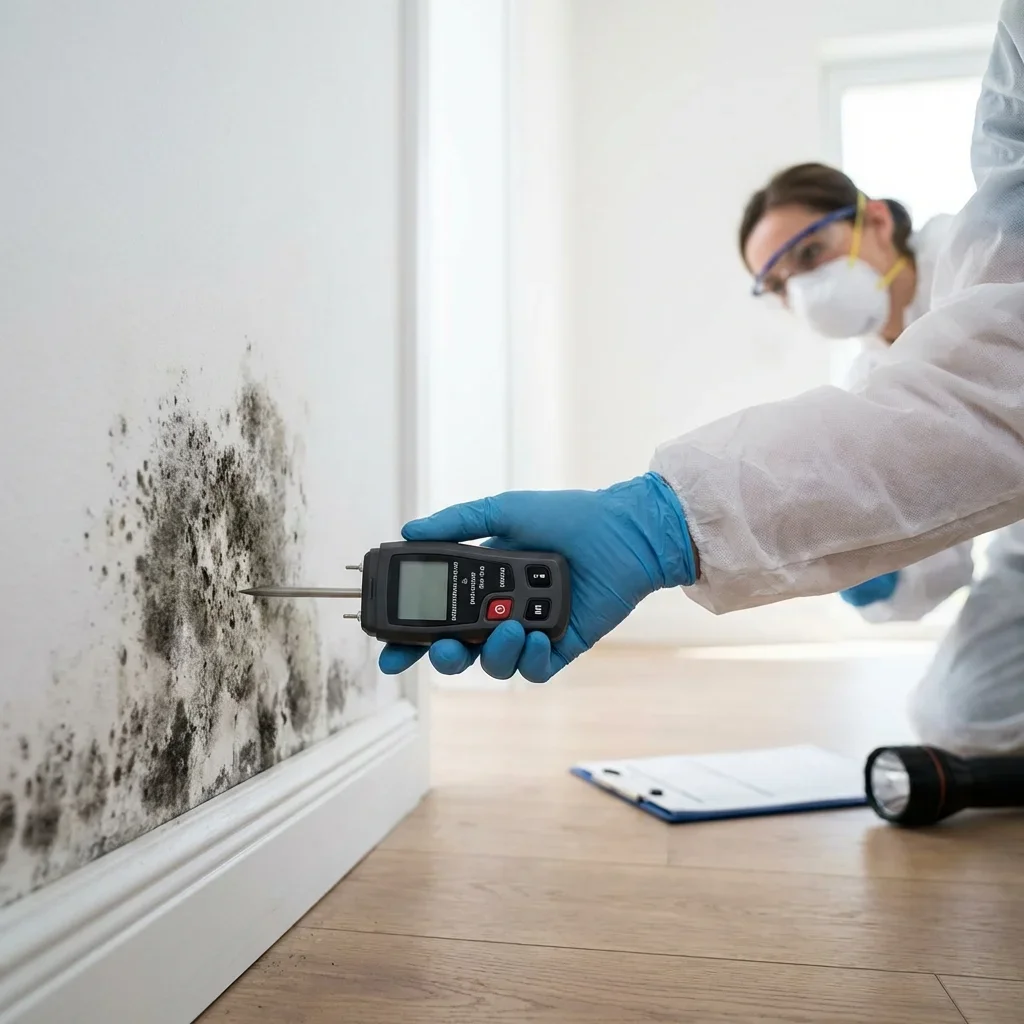
Most mold situations don't constitute emergencies. They're problems requiring prompt attention, not midnight panic calls.
But several scenarios warrant urgent response.
Active water intrusion with visible mold growth poses immediate risk if anyone in the household has severe asthma or immune compromise. A ruptured supply line soaking drywall behind a bathroom, storm water flooding a home during hurricane season, a major roof leak during spring storms — these situations demand emergency mold removal alongside water extraction because vulnerable occupants can't safely remain in the home during active exposure.
Sudden respiratory distress that improves when leaving the home and worsens upon return suggests significant exposure.
This pattern appeared frequently in Houston after Hurricane Harvey: residents returned to homes that looked dry but had extensive hidden mold, experienced immediate breathing difficulty, and required medical attention. If symptoms track this clearly with location, treat it as urgent.
Discovery during real estate transactions sometimes creates time pressure. You're under contract, inspection reveals mold, closing is in 14 days, and remediation plus clearance testing takes 5-7 days. Insurance claim mold services can expedite response when coverage applies, but most transaction-related mold becomes the buyer's negotiation leverage or seller's last-minute expense.
Severe contamination affecting 30%+ of living space, especially when combined with HVAC involvement, sometimes requires temporary relocation during remediation.
Most Texas families don't need to move out for typical bathroom or attic mold projects. But whole-house scenarios with wall cavity mold in multiple rooms, containment barriers throughout the home, and air scrubbers running 24/7 make staying uncomfortable and potentially counterproductive.
The Bottom Line: Balancing Caution and Perspective
Black mold deserves respect, not panic.
It indicates a moisture problem serious enough to support persistent fungal growth. That underlying issue — the leak, the humidity, the ventilation failure — matters more than the mold species.
Your health response is individual. Some people live with visible mold and experience nothing. Others react severely to low-level exposure. Neither response is wrong, and neither makes the mold safe to ignore.
Texas climate and construction patterns create constant mold pressure, which means constant vigilance on moisture control.
Address visible growth promptly using qualified TDLR-licensed professionals for anything beyond small surface patches. Fix the water source first, or remediation is just expensive landscaping. Document everything with photos and keep records of who did what work — you'll need this for insurance claims, real estate transactions, or if health issues develop later.
The houses that stay mold-free in Texas aren't lucky.
They're maintained. Gutters cleaned. AC serviced. Leaks fixed the day they're noticed. Humidity monitored. Ventilation functional. It's unglamorous work that prevents the expensive, disruptive problems nobody wants to deal with.
- US Environmental Protection Agency (EPA). "Are there federal regulations or standards regarding mold?." https://www.epa.gov/mold/are-there-federal-regulations-or-standards-regarding-mold. Accessed April 02, 2026.
- Centers for Disease Control and Prevention (CDC). "Mold, Testing, and Remediation." https://www.cdc.gov/niosh/mold/testing-remediation/index.html. Accessed April 02, 2026.
- US Environmental Protection Agency (EPA). "A Brief Guide to Mold, Moisture and Your Home." https://www.epa.gov/mold/brief-guide-mold-moisture-and-your-home. Accessed April 02, 2026.