What Black Mold Removal Actually Costs in Texas
Black mold (Stachybotrys chartarum) remediation pricing in Texas varies by project size, contamination severity, and access difficulty. Small isolated patches (under 10 square feet) cost $500–$2,000 for professional removal.[1]
Moderate contamination affecting 10–100 square feet — common in bathrooms, laundry rooms, or single-room water damage — typically runs $2,000–$7,000. Whole-house remediation after flooding or systemic HVAC contamination starts around $10,000 and can exceed $30,000 for homes over 2,500 square feet with extensive structural damage.
The EPA recommends professional remediation for any black mold area larger than 10 square feet or mold in HVAC systems, which require specialized containment and air filtration equipment.[2] Texas contractors use negative air machines, HEPA filtration, and physical barriers to prevent spore spread during removal. Equipment rental and labor for containment setup alone adds $1,500–$3,500 to most jobs.
Price per square foot typically falls between $10–$25 for straightforward surface mold on non-porous materials like tile or sealed concrete. Porous materials like drywall, insulation, or ceiling tiles require removal and replacement, pushing costs to $25–$50 per square foot when you include demolition, disposal, and reconstruction.
Hidden mold behind walls or under flooring adds inspection costs ($300–$600 for thermal imaging or moisture mapping) plus access labor.
| Project Size | Square Footage | Typical Cost Range | Common Scenarios |
|---|---|---|---|
| Small-Scale | Under 10 sq ft | $500–$2,000 | Bathroom corners, shower grout, windowsills |
| Medium-Scale | 10–100 sq ft | $2,000–$7,000 | Single-room water damage, laundry rooms, HVAC issues |
| Large-Scale | 100–500 sq ft | $10,000–$30,000 | Multiple rooms, post-flood, whole-house contamination |
| Whole-House | 500+ sq ft | $30,000+ | Extensive structural damage, systemic failures |
Small-Scale Black Mold Jobs ($500–$2,000)
Bathroom corner mold, shower tile grout, or windowsill condensation spots fall into this range when caught early. Technicians scrub non-porous surfaces with antimicrobial solutions, apply encapsulants, and run air scrubbers for 24–48 hours.
No structural demo means lower labor costs.
You're paying mostly for technician time (2–4 hours), cleaning solutions, and minimal equipment. Texas contractors in competitive metros like Austin or San Antonio often quote flat rates for standard bathroom jobs — $650–$900 is common for up to 15 square feet of tile or grout remediation. Pier-and-beam homes with crawl space access sometimes see lower costs because containment is simpler than slab homes where every wall cavity is a potential spread route.
This tier assumes the moisture source is already fixed. If your plumber still needs to repair the leaking shower pan or replace corroded copper piping, add $400–$1,200 for that work before mold removal begins.
Medium-Scale Remediation ($2,000–$7,000)
Most residential black mold jobs in Texas fall here: single-room contamination from AC overflow pans, washing machine supply line failures, or toilet wax ring leaks. Remediation involves containment setup, drywall removal, insulation replacement, HEPA vacuuming, antimicrobial treatment, and post-remediation air clearance testing.
A typical 10×12 laundry room with mold behind drywall from a slow leak costs $2,800–$4,200. That includes removing 4–6 sheets of drywall, pulling fiberglass insulation, treating studs with antimicrobial, running negative air for 3–5 days, and clearance testing.
Reconstruction (new drywall, texture, paint) adds another $1,200–$2,000 unless you hire separate contractors.
Houston and DFW homes on slab foundations often discover mold spread along interior wall bases where plumbing runs under the slab. Expansive clay soil causes foundation shifting that cracks copper pipes, creating slow leaks homeowners don't notice until drywall wicks moisture 2–3 feet up the wall. Remediation requires cutting drywall 12–18 inches above visible damage to ensure complete removal, which increases demo costs but prevents callbacks.
HVAC-related black mold in supply ducts or return plenums costs $3,500–$6,500 depending on duct accessibility and whether the air handler sits in an attic or closet. Texas runs AC 8+ months annually, so condensation in poorly insulated ductwork is a recurring issue.
Remediation includes duct cleaning, plenum treatment, coil sanitization, and sometimes full duct replacement if contamination is severe.
Large-Scale and Whole-House Jobs ($10,000–$30,000+)
Post-flood remediation, roof leak affecting multiple rooms, or systemic plumbing failures push costs into five figures. A 1,800-square-foot home with black mold in three bedrooms, hallways, and attic insulation after Hurricane Harvey-style flooding averaged $18,000–$25,000 in the Houston metro for full remediation and reconstruction.
Whole-house containment requires sealing off HVAC registers, creating negative pressure zones in each affected room, and coordinating multi-day demolition schedules. Labor costs jump because crews need 3–5 technicians working simultaneously rather than one or two on smaller jobs. Commercial-grade air scrubbers ($150/day rental each) run continuously, and debris disposal for contaminated drywall, insulation, and flooring adds $2,000–$4,000 to the total.
Attic black mold from roof leaks or inadequate ventilation costs $4,500–$12,000 depending on attic square footage and insulation type. Blown-in cellulose insulation requires complete removal (contaminated material can't be salvaged), while batt insulation between trusses is easier to extract.
Spray foam insulation with mold growth sometimes requires foam removal and reapplication, which can exceed $8,000 for a 2,000-square-foot attic. You'll find more attic-specific pricing in our attic mold removal cost guide.
Homes built before 1980 with pier-and-beam foundations and crawl spaces face different cost structures. Crawl space mold remediation runs $3,000–$8,000 for vapor barrier replacement, floor joist treatment, and moisture control installation.
Older cast iron plumbing in these homes often leaks at joints, creating persistent moisture that feeds mold cycles.
What Drives Black Mold Removal Costs Up in Texas
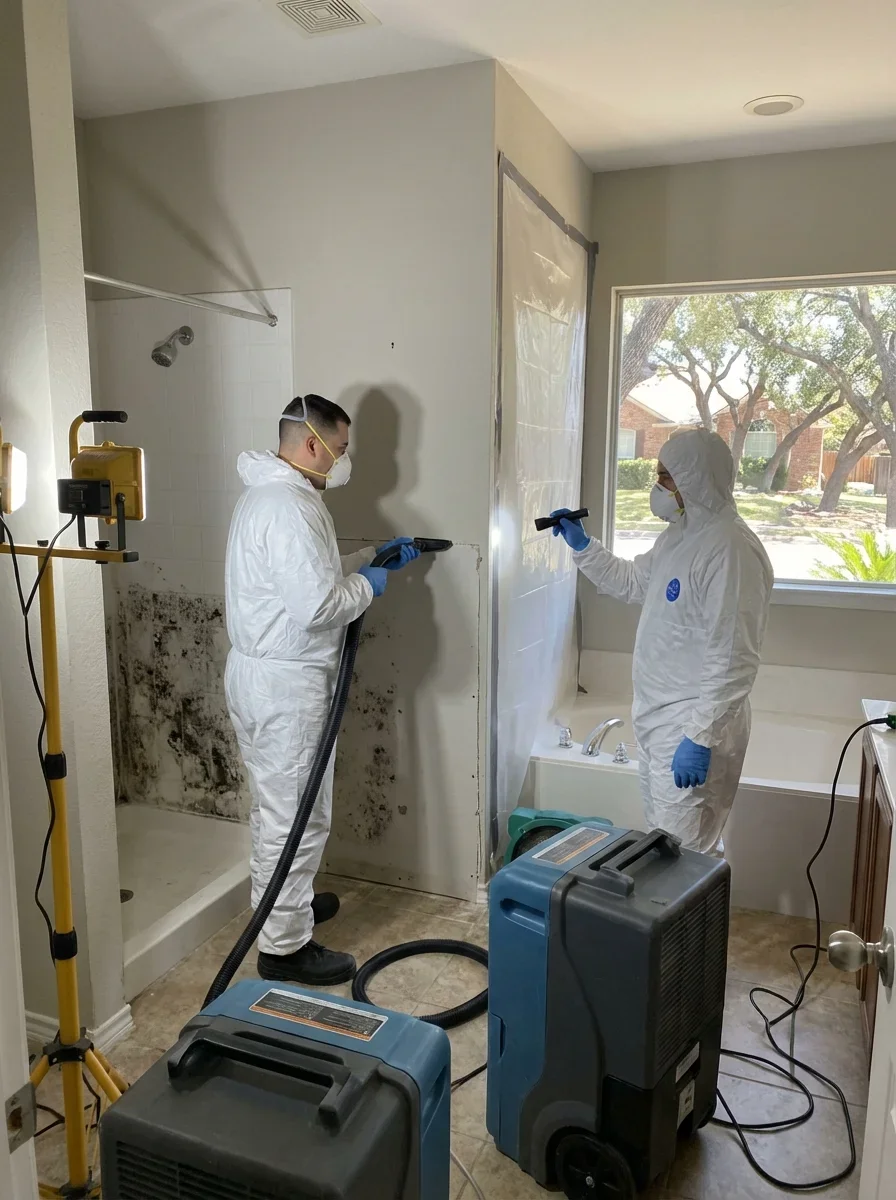
Three factors control your final bill: contamination severity, material type, and access difficulty.
A small patch of black mold on ceramic tile costs $15–$20 per square foot for surface cleaning. The same square footage on drywall with mold penetrating the paper backing costs $35–$50 per square foot because the entire panel needs removal and replacement.
Containment complexity matters more in Texas than many other states. Slab-on-grade construction means no basements to isolate — mold in one room can spread through wall cavities, HVAC ducts, or even under baseboards to adjacent spaces. Contractors build temporary walls with plastic sheeting and airlock entries, then maintain negative air pressure to prevent spore migration.
Proper containment for a 300-square-foot contaminated area costs $1,800–$3,000 just for setup and daily monitoring.
Texas TDLR Requirement: The Texas Department of Licensing and Regulation mandates separate companies for mold assessment and remediation to prevent conflicts of interest. Budget $300–$600 for the licensed assessment, then hire a different TDLR-licensed contractor for actual remediation work. This dual-company requirement adds coordination time and costs most other states don't mandate.
Texas-specific mold licensing under the Texas Department of Licensing and Regulation (TDLR) requires separate companies for assessment and remediation.[3] You'll pay $300–$600 for a licensed Mold Assessment Technician to inspect, test, and write a remediation protocol, then hire a separate TDLR-licensed Mold Remediation Contractor to perform the work. This two-company requirement prevents conflicts of interest but adds coordination time and dual service fees most other states don't mandate.
Verify licenses at tdlr.texas.gov/mol before signing contracts.
How Building Age and Construction Type Affect Pricing
Homes built after 2000 with spray foam insulation and PEX plumbing see higher remediation costs when mold strikes because spray foam can't be cleaned — only removed and replaced. A post-2015 DFW tract home with mold in exterior wall cavities insulated with closed-cell foam pays $6,000–$10,000 for foam removal, cavity treatment, and reapplication versus $2,500–$4,000 for the same wall area with fiberglass batts.
Pre-1980 pier-and-beam homes avoid some slab-related issues but trade them for crawl space moisture problems. Remediation under these homes requires technicians to work in 18–36 inch clearances, slowing labor and increasing hourly costs.
Expect to pay 15–25% more for crawl space work compared to accessible attic or interior spaces.
Rapid new construction in Austin and San Antonio occasionally has moisture management defects — missing flashing around windows, improperly installed vapor barriers, or inadequate roof ventilation. Black mold in 2–5 year old homes often indicates builder defects, which can complicate costs if warranty claims or litigation are involved.
Some homeowners pursue builder remedies before paying out-of-pocket, adding months to the timeline but potentially recovering costs.
Hidden Costs: Testing, Permits, and Reconstruction
Post-remediation verification testing costs $350–$600 and is required under TDLR rules to confirm spore counts return to safe levels. Most contracts bundle this into the total price, but confirm before signing.
If clearance testing fails, contractors re-clean and re-test at no additional charge (reputable companies guarantee clearance).
The underlying cause — plumbing repair, roof patching, HVAC fixes — isn't included in mold remediation quotes. A foundation plumber repairing a slab leak costs $2,500–$6,500 depending on access. Roof repairs range from $800 for flashing replacement to $12,000+ for significant storm damage.
Budget for these repairs separately; mold will return if moisture sources aren't eliminated.
Reconstruction after demolition adds 30–60% to remediation costs unless you're handy enough to DIY or hire separate contractors. A remediation company might charge $4,200 to remove mold from a bathroom, then quote another $2,800 to hang drywall, retile, and paint.
General contractors often complete reconstruction for less, but coordination delays are common.
Texas-Specific Cost Factors You Won't See Elsewhere
Expansive clay soil in Houston, Dallas-Fort Worth, and San Antonio creates foundation movement that cracks both slabs and plumbing. The Blackland Prairie and Gulf Coast regions experience significant soil volume changes with moisture fluctuations — your foundation can heave several inches seasonally.
This cracking triggers plumbing leaks under the slab, which feed black mold growth in wall cavities and flooring.
Remediation in homes with active foundation issues costs more because contractors often discover multiple moisture intrusion points. A single-point leak remediation might start at $3,200, but once crews open walls they find mold at three additional locations along the same pipe run.
Final costs inflate 40–70% from initial estimates. Foundation repair (piers, leveling) costs $4,000–$15,000 and should happen before or during mold work to prevent recurrence.
Hurricane season (June–November) and spring severe weather create demand spikes that raise prices 15–30%. Post-Harvey Houston saw black mold remediation costs jump from typical $12–18 per square foot to $25–35 per square foot due to contractor shortages and insurance claim volumes.
Booking remediation immediately after flooding often means paying premium emergency rates ($250–$350/hour labor versus standard $85–$125/hour).
AC system runtime in Texas — often 2,500+ hours annually — accelerates condensate-related mold. Overflow pans, clogged drain lines, and ductwork condensation are year-round issues unlike northern states where AC runs 3–4 months. HVAC mold remediation costs stay consistent because the problem never goes away seasonally.
Expect to pay $150–$300 annually for preventive drain line maintenance if you've had mold issues before; it's cheaper than repeat remediation.
Texas lacks a workers' compensation mandate for contractors, so verify your remediation company carries general liability, pollution liability, and professional liability insurance. Unlicensed or underinsured companies quote 30–50% below market to win bids, then walk away when post-remediation testing fails or health complaints arise.
TDLR licensing requires proof of insurance, but confirm coverage limits ($1 million general liability minimum is standard).
When You Can Handle Black Mold Yourself (and Save $500–$2,000)
The EPA permits DIY cleanup for black mold areas under 10 square feet on non-porous surfaces if you're not immunocompromised and the mold isn't from sewage contamination.[1] A small shower corner or windowsill spot costs $45–$80 in supplies (respirator, goggles, antimicrobial cleaner, disposal bags) versus $650–$1,200 for a pro.
You need an N95 respirator minimum (N100 preferred), eye protection, disposable gloves, and a plastic drop cloth to contain debris. Scrub with detergent solution, bag contaminated materials immediately, and dry the area completely with fans.
Run a HEPA air purifier in the room for 24 hours after cleaning.
DIY mold removal fails when homeowners skip moisture source repair, underestimate contamination extent, or use bleach on porous materials (it doesn't penetrate drywall or wood — surface mold dies but subsurface growth continues). If mold returns within 30 days, hidden moisture or deeper contamination exists.
At that point you're better off hiring a mold inspection service for $300–$500 to identify the real problem before spending more on ineffective DIY attempts.
Don't DIY if mold covers more than 10 square feet, appears in HVAC ducts or returns, affects porous materials like drywall or insulation, or stems from sewage or flooding. Black mold produces mycotoxins that become airborne during disturbance — professional containment and air filtration protect your family from exposure spikes during removal.[3]
How to Get Accurate Black Mold Removal Quotes in Texas
Request on-site assessments from 2–3 TDLR-licensed companies. Phone quotes or "per square foot" estimates without inspection miss hidden contamination and moisture sources.
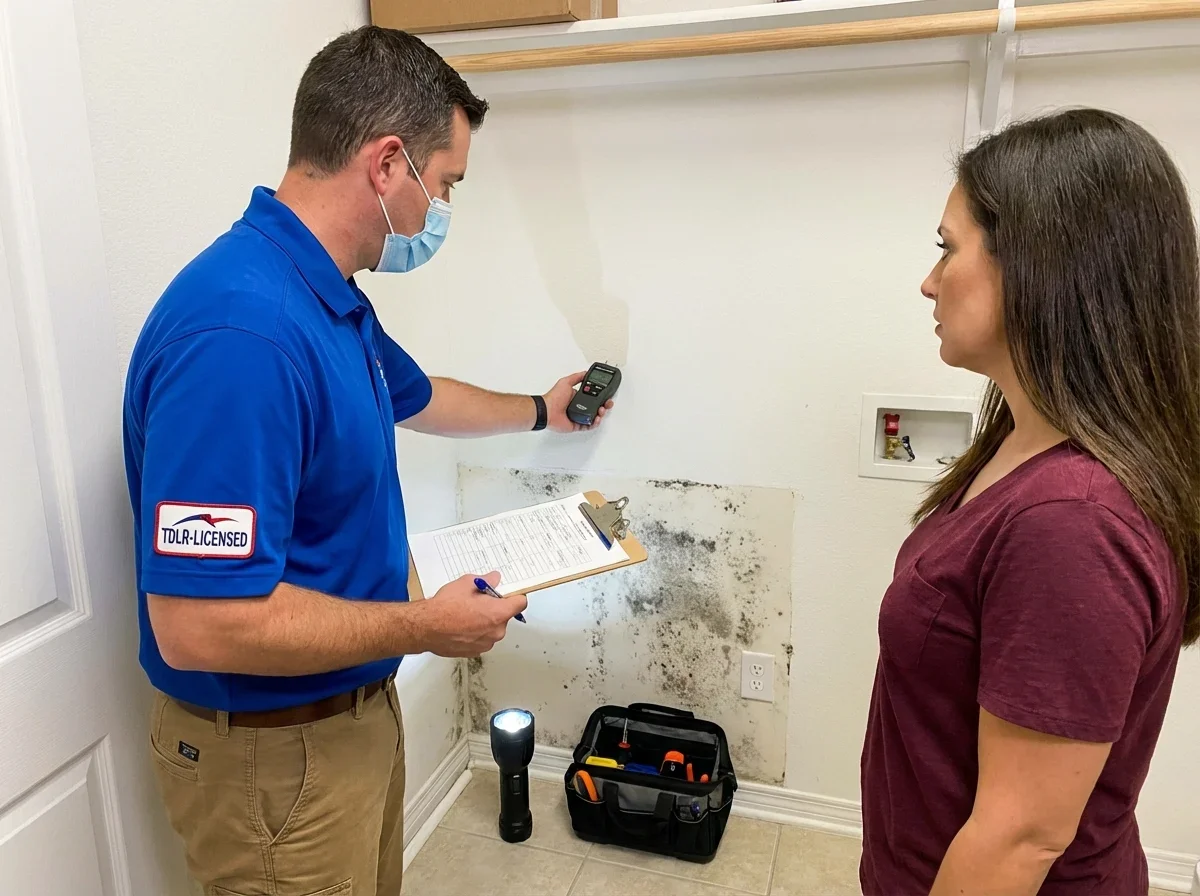
Legitimate contractors spend 30–60 minutes inspecting, checking moisture levels with meters, and photographing affected areas before quoting.
Ask for itemized proposals breaking out containment, demolition, cleaning, testing, and reconstruction. Lump-sum bids hide where your money goes and make it harder to negotiate or compare.
A transparent quote lists labor hours, materials, equipment rental, disposal fees, and testing separately.
Verify TDLR licensing for both the assessment company and remediation company at tdlr.texas.gov/mol. Texas requires separate licenses: the assessor writes the protocol, the remediator executes it, and a third-party or the original assessor performs clearance testing.
Don't hire companies that offer to assess and remediate under one contract — it violates Texas Mold Assessment and Remediation Rules (TMARR).
Quote Red Flags to Avoid:
- Pricing above $40/sq ft without structural complications
- Same-day contract pressure or scare tactics about "exponential mold spread"
- Refusal to provide TDLR license numbers upfront
- No moisture meter inspection or pre-work documentation
- Combined assessment and remediation services (violates Texas law)
- Quotes 25%+ above regional metro averages without clear justification
Check if your homeowners insurance covers the underlying cause (sudden pipe burst, roof storm damage) even if it excludes mold remediation itself. Texas policies often cover up to $5,000–$10,000 for mold if it results from a covered peril. Filing a claim for the water damage might cover plumbing/roof repairs and part of remediation costs.
Our insurance coverage guide explains how Texas mold exclusions work and when you can successfully claim.
Red Flags That Signal Overpricing or Scams
Quotes above $40 per square foot for standard drywall removal and treatment suggest inflated pricing unless structural complications exist. Houston metro averages $22–$28 per square foot for moderate contamination; DFW runs slightly lower at $20–$25 per square foot.
Outlying areas like Corpus Christi or El Paso may quote higher due to limited contractor availability, but differences beyond 25% from metro averages warrant scrutiny.
Pressure to sign same-day contracts, claims that "mold spreads exponentially every hour," or scare tactics about immediate health danger often indicate bad actors. Reputable companies provide written quotes valid for 7–14 days and encourage you to get second opinions.
Black mold is serious, but it doesn't double in size overnight — you have time to make informed decisions.
Avoid companies that skip moisture meters, don't photograph pre-remediation conditions, or refuse to provide TDLR license numbers. Post-remediation disputes over scope of work are common; documentation protects both parties.
Contractors confident in their work document everything and welcome third-party verification testing.
Reducing Black Mold Removal Costs Without Cutting Corners
Handling your own demolition and reconstruction saves 30–50% on labor if you're capable. Remediation companies charge $65–$95/hour for demo work a handy homeowner can do with basic tools. Pull drywall yourself before the crew arrives, then hire them only for containment, antimicrobial treatment, air scrubbing, and clearance testing.
Rebuild afterward with your own contractor or DIY.
Fix moisture sources before mold develops extensively. A $180 plumbing service call to repair a dripping supply line costs far less than $3,500 to remediate the mold that grows behind your wall over six months.
Monthly visual inspections of under-sink areas, AC drip pans, water heater connections, and toilet bases catch problems early.
Bundle multiple moisture issues into one remediation project if possible. Addressing black mold in a bathroom and separate bedroom mold from a window leak in one mobilization costs less than two separate projects.
Containment setup, equipment rental, and clearance testing happen once instead of twice.
Consider mold prevention services after remediation — $400–$800 for dehumidifier installation, crawl space encapsulation, or HVAC UV light systems prevents recurrence. Texas humidity (often 70–90% in Houston/Galveston during summer) feeds mold growth year-round. Controlling indoor humidity below 50% eliminates most black mold risk.
Preventive investment pays back quickly if it avoids a $5,000 remediation project every 2–3 years.
Negotiate reconstruction separately or exclude it from remediation contracts. General contractors or handymen rebuild for $35–$55/hour versus $75–$110/hour remediation companies charge for the same drywall and paint work.
You'll coordinate an extra contractor, but savings on a three-room reconstruction can exceed $2,000.
What Black Mold Remediation Includes (and What It Doesn't)
Standard remediation contracts cover containment setup, demolition of contaminated materials, HEPA vacuuming, antimicrobial application, air scrubbing, debris disposal, and post-remediation clearance testing.
You're paying for spore removal and surface treatment to safe levels, not cosmetic restoration.
Reconstruction — drywall hanging, taping, texture, paint, flooring replacement, trim reinstallation — is usually a separate line item or entirely separate contract. Some full-service companies bundle remediation and reconstruction, but itemized pricing remains important to understand cost breakdowns.
Verify what "turnkey" quotes include before assuming you'll get a finished room.
Moisture source repair isn't included unless the remediation company also holds plumbing, roofing, or HVAC licenses. Most don't. You'll hire separate contractors to fix the leak, replace the roof shingles, or repair the AC drain line.
Remediation addresses the mold itself, not what caused it.
Belongings and contents cleaning requires separate services. Mold on furniture, clothing, books, or stored items needs specialized cleaning or disposal. Some remediation companies offer contents cleaning for $500–$2,000 depending on item quantity and contamination level, but it's not standard in mold removal contracts.
Non-porous items (metal, glass, hard plastics) can usually be cleaned; porous items (upholstered furniture, mattresses, cardboard boxes) often require disposal.
Post-remediation air quality monitoring beyond the initial clearance test costs extra. Some homeowners request follow-up testing at 30, 60, and 90 days to confirm mold doesn't return — $250–$400 per test.
This makes sense if you're selling the home and want documentation for buyers, but it's not required for personal occupancy.
Timeline: How Long Black Mold Removal Takes (and Why It Matters for Costs)
Small jobs (under 25 square feet) take 1–2 days: containment setup on day one, cleaning and air scrubbing overnight, clearance testing on day two. You'll pay for technician labor, equipment rental, and testing within that 48-hour window.
Most contractors charge daily minimums ($800–$1,200/day), so extending to three days significantly increases costs.
Medium remediation projects (50–150 square feet) span 3–5 days. Demolition and bagging on day one, antimicrobial treatment and initial air scrubbing on day two, continued air filtration on days three and four, clearance testing on day five. Equipment rental charges accrue daily — negative air machines cost $100–$200/day, HEPA air scrubbers run $75–$150/day, and dehumidifiers add $40–$80/day.
A project that drags to seven days due to access issues or scope expansion adds $600–$1,000 in equipment costs alone.
Whole-house remediation takes 7–14 days depending on square footage and crew size. Larger companies mobilize 3–5 technicians to work parallel containment zones, completing in 7–10 days. Smaller outfits with 1–2 techs need two weeks.
Extended timelines mean either temporary relocation (hotel costs $100–$200/night for a family) or living in partial containment with limited HVAC and room access.
Texas humidity slows drying times compared to arid states. Structural drying after water damage requires 3–5 days before mold remediation can even begin. Contractors run commercial dehumidifiers and air movers to drop moisture content in drywall and framing below 15% — the threshold where mold growth stops.
Rushing this phase to save rental costs guarantees mold returns, ultimately costing more in repeat remediation.
Understanding the Texas Mold Remediation Process
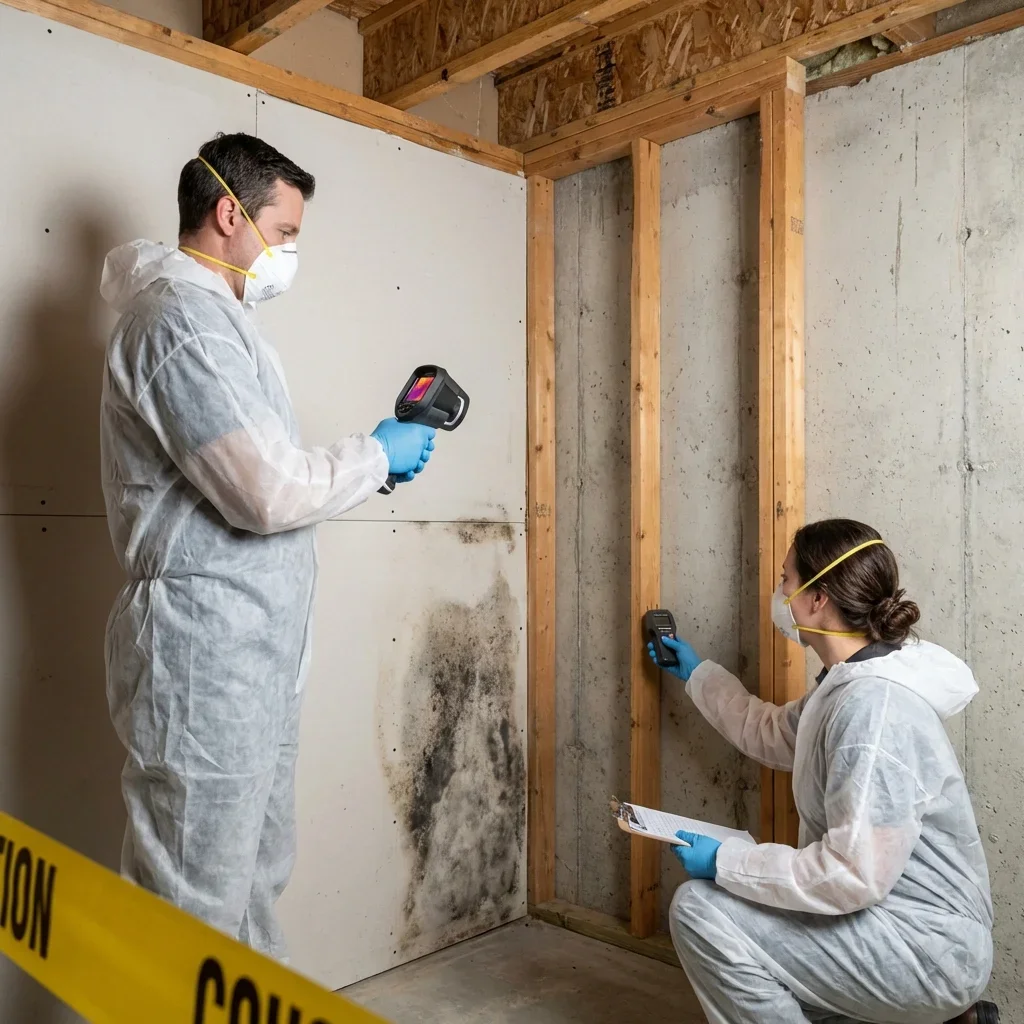
TDLR-licensed assessment starts with visual inspection, moisture mapping using infrared cameras or pin meters, and air or surface sampling if contamination extent is unclear. The assessor writes a remediation protocol specifying containment boundaries, materials to remove, cleaning procedures, and clearance criteria.
This protocol costs $400–$800 and becomes the legal scope of work for the remediation contractor.
Remediation begins with containment: sealing off affected areas with 6-mil polyethylene plastic, creating airlocks with zipper doors, and establishing negative air pressure using HEPA-filtered exhaust fans. Technicians wear Tyvek suits, N100 respirators, and gloves.
All contaminated materials — drywall, insulation, baseboards, sometimes flooring — get bagged in 6-mil contractor bags and disposed of as contaminated waste.
HEPA vacuuming removes surface spores from framing, studs, and non-porous materials. Antimicrobial solutions (typically quaternary ammonium compounds or botanical extracts) are applied to all surfaces. Air scrubbers run continuously, filtering room air through HEPA filters at 4–6 air changes per hour.
This phase continues 24–72 hours depending on contamination severity.
Final cleaning involves wiping all surfaces with damp cloths, re-vacuuming with HEPA equipment, and sometimes applying mold-resistant encapsulants to wood framing. The remediation company notifies the original assessor or a third-party clearance company to perform post-remediation testing. Air samples and surface swabs must show spore counts at or below outdoor ambient levels — typically under 500 spores per cubic meter for total fungi.
Clearance failure triggers re-cleaning at no additional cost under most contracts. Once testing passes, the remediation company provides a certificate of completion and the assessor issues a clearance letter.
These documents matter for home sales, insurance claims, and warranty coverage. Our mold remediation process guide walks through each step in detail.
Regional Price Variations Across Texas
Houston averages $20–$30 per square foot for black mold remediation due to high humidity, frequent flooding, and robust contractor competition. Post-Harvey awareness keeps demand steady year-round.
Slab foundation homes dominate, creating consistent plumbing-related mold issues.
Dallas-Fort Worth runs slightly lower at $18–$28 per square foot with less flooding risk but similar expansive clay soil problems. Rapid suburban growth in Frisco, McKinney, and Prosper creates demand for new construction mold inspections when builders cut corners on moisture barriers.
Austin prices trend higher — $22–$32 per square foot — driven by premium real estate values and homeowner willingness to pay for certified, insured contractors. The tech industry influx tolerates less price sensitivity, and contractors adjust accordingly.
San Antonio sees $17–$25 per square foot, lower than other major metros but complicated by some of Texas's hardest water (300+ ppm calcium carbonate in Hill Country suburbs).
Hard water accelerates copper pipe corrosion, creating the slow leaks that feed hidden mold.
Corpus Christi, Galveston, and Gulf Coast communities pay $25–$35 per square foot due to limited contractor availability and salt air corrosion issues. Hurricane risk keeps insurance costs high, and contractors factor in mobilization expenses for coastal work.
Rural Texas — Lubbock, Amarillo, Wichita Falls — averages $15–$22 per square foot with lower labor costs but sometimes longer wait times for qualified contractors.
TDLR licensing is statewide, but not every small town has a local licensed remediator.
When to Walk Away From a Property Due to Mold Costs
Pre-purchase mold inspections sometimes reveal remediation costs exceeding 10% of the home's value — a common negotiation breaking point. A $250,000 home with $30,000 in remediation needs might justify walking away, especially if structural damage or recurring moisture issues complicate the picture.
Homes with active foundation movement, ongoing roof leaks, or systemic plumbing failures under slab require addressing root causes before mold remediation makes sense. If foundation repair quotes exceed $20,000 and mold remediation adds another $15,000, you're looking at $35,000+ just to make the home livable.
Unless purchase price reflects those costs, you're better off finding a different property.
Pier-and-beam homes with extensive crawl space mold sometimes need complete floor joist replacement if wood rot accompanies mold growth. Replacing structural framing runs $12,000–$25,000 depending on home size. Add remediation, vapor barriers, and moisture control, and total costs can hit $40,000+.
Older homes with cast iron plumbing, outdated electrical, and deferred maintenance often aren't worth the investment.
Post-flood homes that sat wet for more than 72 hours before drying often develop mold throughout wall cavities, insulation, and subfloors. If the entire first floor needs gutting — drywall, insulation, flooring, baseboards, possibly cabinetry — reconstruction costs spiral to $50,000–$100,000 for a modest home.
Insurance may cover part, but verify coverage before committing to purchase.
Our real estate mold inspection guide explains how to evaluate remediation costs during due diligence and negotiate repair credits or price reductions.
How Insurance Affects Your Out-of-Pocket Costs
Texas homeowners insurance typically excludes mold unless it results from a covered peril like sudden pipe burst or storm damage. Policies include mold coverage limits — often $5,000–$10,000 — which cover part of remediation if you file a successful claim for the underlying damage.
A washing machine supply line that bursts while you're home, flooding the laundry room, is a covered sudden water damage event. Insurance pays for water extraction, drying, and mold remediation up to policy limits.
The same supply line that leaks slowly for months, creating mold you discover later, isn't covered because it's gradual damage from lack of maintenance.
Filing claims for mold can raise premiums or trigger non-renewal, so homeowners weigh claim amounts against long-term insurance costs. A $6,000 remediation job might not justify filing if your deductible is $2,500 and you risk premium increases of $800/year for three years.
Run the math before filing.
Some Texas carriers offer mold endorsements that increase coverage limits to $25,000 or $50,000 for an additional $50–$150 annual premium. If you live in a high-risk area (flood zone, older home, history of plumbing issues), the endorsement pays for itself in one claim.
Document everything if you plan to file: photographs of water damage and mold, plumber invoices showing the covered peril (burst pipe, AC overflow), remediation estimates from licensed contractors. Adjusters often lowball initial offers — having detailed documentation and competing quotes strengthens your negotiating position.
Our insurance claim mold services page covers how to maximize recovery.
- US Environmental Protection Agency (EPA). "Mold Cleanup in Your Home." https://www.epa.gov/mold/mold-cleanup-your-home. Accessed April 02, 2026.
- US Environmental Protection Agency (EPA). "A Brief Guide to Mold, Moisture and Your Home." https://www.epa.gov/mold/brief-guide-mold-moisture-and-your-home. Accessed April 02, 2026.
- Penn State University Extension. "Mold Course Chapter 2: Health Effects of Mold." https://extension.psu.edu/mold-course-chapter-2-health-effects-of-mold. Accessed April 02, 2026.